

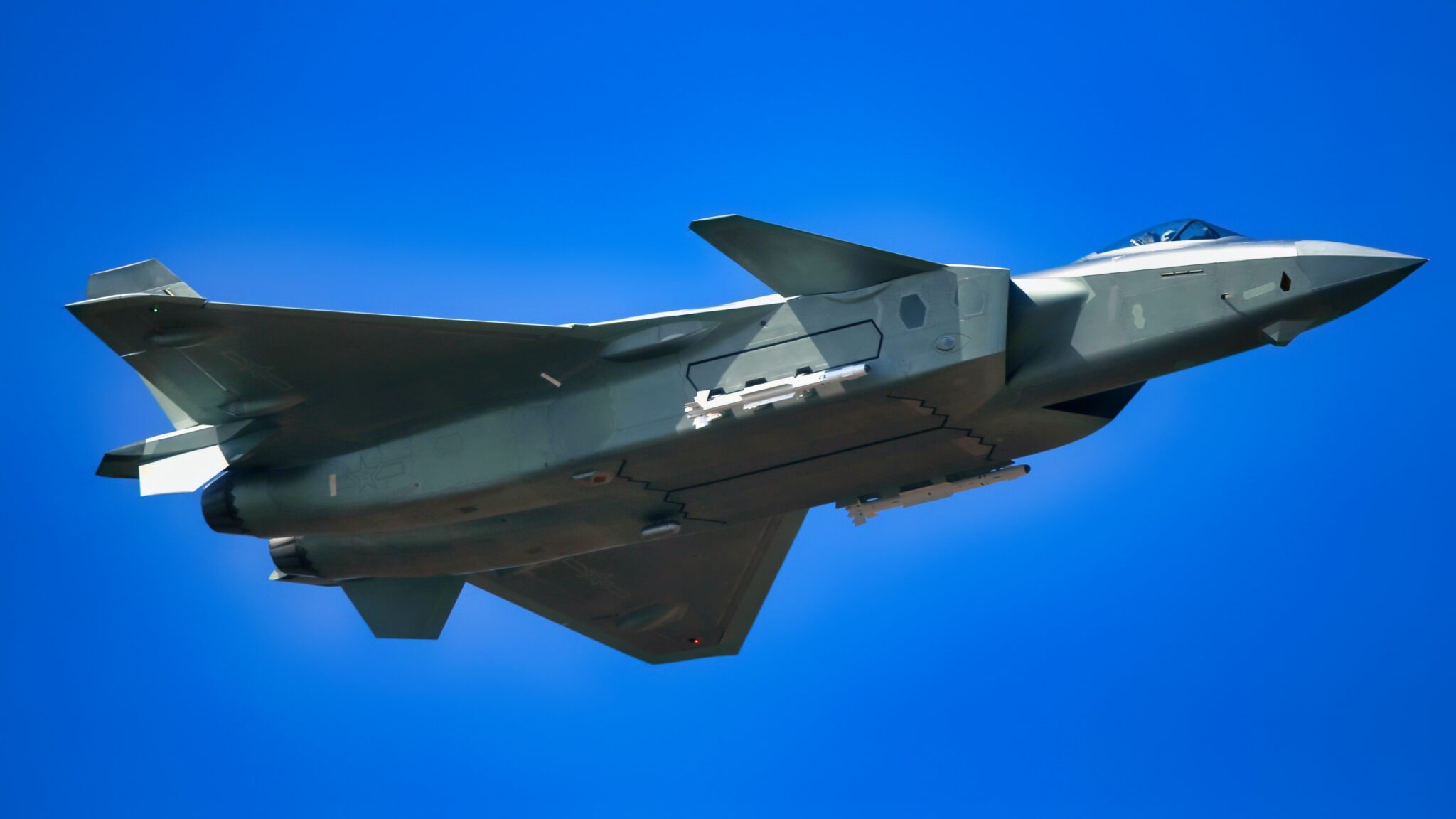
The Chengdu J-20, also known as the “Mighty Dragon,” is a fifth-generation, twin-engine stealth fighter developed by China. Designed by the Chengdu Aircraft Industry Group, the J-20 made its maiden flight on January 11, 2011, and officially entered service with the People’s Liberation Army Air Force in 2017. This made it the world’s third operational fifth-generation fighter, following the F-22 and F-35.
The J-20 is a multirole aircraft capable of air superiority, ground strike, and air defense missions. It is equipped with advanced systems, including an Active Electronically Scanned Array (AESA) radar, modern cockpit displays, and high-capacity data links. Its canard-delta design, low-observable blended body, large canted twin tails, and internal weapons bays optimize the aircraft for stealth and high-performance operations, while large fuel tanks support long-range missions.
There are three main variants of the J-20: the standard production model J-20A, the thrust-vectoring J-20B, and the two-seat J-20S1 designed for tandem operations. Engine technology is a critical factor in the aircraft’s performance and stealth. Initially, it used Russian AL-31FM2 engines, but China has been developing its own WS-10G and WS-15 engines. The WS-10G is a thrust-vectoring turbofan, while the WS-15 is designed to provide supercruise capability and high maneuverability. In March 2022, Chinese media reported that WS-15 testing was completed.
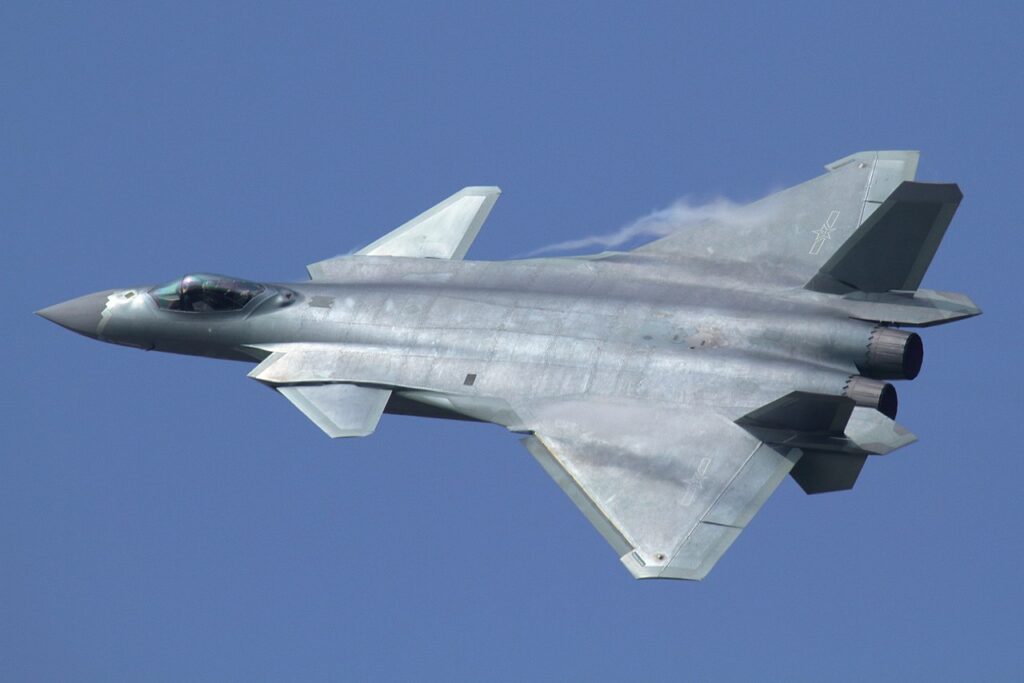
The J-20 program began in the late 1990s under the J-XX initiative, with multiple prototypes undergoing design changes and test flights. By 2014, the third prototype featured modified supersonic inlets, stealth coatings, and redesigned vertical stabilizers. Low-rate initial production began in 2015, and by 2017, Chinese media reported the aircraft was ready for serial production.
From 2019 onward, engine and variant developments accelerated. Prototypes with yellow primer coatings and new WS-10 engines underwent flight testing. In 2020, the J-20B variant was introduced with thrust-vectoring capability and entered serial production. In 2021, China began replacing Russian engines with WS-10C units, while the WS-15 continued testing for supercruise performance.
The Chengdu J-20 combines cutting-edge technology and versatility, playing a strategic role in China’s ambitions for air superiority.
