

24 November 2025 – A newly released report from the U.S.-China Economic and Security Review Commission concludes that Beijing exploited the May 2025 India–Pakistan confrontation to trial its most advanced weapons under real combat conditions. The findings suggest significant repercussions for South Asia’s strategic balance and China’s rapidly expanding defense export ambitions.
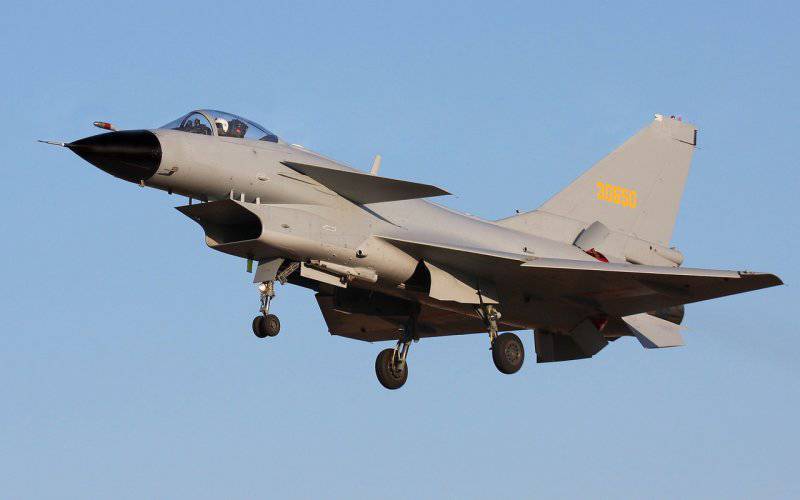
According to the report published on November 18, China took advantage of the 7–10 May clash—known in India as Operation Sindoor—as Pakistan relied heavily on Chinese military equipment during its counterstrikes. For the first time, systems such as the J-10 fighter jet, HQ-9 long-range air defense battery, and PL-15 air-to-air missiles were used in high-intensity engagements against a capable opponent, effectively turning a regional crisis into a live-fire testing ground for both the PLA and China’s export-driven arms industry.
The confrontation erupted after an insurgent attack in Jammu and Kashmir killed 26 civilians, prompting Indian air and missile strikes deep into Pakistani territory. Pakistan responded with drone and missile barrages targeting Indian bases and logistical hubs, while India executed deeper retaliatory missions. Analysts note that both sides struck farther than at any point in the past half-century—highlighting how quickly incidents in Kashmir can escalate between two nuclear powers.
The report emphasizes that a broader doctrinal contest underpins these tactical exchanges. India has been refining its fast-mobilizing Cold Start strategy, built on Integrated Battle Groups designed to carry out limited incursions without crossing Pakistan’s nuclear red lines. Pakistan, facing a widening conventional gap, has doubled down on a full-spectrum deterrence posture that blends tactical nuclear weapons, long-range missiles, and upgraded conventional assets. Within this framework, Chinese-built systems are shaping not just Pakistan’s arsenal but both countries’ calculations regarding risk and escalation.
China has solidified its position as Pakistan’s dominant arms supplier, supported by the China–Pakistan Economic Corridor and Gwadar port infrastructure. Recent joint exercises—such as Warrior-VIII in late 2024 and China’s role in the AMAN 2025 naval drills—further enhanced interoperability ahead of the May conflict. Pakistan’s J-10CE jets, together with Chinese early warning aircraft and long-range PL-15E missiles, formed the backbone of a Chinese-designed kill chain that Pakistani officials say enabled extended-range engagements against Indian strike aircraft, including Rafales.
On the defensive front, Pakistan’s HQ-9P and HQ-9BE systems created a multilayer shield over key cities and military sites. Meanwhile, Chinese-origin SH-15 artillery, VT-4 tanks, Tughril-class frigates and the Hangor-class submarine program have transformed Pakistan’s land and naval forces, complicating Indian operations from the Himalayas to the Arabian Sea.
The report argues that Beijing—long concerned about the PLA’s lack of real-combat experience—used the conflict as a rare, low-risk laboratory to validate sensors, networks, and software against Western-designed platforms. Pakistan’s fragile economy and rising internal security threats have paradoxically strengthened Islamabad’s commitment to Chinese equipment following the perceived battlefield performance in May.
For Western and Indian defense planners, the implications extend well beyond a short border skirmish. China has already framed the results as proof that its systems can challenge advanced Western platforms, leveraging the narrative to compete in global fighter and missile defense markets. India, meanwhile, is accelerating modernization and deepening security ties with the U.S. and France.
In this sense, Operation Sindoor marks a pivotal moment—a brief but violent encounter that provided China with real combat data and shifted threat perceptions from South Asia all the way to the Taiwan Strait.
