

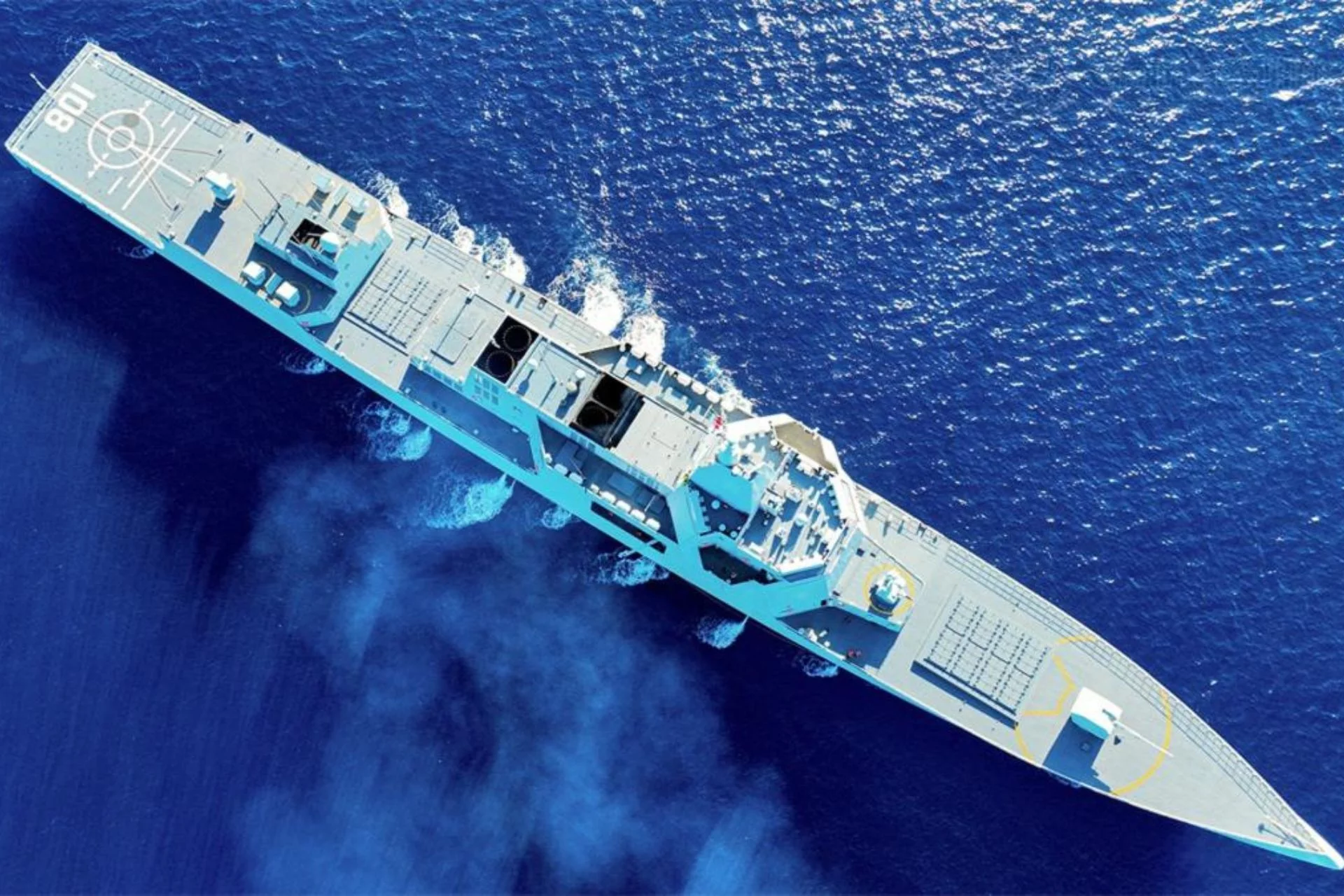
China is assembling a layered anti-access/area denial (A2/AD) architecture that combines long-range strike systems, high-end surface combatants and a dense sensor mesh. Paired together — DF-21D and DF-26 ballistic anti-ship missiles, Type 055 destroyers with extensive VLS capacity, high-speed YJ-21 anti-ship weapons, and a resilient multi-sensor chain — the network shortens reaction windows for carrier strike groups, complicates reinforcement through the first and second island chains, and favors the actor that can keep its sensor-to-shooter links intact.
The outer layer is shaped by two missile families: the DF-21D (roughly 1,500 km) and the DF-26 (approaching 4,000 km), which push carrier operations farther offshore and strain air wing cycles and aerial refueling. Within that perimeter, the Type 055 acts as a mobile, sea-based strike and sensor node: its 112 universal vertical launch cells let it carry layered air defense, anti-ship, and land-attack loads, and it has been tied to the very-high-speed YJ-21, a weapon that materially compresses the detect-decide-engage timeline.
A coherent sensor web—imaging and ocean-sensing satellites, over-the-horizon radars, long-range maritime patrol aircraft, acoustic arrays and coastal stations—provides the in-flight updates and track correlation needed to guide beyond-horizon fires. No single sensor is decisive; it is the fusion of multiple sources and sustained track quality that creates an effective engagement picture.
Three technical takeaways stand out. First, anti-ship ballistic missiles require timely external updates during flight; without them their practical reach is constrained. Second, the number of launcher cells is as operationally important as raw range—112 VLS cells allow a Type 055 to sustain air defense while contributing strike capacity. Third, the advent of ultra-fast weapons like the YJ-21 shrinks engagement timelines to seconds, shifting pressure onto command processes as much as sensors.
China’s design trades visible presence for distributed leverage: dispersed land launchers, ships operating under the umbrella of shore-based EW and air defenses, H-6 stand-off launch options and submarine firing windows all complicate allied planning. That forces carriers and their escorts to require additional reconnaissance, deception and jamming, and careful missile inventory planning.
Consequently, countermeasures emphasize breaking the opponent’s kill chain—temporarily cutting tracks and data links, dispersing sensors and shooters, and employing stand-in forces on friendly islands—rather than attempting single-point neutralization. If China can maintain network coherence across the first island chain and project tracking power beyond the second, it gains strategic leverage in gray-zone timelines and slows reinforcement. If, however, allied action can induce repeated interruptions to detection and command links, the advantage shifts to actors who can impose friction while preserving their own decision cycles. In the Indo-Pacific, the decisive factor is less fleet tonnage and more the integrity and resilience of networks and processes.
