

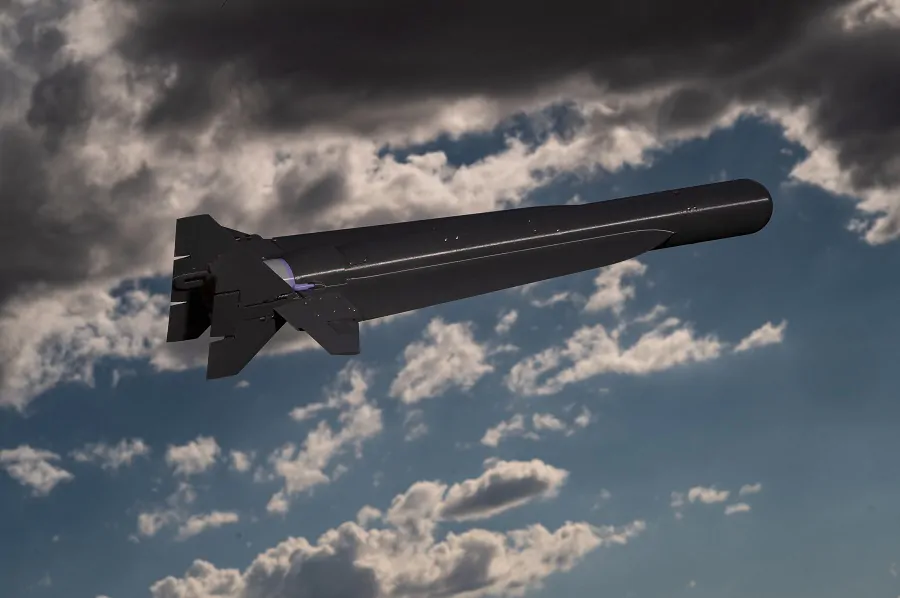
Cummings Aerospace has completed a flight test of its man-portable loitering munition Hellhound S3, validating extended-range performance and underscoring the system’s suitability for strike and counter‑drone roles. In the trial, the drone flew more than 30 kilometres with an inert payload and landed with over 50% fuel remaining, implying a potential operational range exceeding 60 km.
The test, carried out on 18 September, began with a vertical launch. Hellhound S3 then loitered over the target area in a tight figure‑eight pattern before conducting a controlled recovery. During the flight the platform attained speeds of approximately 80 m/s (about 180 mph) while carrying a modular inert load.
“This test validates Hellhound S3’s persistent loiter capability at extended ranges,” said Sheila Cummings, CEO of Cummings Aerospace. She added that the combination of range, speed and modularity makes the system well suited both to loitering‑munition strike missions and to counter‑UAS operations against Group‑2 and Group‑3 threats, such as Shahed‑type vehicles.
Hellhound S3 is built on a modular open‑systems architecture and leverages 3D printing for rapid iteration based on flight data and operator feedback. The design supports multiple swappable payloads—warheads, EW packages or ISR sensors—that soldiers can change in under two minutes without tools.
The company stated the platform has reached Technology Readiness Level 7 and Manufacturing Readiness Level 7, denoting proven operational performance and production scalability. Over the coming months Cummings plans further testing of target recognition algorithms and development of hunter‑killer concepts of operation for Hellhound.
The program aligns with procurement trends favoring affordable, quickly producible UAS capable of achieving tactical overmatch through mass, modularity and rapid field upgrades.
