

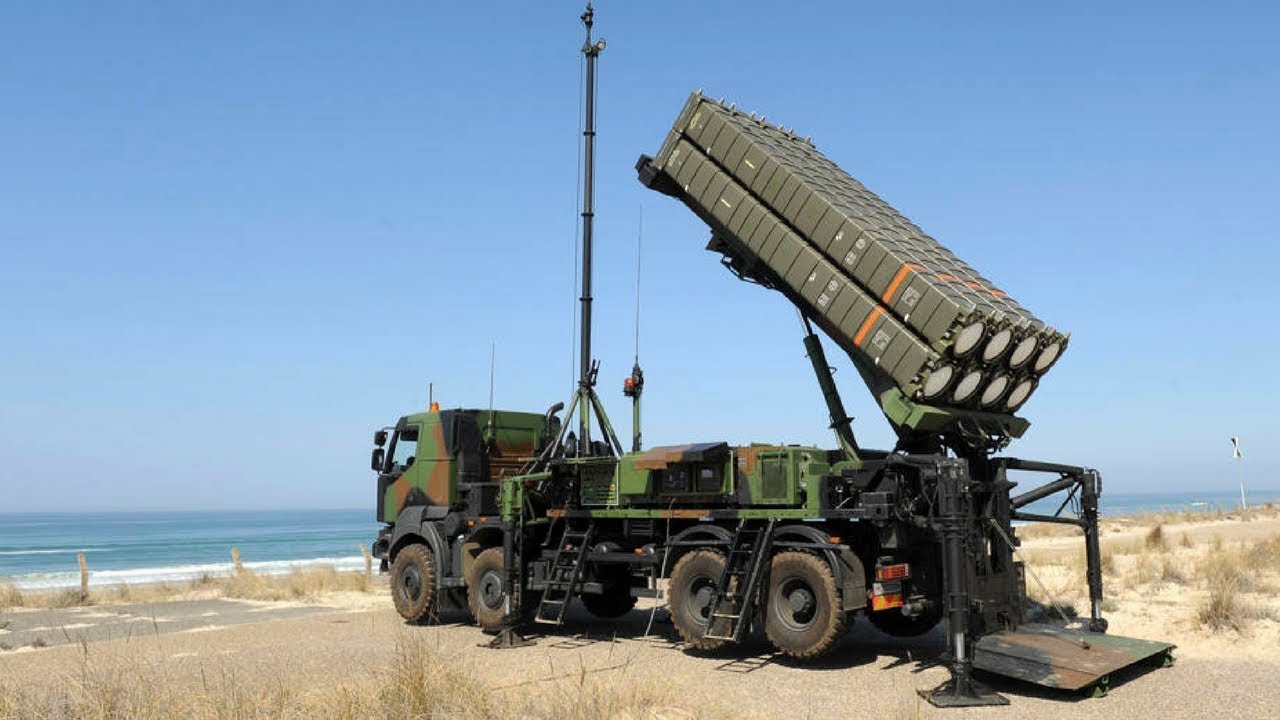
In a landmark decision, Denmark has selected the Franco-Italian SAMP/T surface-to-air missile system as its new long-range air defense solution, rejecting the U.S.-made Patriot PAC-3 despite Washington’s recently approved $8.5 billion Foreign Military Sales package. The announcement, made by the Danish Ministry of Defence on September 12, 2025, marks one of the most significant procurement moves in Denmark’s modern defense history and signals Europe’s growing emphasis on strategic autonomy.
The SAMP/T, developed by the Eurosam consortium, pairs MBDA’s Aster 30 missile with Thales’ 360-degree Arabel radar, providing full coverage against advanced aircraft, cruise missiles, and short-range ballistic threats. The system is already fielded by France and Italy and was recently ordered by Poland, making it a cornerstone of Europe’s emerging missile defense network.
Defense Minister Troels Lund Poulsen highlighted that lessons from the war in Ukraine were decisive in shaping Copenhagen’s approach. “Experience from Ukraine demonstrates that ground-based air defense plays a crucial role in protecting civilians and infrastructure from aerial attacks. This acquisition represents a vital investment in Denmark’s ability to defend its population,” Poulsen stated.
From a technical perspective, the SAMP/T offers a maximum range of about 120 km against aircraft and cruise missiles and around 25 km against ballistic targets, with 360-degree radar coverage enabling simultaneous engagement of multiple threats. While the U.S. Patriot PAC-3 MSE interceptor provides superior hit-to-kill capability and higher altitude engagement for ballistic missile defense, Danish officials appear to have favored SAMP/T’s continuous coverage, faster delivery timeline, and alignment with European defense industry objectives.
The decision is part of a broader plan to establish a layered air defense network consisting of eight fully integrated batteries. Strategically, this choice strengthens Europe’s collective air defense architecture and reinforces NATO’s deterrence posture along its eastern flank, while also signaling Denmark’s intent to deepen European defense cooperation.
