

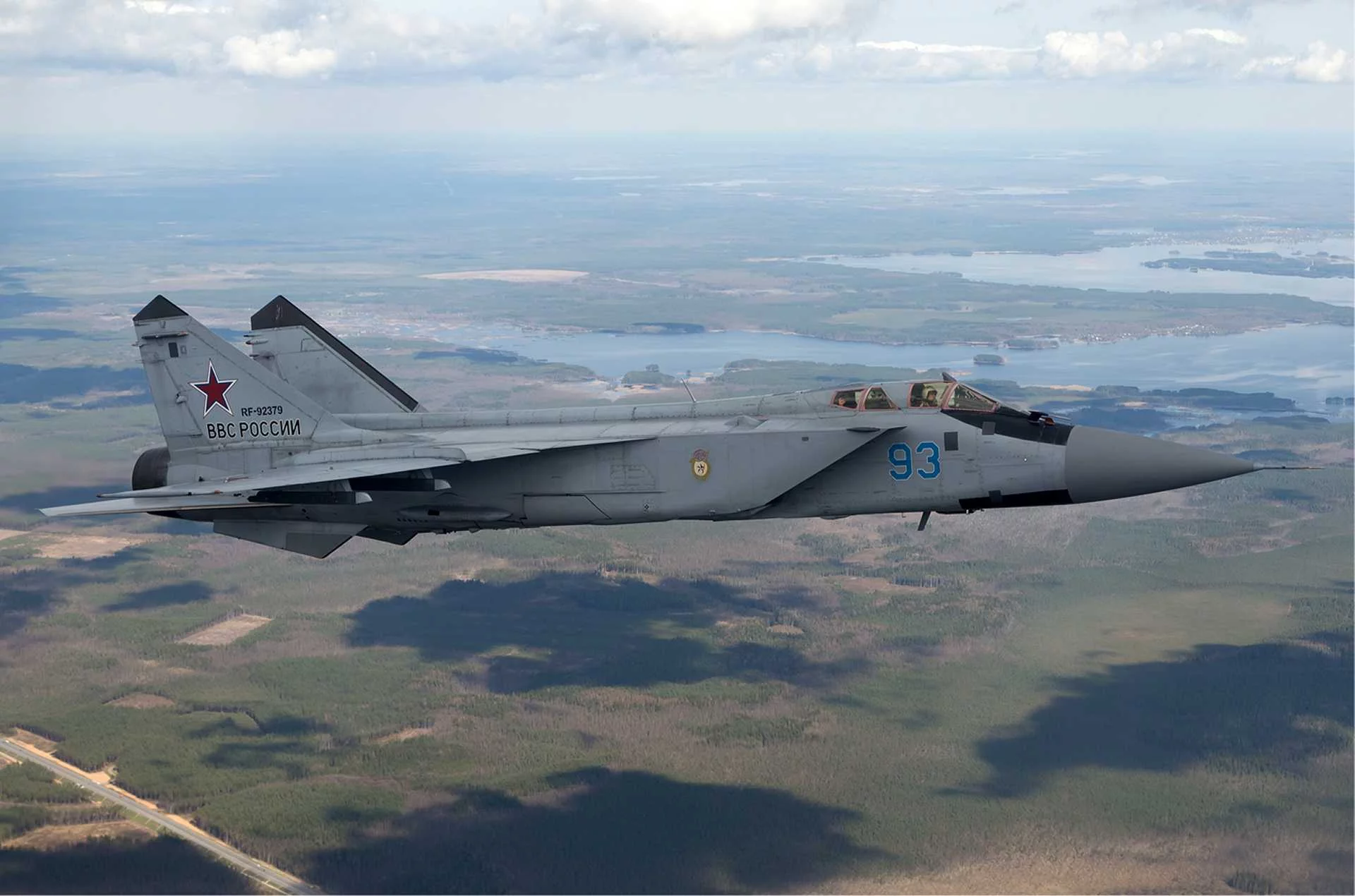
Estonia has requested NATO consultations under Article 4 after three Russian MiG-31 fighter jets entered its airspace near Vaindloo Island in the Gulf of Finland for nearly 12 minutes. The incident marks the fifth and most serious airspace violation of 2025. NATO jets intercepted the Russian aircraft, escorting them out of Estonian airspace. Tallinn described the breach as a deliberate provocation and said allied consultations would take place next week.
The Estonian government stated that the aircraft flew without filing flight plans, with transponders turned off, and failed to establish radio contact with Estonian air traffic control. NATO Article 4 allows any member to call urgent consultations when its territorial integrity or security is perceived to be at risk. While not triggering collective defense, it ensures political coordination and joint response planning.
The MiG-31, designed as a high-speed long-range interceptor, can engage multiple aerial targets in its modernized MiG-31BM version, while some variants carry the Kh-47M2 Kinzhal hypersonic missile. During the incident, Italian F-35s scrambled as part of NATO Baltic Air Policing to intercept and escort the jets toward Kaliningrad. Prime Minister Kristen Michal called the violation unacceptable, stressing the need for coordinated allied action.
Estonia also took diplomatic measures, summoning the Russian chargé d’affaires in Tallinn to issue a formal protest. The Estonian Parliament’s defense and foreign affairs committees held an extraordinary session. NATO allies including France, Latvia, Lithuania, Germany, Greece, Poland, Norway, Canada, and the UK issued statements of solidarity. European Commission President Ursula von der Leyen linked the breach to wider Russian actions and called for the rapid adoption of the 19th sanctions package against Moscow.
Russia denied violating Estonian airspace, claiming the flight was a planned transit conducted according to international rules. Estonian officials maintained that the aircraft had entered sovereign airspace, and that the lack of flight plans and transponders increased the severity of the incident. This September 19 event represents the fifth Russian violation of Estonian airspace in 2025 and the longest of the year, highlighting the complexities of airspace management near the Estonia-Russia border.
