

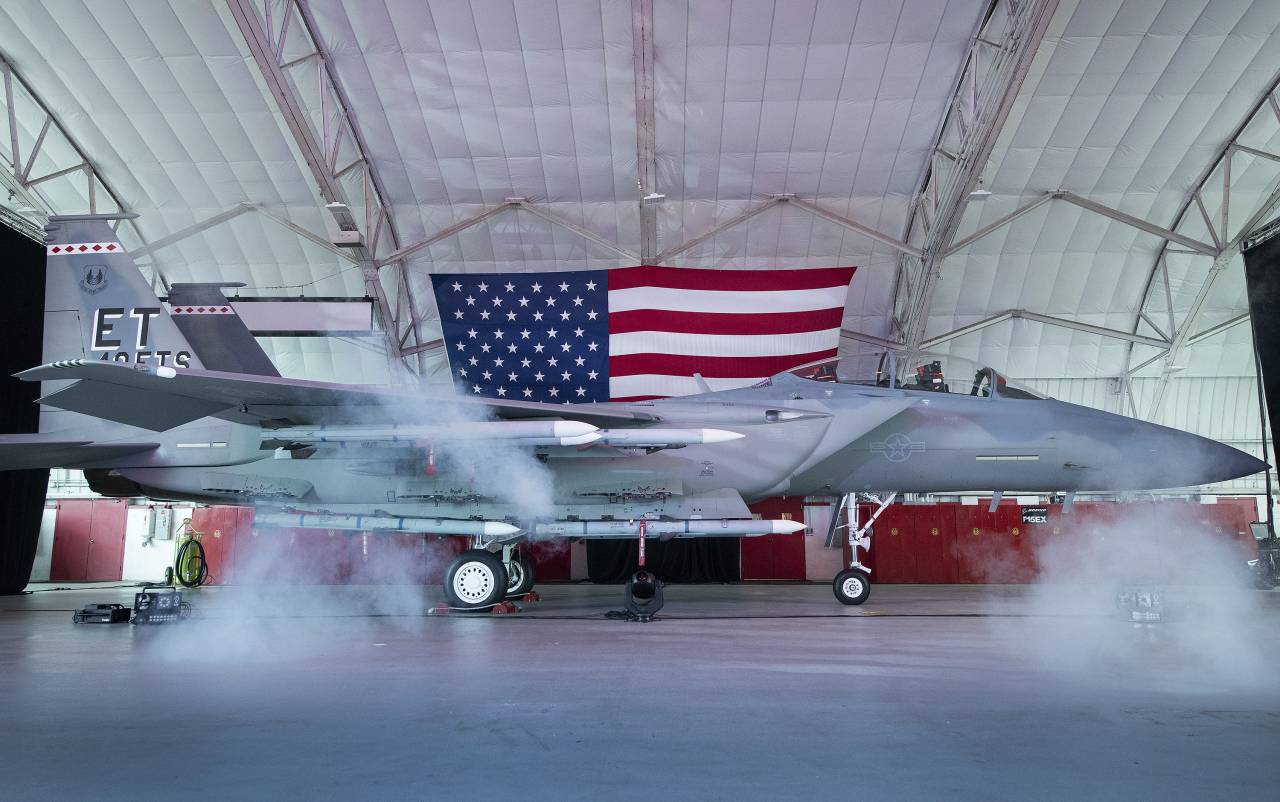
The U.S. Air Force’s newest multirole fighter, the F-15EX Eagle II, has taken a major step toward frontline service after completing its first operational demonstration over the Gulf of America. Four F-15EX jets from Eglin Air Force Base participated in the mission, with Secretary of the Air Force Troy E. Meink flying in the rear cockpit of the lead aircraft—highlighting the strategic significance of the sortie.
A Milestone Flight Over Strategic Waters
Official imagery released by the U.S. Department of War confirmed that the November 21 flight was conducted as a full operational evaluation, showcasing how the Eagle II is transitioning from development and testing into an active element of America’s future strike force. The event also signaled Washington’s intent to pair fifth-generation stealth fighters with a high-payload, non-stealth platform capable of delivering massed missile fire from standoff ranges.
Next-Generation Features of the F-15EX
Evolved from the Advanced Eagle designs developed for Middle Eastern partners, the F-15EX integrates a series of modern upgrades:
- AN/APG-82(V)1 AESA radar
- EPAWSS electronic warfare system
- 29,500-pound payload capacity
- Up to 12 air-to-air missiles
- Compatibility with JASSM and future hypersonic weapons
With a 20,000-hour service life and digital fly-by-wire controls, the platform is built to support rapid modernization through its open-architecture mission systems.
From Prototype to Operational Asset
After initial deliveries in 2021, the F-15EX underwent extensive weapons trials and avionics validation. In 2024, the Oregon Air National Guard declared initial operational capability. A forward deployment to Kadena Air Base in July 2025 marked its integration into Indo-Pacific operations.
Complementing Fifth-Generation Fighters
Although not a stealth aircraft, the F-15EX delivers:
- Significantly larger weapons capacity
- Lower operating costs
- The ability to serve as a “missile magazine” supporting F-35 and F-22 formations
Fifth-generation fighters can identify and track threats, while F-15EX launches long-range salvos from safer distances—a concept now central to U.S. airpower doctrine.
Growing Strategic Role
The demonstration over the Gulf of America confirms the Eagle II’s expanding role in both continental U.S. defense and Indo-Pacific presence. Current planning documents indicate a target fleet of 120–130 aircraft, underlining the platform’s importance for the 2030s as a heavily networked, high-payload fighter capable of carrying emerging weapons and teaming with autonomous aircraft.
