

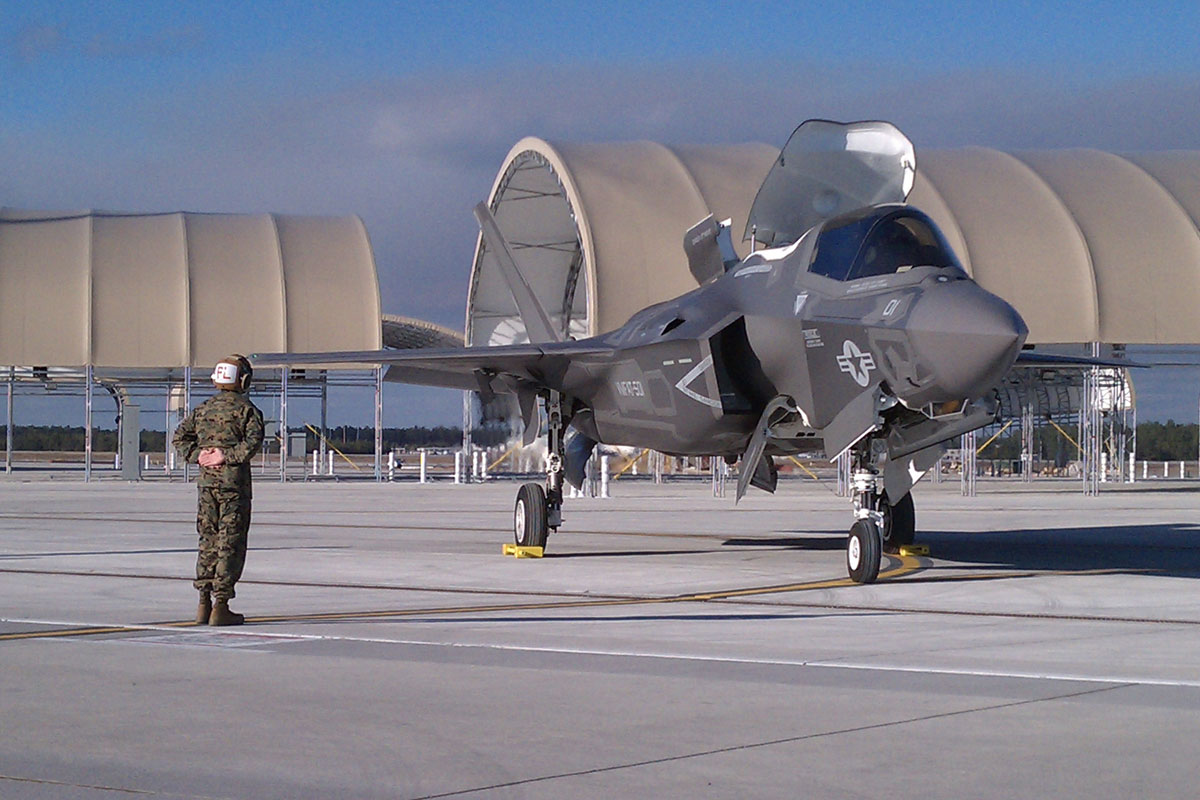
The first U.S. Marine Corps F-35B Lightning II stealth fighters have landed in Puerto Rico, marking a significant boost to Washington’s military posture in the Caribbean, Reuters reported on September 14. The Pentagon’s plan to deploy ten F-35Bs to Muñiz Air National Guard Base near San Juan, first revealed on September 5, became reality this past weekend. While officials describe the move as part of an anti-cartel campaign, analysts note it also sends a clear message of pressure toward Venezuela.
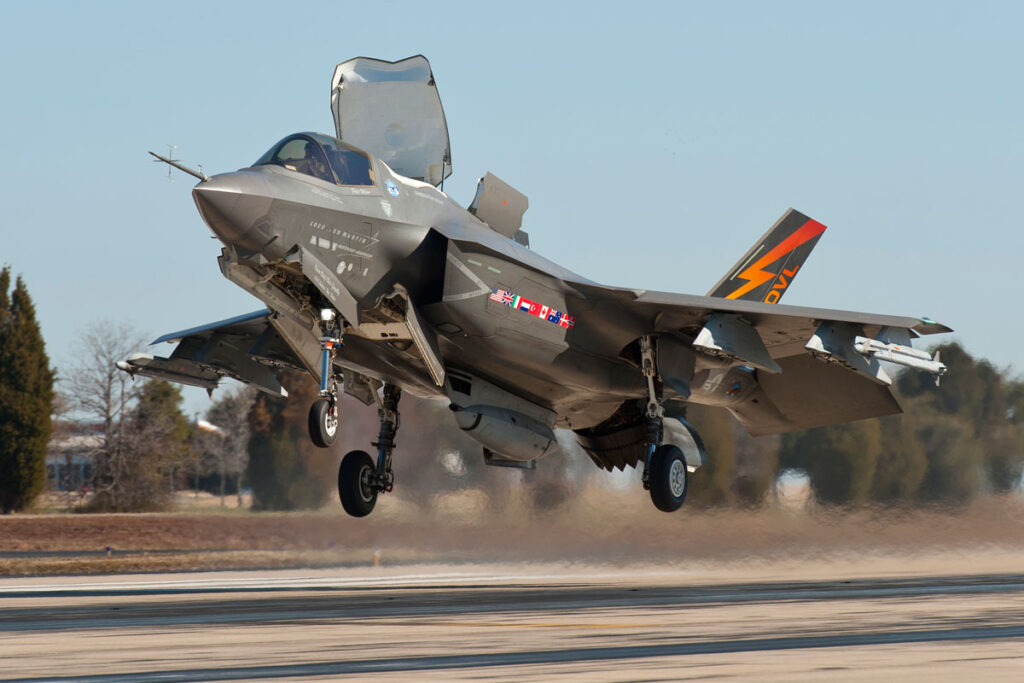
The aircraft selected for this mission are the short takeoff and vertical landing (STOVL) variant, the F-35B. Equipped with a powerful Pratt & Whitney F135 engine, a lift fan, and a swiveling exhaust nozzle, the jet can operate from short runways or amphibious assault ships — a capability legacy fighters like the F-16 and F/A-18 lack.
Operationally, the F-35B merges stealth with advanced situational awareness. Its AN/APG-81 AESA radar, DAS, and EOTS systems allow simultaneous tracking of air, land, and sea targets, fusing data into a single tactical picture. The aircraft carries AMRAAM missiles and precision-guided JDAM or Paveway bombs internally to maintain stealth, but can also mount external weapons when required — enabling rapid transition from surveillance to precision strike in a single sortie.
Muñiz Air Base, traditionally home to the Puerto Rico Air National Guard’s 156th Wing, provides a strategic hub roughly 800 kilometers from Venezuela. Its location avoids diplomatic hurdles of foreign basing agreements while granting proximity to key Caribbean maritime routes.
This deployment coincides with one of the largest U.S. naval task forces in the region in decades. Ships including USS Gravely, USS Jason Dunham, USS Sampson, USS Lake Erie, and USS Iwo Jima are operating nearby, supported by more than 4,500 Marines and sailors conducting amphibious drills.
Just days before the jets’ arrival, Venezuelan F-16s flew dangerously close to USS Jason Dunham. U.S. Defense Secretary Pete Hegseth warned that “further strikes against cartel or Venezuelan-linked targets cannot be ruled out.” Venezuelan President Nicolás Maduro has ordered maximum military readiness, calling the deployment a threat to sovereignty. U.S. defense analysts, however, argue that the move is designed both to disrupt cartel logistics and to increase pressure on Caracas, with Dr. Evan Ellis noting that “the arrival of F-35s completely changes the Caribbean equation.”
