

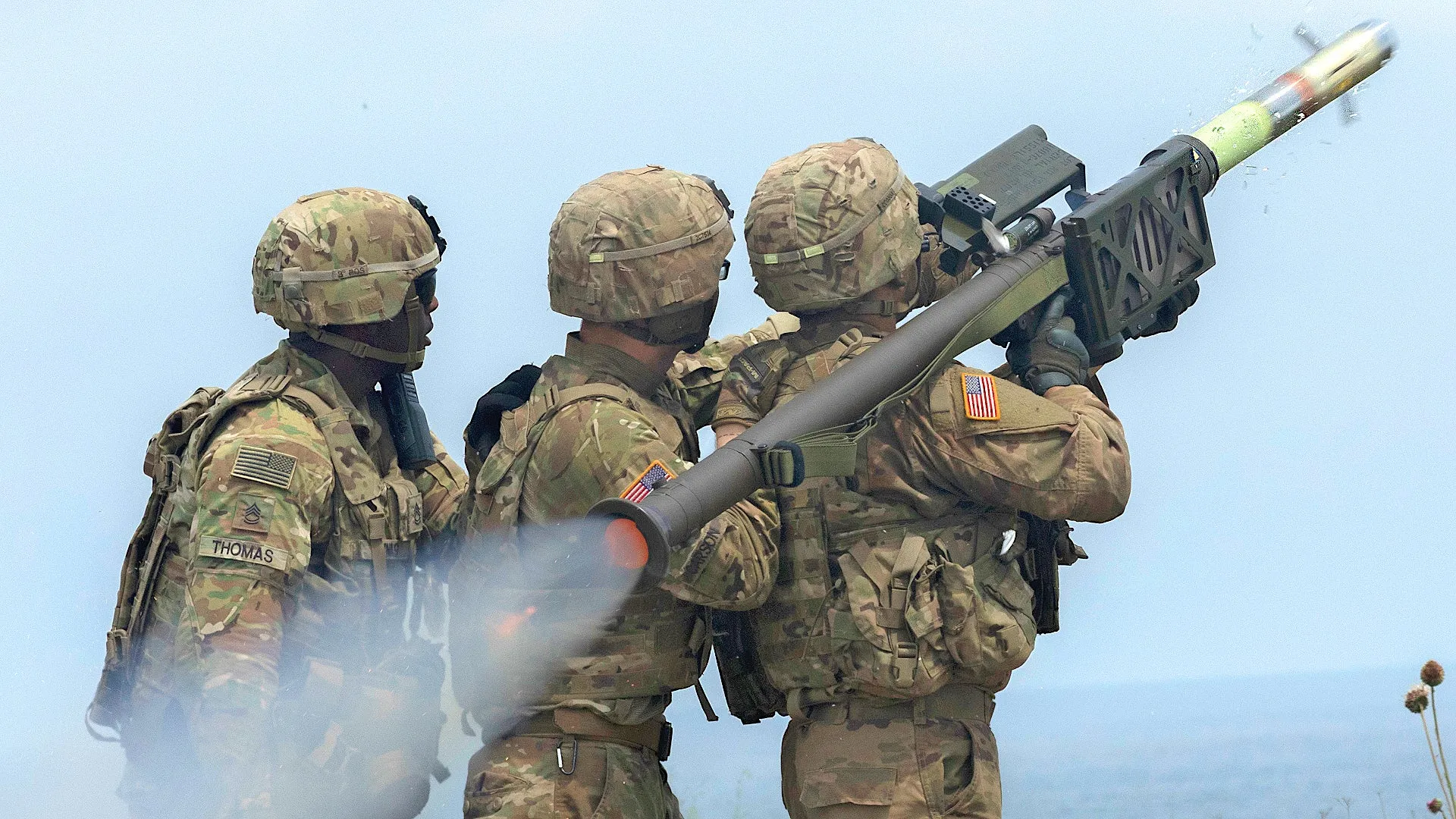
The FIM-92 Stinger stands out as one of the most indispensable short-range air defense systems on the modern battlefield. First introduced into U.S. military service in 1981, this man-portable air-defense system (MANPADS) is now used not only by the United States but also by nearly 30 countries worldwide. It is primarily manufactured by Raytheon Missiles & Defense, with licensed production also carried out by Airbus Defence and Space in Germany and Roketsan in Turkey.
Technical Specifications and Operating Principle
The Stinger is a passive guidance missile that utilizes infrared (IR) tracking technology. It homes in on the heat signature emitted from the engine of its target. Some advanced variants also use ultraviolet (UV) detectors alongside IR to better distinguish targets from countermeasures like flares.
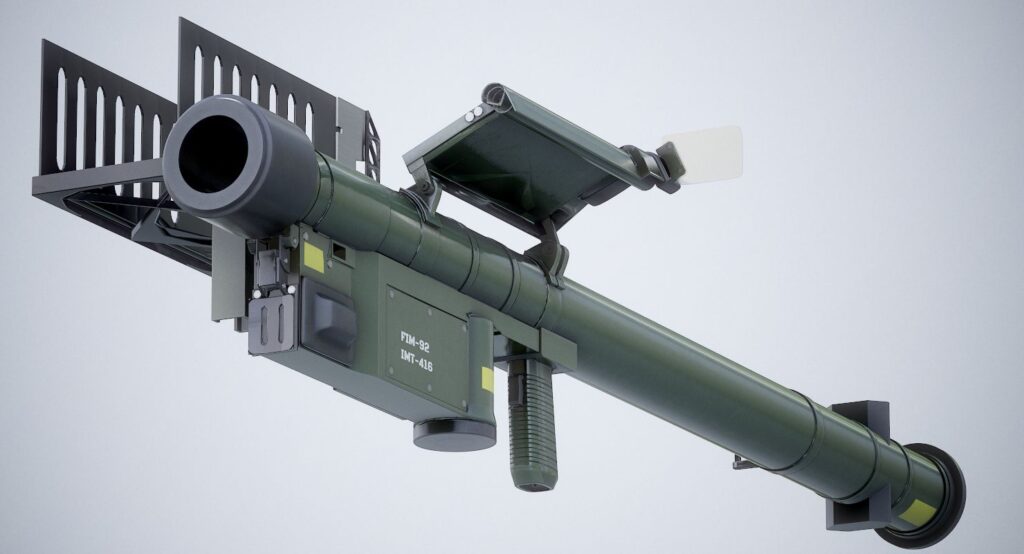
- Missile Length: 1.52 meters
- Diameter: 70 mm
- Total Weight (with launch tube): Approximately 15.2 kg
- Maximum Range: 4,800 m
- Maximum Altitude: 3,800 m
- Top Speed: Mach 2.54 (approx. 1,930 mph / 864 m/s)
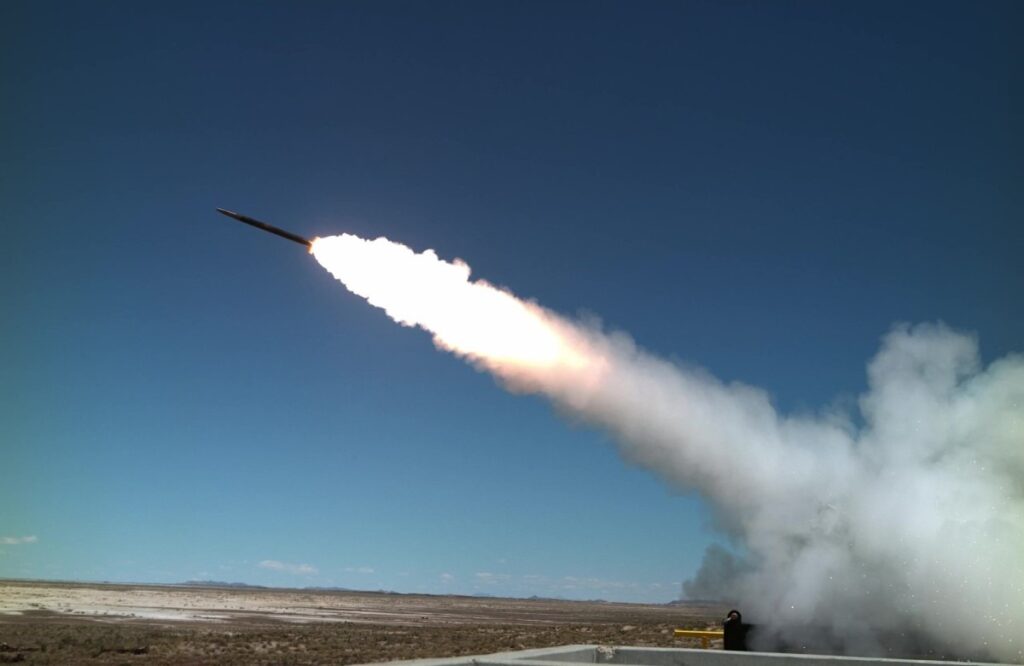
Upon launch, a small ejection motor propels the missile a safe distance from the operator. Then, a two-stage solid-fuel main motor kicks in, accelerating the missile at high speed toward the target.
Usage and Support Equipment
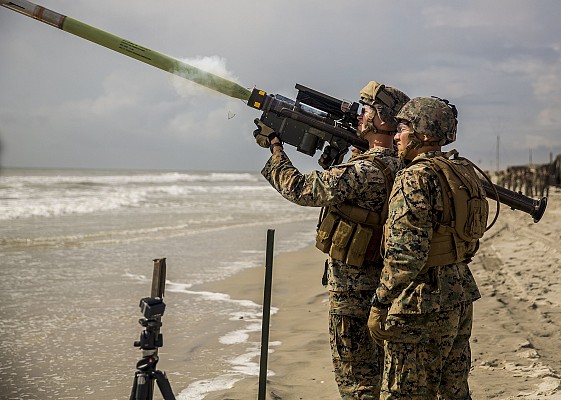
While the Stinger can be fired by a single operator, standard military procedure typically involves a two-person team—one team leader and one gunner. Before launch, a special cartridge known as a Battery Coolant Unit (BCU) is inserted into the launcher grip. This unit cools the seeker head to its operating temperature and provides power for about 45 seconds.
Additionally, the system is equipped with an IFF (Identification Friend or Foe) capability to reduce the risk of accidental friendly fire.
Variants
Over the years, the FIM-92 Stinger series has been continuously upgraded through various technical improvements:
- FIM-92A (Stinger Basic): The initial production model, equipped with IR seeker only.
- FIM-92B (Stinger POST): Features dual detectors (IR + UV) to counter flares and other decoys.
- FIM-92C/D (Stinger RMP): Equipped with a reprogrammable microprocessor for software-based threat updates.
- FIM-92E (RMP Block I): Deployed since 1995, includes improved seeker for low-signature targets.
- FIM-92F: Introduced with a software update in 2001.
- FIM-92G: Enhanced version of the FIM-92D.
Deployment Platforms
The FIM-92 Stinger is not limited to shoulder launches. It can also be integrated into both ground and aerial platforms:
- Ground Vehicles: M1097 Avenger and M6 Linebacker
- Humvee-mounted launcher systems
- Helicopter Variant (ATAS): The Air-to-Air Stinger is capable of engaging targets from rotary-wing aircraft.
- Drone Integration: Experimental versions have been tested on UAVs.
Since the 1980s, the U.S. Navy has also deployed the Stinger on warships for point defense purposes.
Modernization and the Red Wasp Program
In the 2020s, due to the obsolescence of certain electronic components, redesign efforts began to update production capabilities. The U.S. Army aims to keep the Block I variant operational until 2030 and has initiated development of next-generation solutions.
Among these is the Red Wasp Program, which integrates a solid-fuel ramjet into the Stinger’s form factor. This significantly extends its range and allows engagement of high-altitude threats such as modern unmanned aerial systems (UAS) equipped with advanced ISR capabilities.
Production and Procurement Updates
- As of 2022, the U.S. ordered 1,468 Stinger missiles to replenish stockpiles sent to Ukraine.
- In 2023, Raytheon announced plans to increase production to 60 missiles per month.
- Post-2026, newly produced Stingers will feature next-generation Dual Detector Systems for improved target discrimination.
User Countries
The FIM-92 Stinger is currently in service in over 30 countries, including:
- United States
- Germany
- Turkey
- Ukraine
- South Korea
- Finland
- Taiwan
- Japan
- Italy
- Australia
- Greece
- Norway
From its early use by Afghan fighters against Soviet aircraft to its present-day relevance against modern UAV threats, the FIM-92 Stinger continues to prove its effectiveness across diverse combat environments. With its portability, target discrimination capability, modular design, and continuous technological enhancements, the Stinger remains a cornerstone of short-range air defense in the 21st century. Emerging initiatives like the Red Wasp are expected to further enhance this role in the coming years.
Let me know if you’d like this adapted into a press release, infographic, or video script.
