

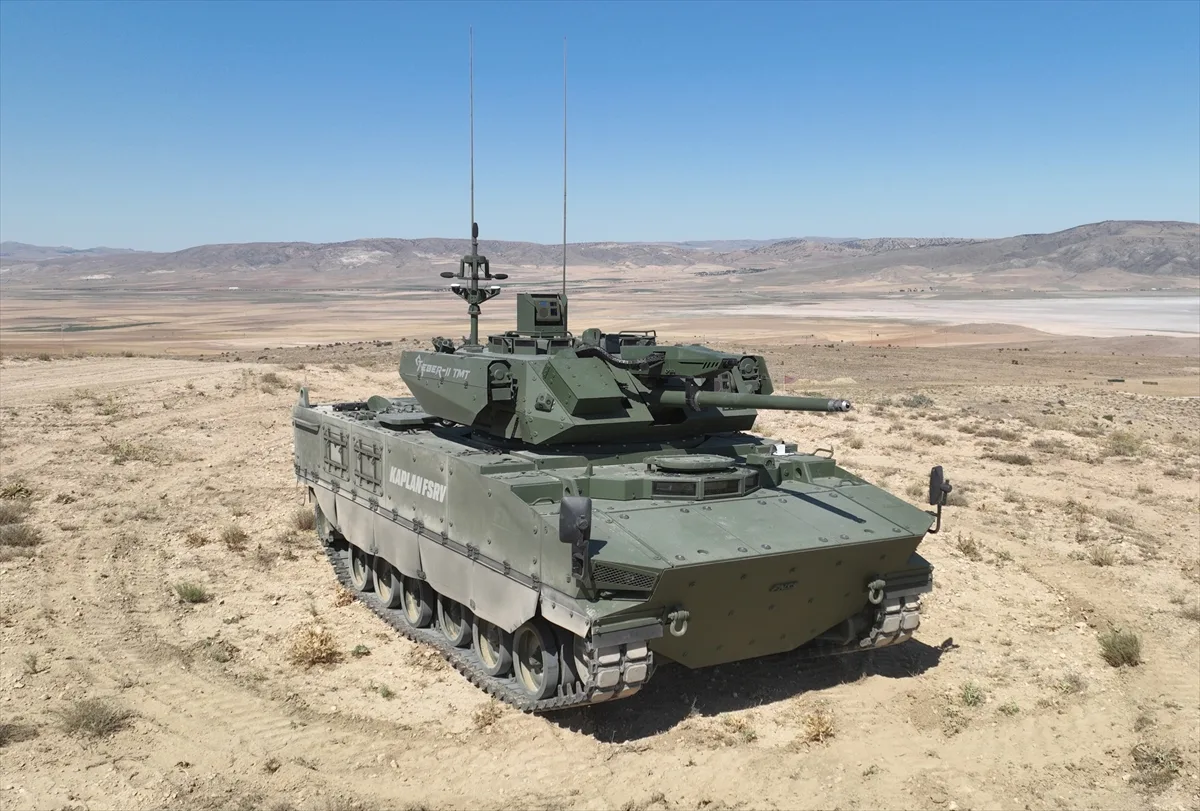
At IDEF 2025, Turkey’s FNSS introduced the Kaplan ADA, a new-generation short-range air defense vehicle equipped with the Teber-2 TMT turret. This unveiling marks a major milestone in Turkey’s domestic defense capabilities, addressing the evolving nature of aerial threats in modern conflict zones.
Built on the agile Kaplan tracked platform, the ADA variant is designed to engage low-altitude targets such as UAVs, attack helicopters, and cruise missiles. The Teber-2 TMT turret integrates dual 30mm cannons, guided missiles, and an advanced electro-optical suite with automatic target tracking and airburst munitions capability.
Combining FNSS’s modular mobility systems with ASELSAN’s sophisticated fire control technology, the Kaplan ADA offers real-time protection to maneuver forces—something traditional towed or static air defense systems cannot achieve. Its network-enabled architecture and rapid response systems give it a critical edge over heavier platforms like Russia’s Pantsir-S1 or analog systems like Germany’s Gepard.
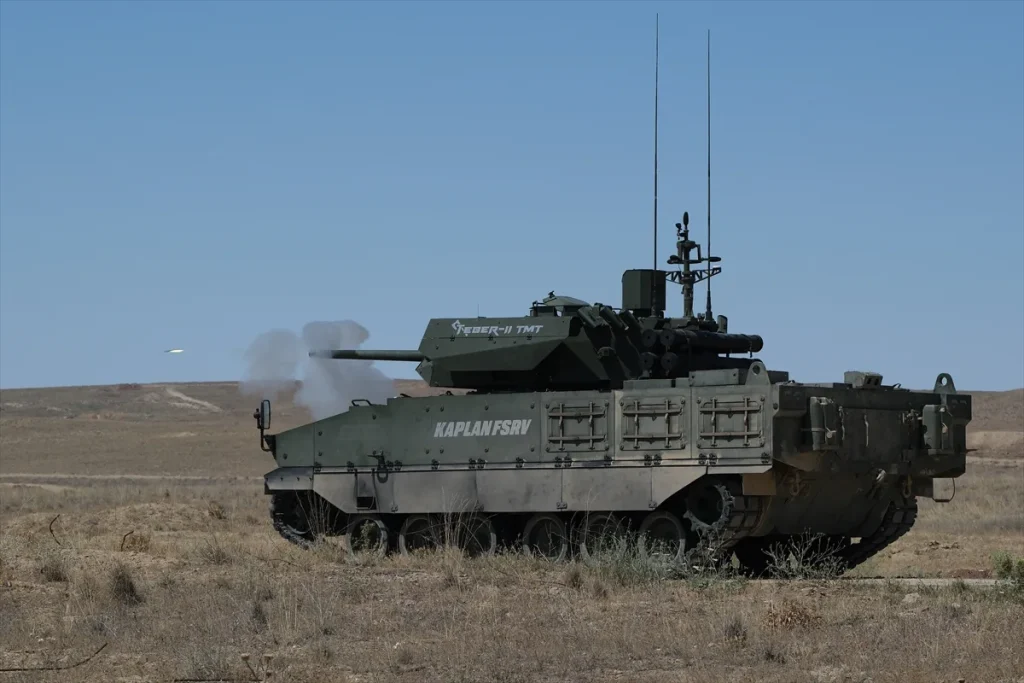
In terms of versatility, Kaplan ADA is suited for urban, mountainous, and amphibious missions, providing tactical flexibility unmatched by heavier systems. The system answers Türkiye’s strategic need to counter drones and loitering munitions, a reality reinforced by recent conflicts in Ukraine, Libya, and the Caucasus.
The Kaplan ADA not only supports Turkey’s goal of defense self-sufficiency but also positions the country as a competitive exporter of integrated SHORAD solutions. As regional tensions rise, the vehicle provides an effective, scalable response for countries seeking reliable and cost-efficient air defense.
With its debut at IDEF 2025, the Kaplan ADA sends a clear signal: Türkiye is ready to meet emerging aerial challenges with indigenous, high-performance defense technology.
