

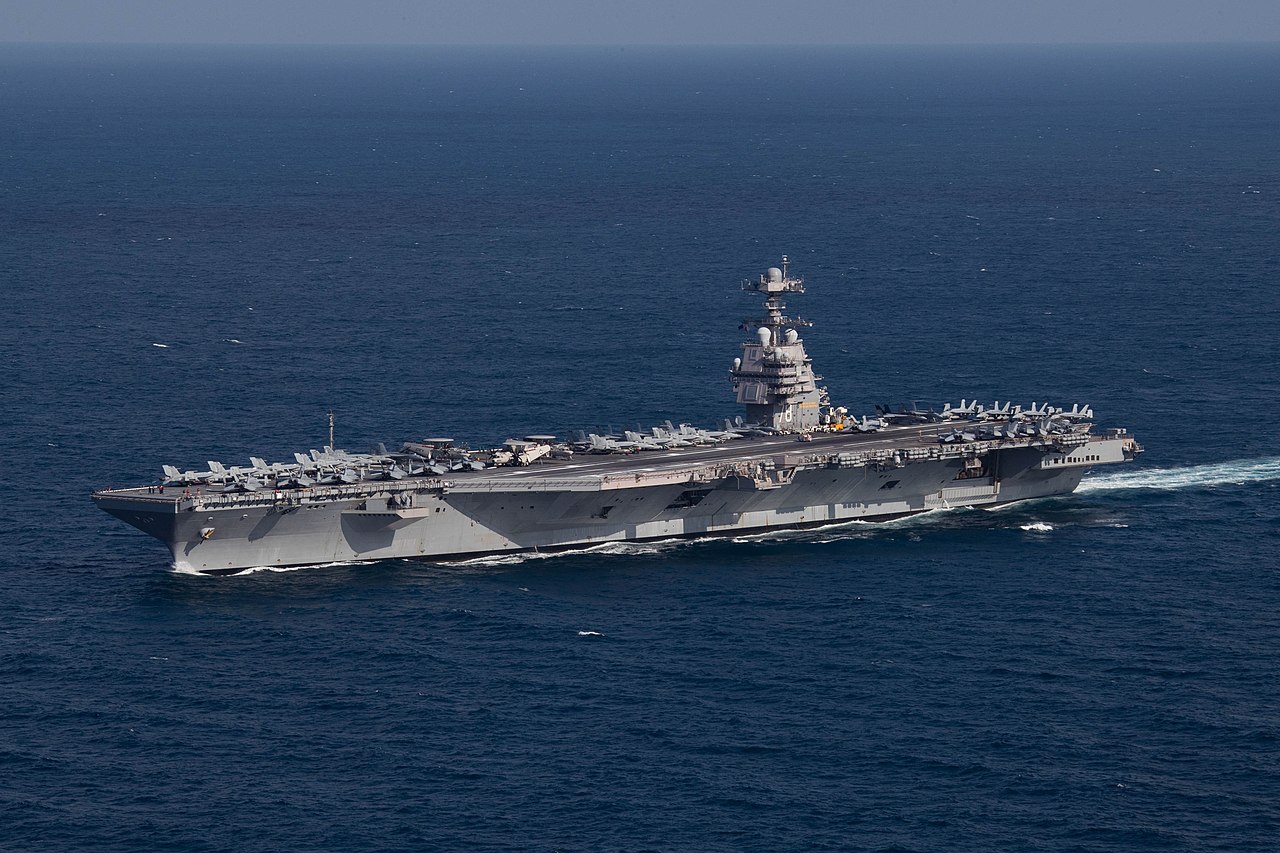
The U.S. Navy launched its next-generation nuclear-powered carrier program with the Gerald R. Ford class (CVN-78) to replace the Nimitz-class aircraft carriers that had been in service for over 40 years. USS Gerald R. Ford (CVN-78), the lead ship of the class, was laid down in 2009 and entered service in 2015. It is followed by USS John F. Kennedy (CVN-79) and USS Enterprise (CVN-80). These vessels are not only symbols of America’s global military power but also advanced engineering achievements adapted to the requirements of modern warfare.
Design and Innovations
The Gerald R. Ford class features a thoroughly renewed design. Compared to its predecessors, these carriers deliver a 25% higher sortie generation rate and 2.5 times greater electrical power capacity than the Nimitz class. This allows for the integration of more advanced radar systems, electronic suites, and energy-intensive weapons. Additionally, crew requirements have been reduced by about 500 billets, improving both operational efficiency and quality of life on board.
One of the most striking innovations is the Electromagnetic Aircraft Launch System (EMALS), which replaces the traditional steam catapults. EMALS ensures safer, faster, and more precise aircraft launches. The Advanced Arresting Gear also enables safer and more cost-effective recoveries of both current and future aircraft types.
Technological Equipment
The Ford class also stands out with its advanced sensors and radar technologies. The Raytheon AN/SPY-3 Dual-Band Radar integrates multifunction and volume search radars, allowing for a smaller island structure. This provides more deck space for aircraft operations, making flight deck management faster and safer. Furthermore, electromagnetic weapons and ammunition elevators reduce maintenance costs while enhancing operational tempo.
Weapon Systems
Although the main strength of an aircraft carrier lies in its embarked air wing, the Gerald R. Ford class is equipped with formidable self-defense systems. The ship carries two RIM-162 ESSM launchers (32 missiles total), two RAM launchers (42 missiles total), two Phalanx CIWS close-in defense systems, and four 12.7 mm machine guns. This layered air defense provides protection against both missile and unmanned aerial threats.
Dimensions and Operational Capacity
Measuring 333 meters in length with a displacement of 101,600 tons, the Ford class can carry over 75 aircraft, ranging from fixed-wing fighters to helicopters and UAVs. The ship operates with a complement of approximately 4,539 personnel including ship crew, air wing, and staff.
Strategic Importance
The Gerald R. Ford class represents not only the pinnacle of U.S. naval power but also one of the most advanced maritime assets worldwide. With its enhanced sortie generation rate, state-of-the-art radar systems, and next-generation launch and recovery technology, these carriers serve as critical assets for rapid crisis response, deterrence, sea control, and humanitarian missions.
In conclusion, the Gerald R. Ford class aircraft carriers reinforce U.S. dominance across the oceans and stand as strategic platforms shaping the future of naval warfare.
