

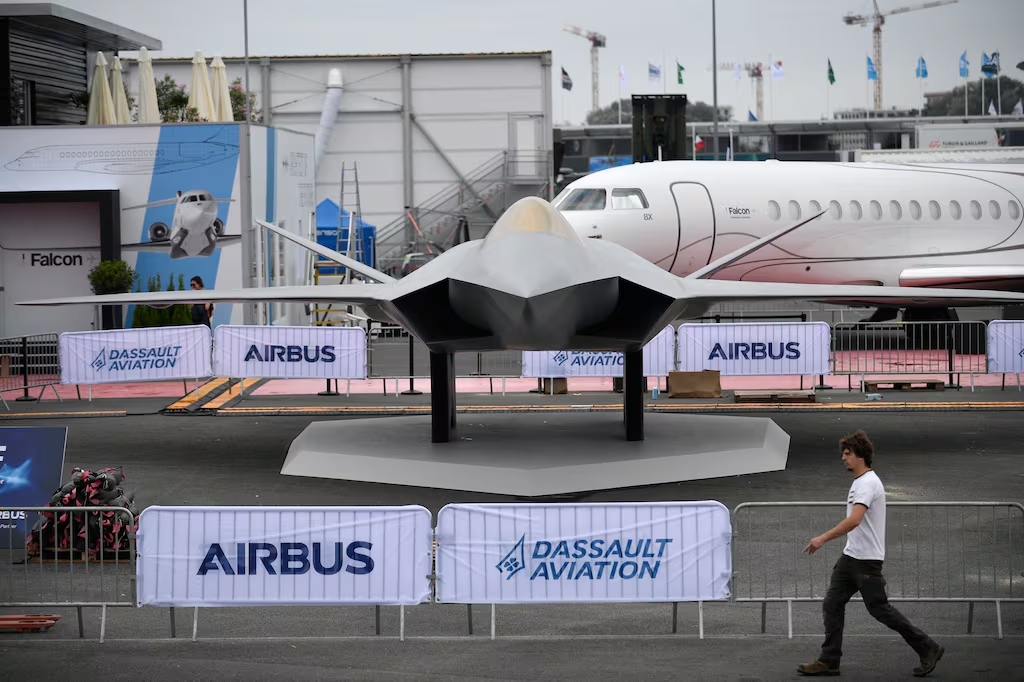
Amid growing disagreements between partner firms, Germany and France are set to reassess the direction of their ambitious Future Combat Air System (FCAS) project by the end of the year, according to German Defence Minister Boris Pistorius. His remarks came after a bilateral meeting with French Armed Forces Minister Sébastien Lecornu on July 24 in Osnabrück.
Pistorius acknowledged the challenges posed by differing interests among the major defense companies involved but emphasized the importance of collaborative spirit. “While the companies bring exceptional expertise to the table, they also bring their own agendas. We’ve been aware of this from the beginning,” he said. “Our priority is ensuring this remains a genuine Franco-German partnership, not a stage for national self-interest.”
Dassault Aviation, which leads the fighter jet development within the FCAS program, has been vocal about wanting a greater stake, with CEO Eric Trappier repeatedly citing delays caused by disagreements over work share with Airbus, Germany and Spain’s industrial lead for the fighter component.
In light of these tensions, France recently proposed revisiting the division of labor to help keep the program on track for its 2040 deadline, according to the country’s arms procurement agency. Lecornu described the current stage of the program as a pivotal one, with Phase 2 — focused on building a demonstrator — demanding deeper operational integration. “We are now entering a phase that binds us definitively to delivering an aircraft,” he said.
Despite the friction, Pistorius maintained that the problems are surmountable. Both ministers indicated they reviewed past phases (1A and 1B) to identify lessons learned. The Osnabrück meeting, they said, will enable them to direct their respective armament agencies and industries toward viable solutions. “Everyone must be part of the fix,” Lecornu insisted.
Both sides reiterated that the FCAS initiative is more than an industrial endeavor — it’s about bolstering Europe’s collective defense. Pistorius highlighted the importance of the Franco-German alliance, not only for FCAS but also for the Main Ground Combat System, another joint defense venture expected to materialize by 2040.
According to Lecornu, the project must first and foremost serve the operational needs of both nations’ militaries. For France, this includes nuclear capability and carrier-based deployment — requirements that override purely industrial considerations. “We’re not here to create projects just for industry’s sake. Our mission is to equip our armed forces and place meaningful orders,” he noted.
He also stressed the urgency of keeping FCAS on schedule, warning that significant delays could leave both countries trailing behind in future combat readiness. While the official timeline targets 2040 for full deployment, Dassault’s Trappier has warned that continued delays could push that to 2045.
A third priority for France is maintaining its defense sovereignty throughout the project’s execution, Lecornu said. Meanwhile, Pistorius reassured that Germany would not hinder potential future exports tied to FCAS, asserting that arms export decisions remain a matter of national jurisdiction and are not governed by the European Commission.
