

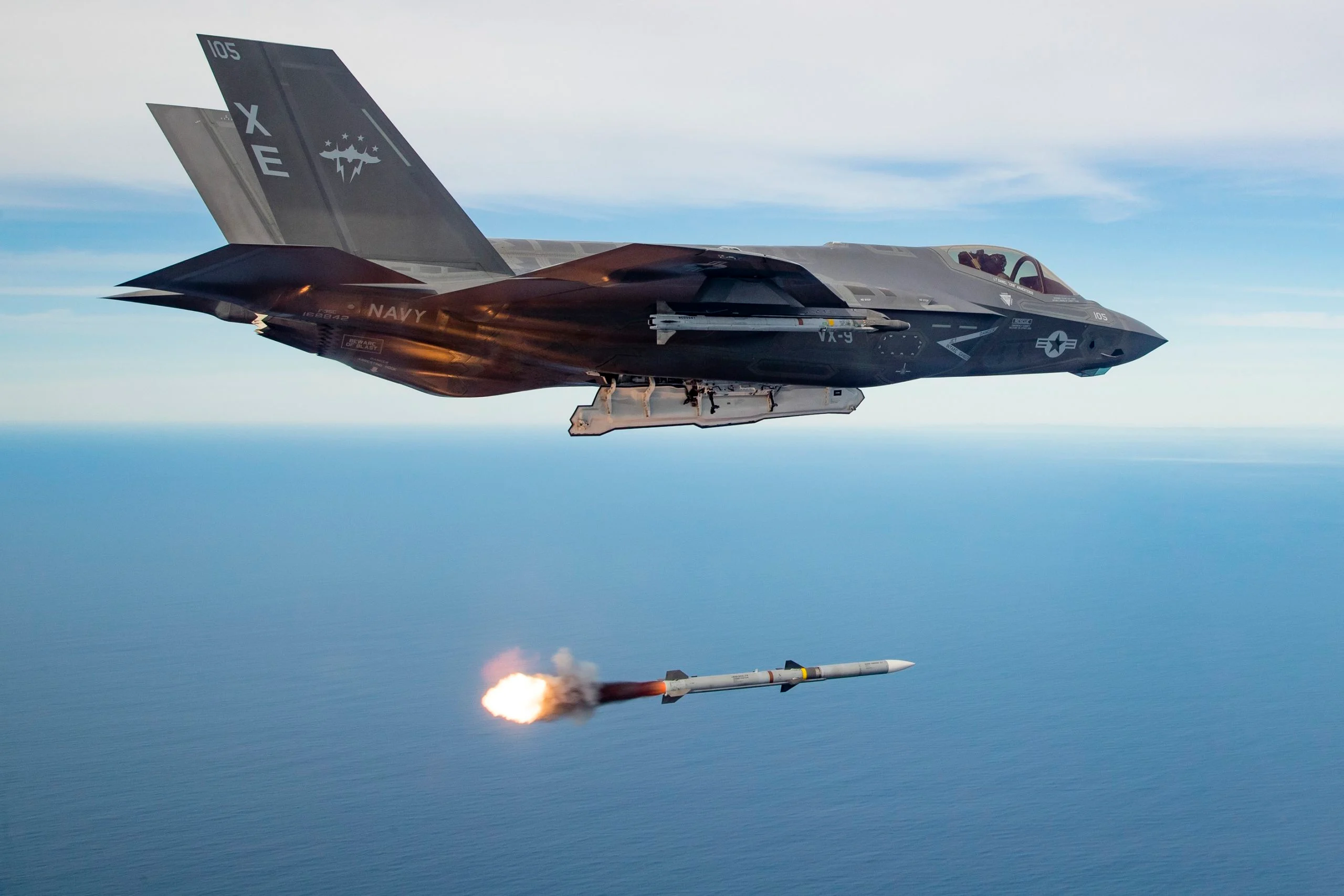
In a landmark defense move, Germany has sealed an agreement with Norway to acquire cutting-edge Joint Strike Missiles (JSM) from Kongsberg Defence & Aerospace, aiming to significantly upgrade the long-range strike capabilities of its incoming F-35A stealth fighters.
Announced by the Norwegian government on June 25, 2025, and finalized during the NATO summit in The Hague, the €565 million deal marks a new chapter in German-Norwegian defense collaboration. The agreement was signed by Norwegian Defence Minister Tore O. Sandvik and his German counterpart Boris Pistorius, underscoring a growing strategic alignment between the two nations.
This acquisition comes as part of Germany’s broader effort to modernize its air force and deepen integration within NATO’s defense posture. Following an earlier declaration on June 5 confirming Berlin’s intent to purchase the missiles, the contract progressed through parliamentary approval in the Bundestag before being formalized. The procurement is structured as a government-to-government deal, with Norway’s Defence Materiel Agency handling the acquisition on Germany’s behalf, mirroring past cooperative frameworks like those used for the Naval Strike Missile.
The JSM is a fifth-generation, stealth-optimized cruise missile engineered for compatibility with the F-35’s internal weapons bay—maintaining the aircraft’s low observability while delivering exceptional stand-off precision. With a combat range exceeding 500 km, a 400-kg warhead, and sophisticated guidance systems that include GPS, INS, infrared imaging, and autonomous targeting, the missile enables the Luftwaffe’s F-35s to neutralize high-value targets on land and sea while avoiding hostile air defenses.
Strategically, this move gives Germany the capability to conduct deep-strike operations in contested environments, enhancing deterrence and operational flexibility across the NATO theater. It also aligns with Berlin’s 2022 decision to purchase 35 F-35A aircraft to replace its aging Tornado fleet—an essential step to maintain participation in NATO’s nuclear sharing arrangement due to the F-35’s compatibility with U.S. B61 nuclear weapons.
Defence Minister Pistorius described the missile agreement as a “mutual commitment to future security,” emphasizing its value not just as a procurement but as a symbol of strategic trust and industrial synergy between Germany and Norway. His Norwegian counterpart, Sandvik, echoed the sentiment, framing the JSM acquisition as a key piece in strengthening NATO’s deterrence and rapid response capabilities.
Beyond military hardware, this deal also reinforces Europe’s defense industrial base through joint innovation and technology transfer. Germany’s integration of the JSM strengthens not just national capabilities, but also the alliance’s collective posture—positioning the Luftwaffe to respond more effectively to evolving threats in an increasingly volatile security landscape.
