

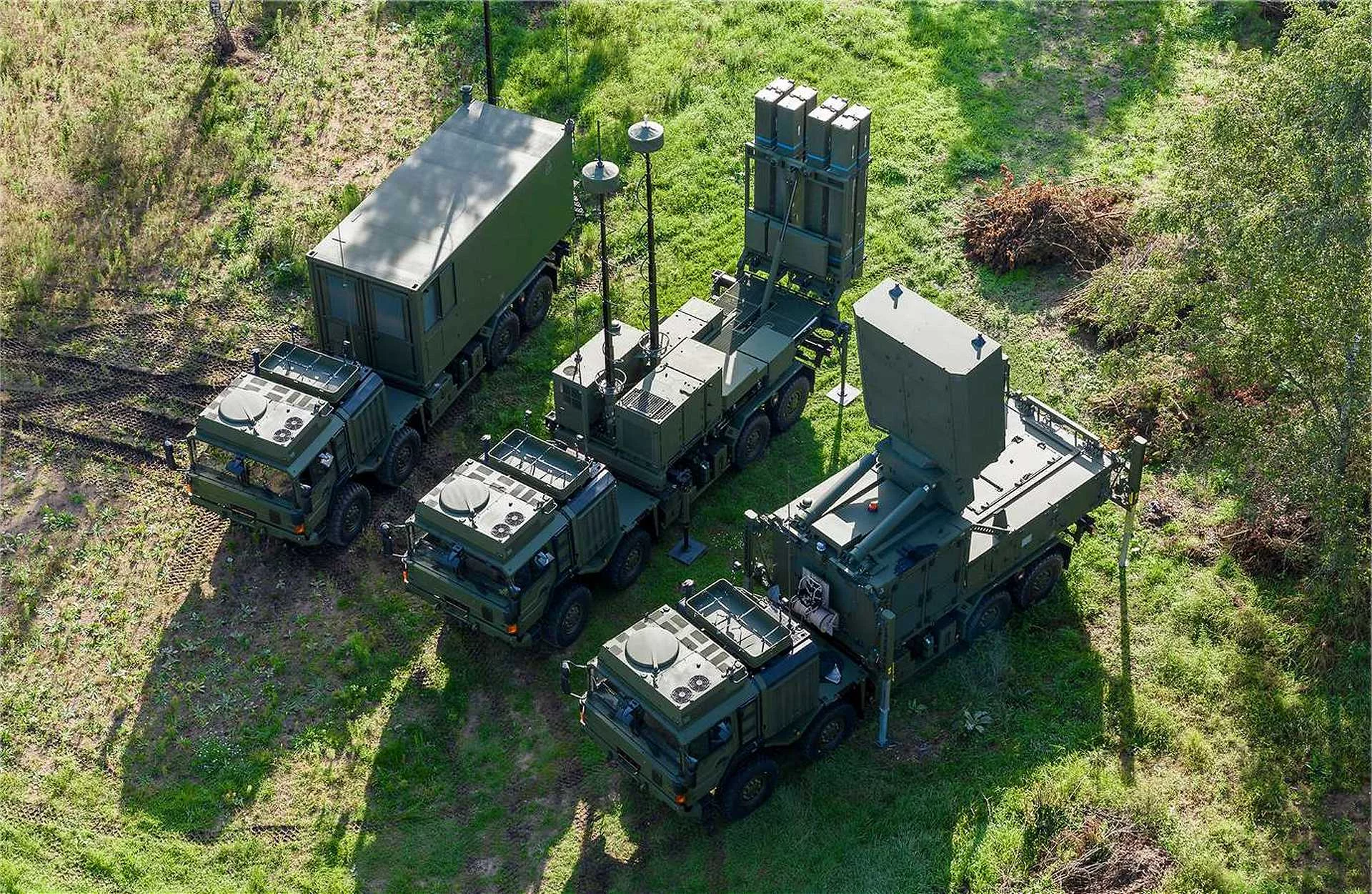
Germany has approved a major new investment aimed at accelerating the modernization of its ground-based air defense forces. The Bundestag’s Budget Committee signed off on a €3.85 billion defense package that includes roughly €1 billion dedicated to acquiring additional IRIS-T SLM air defense missile systems. The decision marks another step in Berlin’s effort to enhance national and NATO-aligned air protection as Europe faces increasingly complex aerial threats.
Although the Ministry of Defence has yet to issue an official announcement, defense analysts highlighted the approval after it appeared in parliamentary records. Lawmakers emphasized that Russia’s expanding missile and drone capabilities—along with operational insights gained from the war in Ukraine—were key factors behind the fast-tracked funding.
The IRIS-T SLM, developed by Diehl Defence together with Hensoldt and Airbus, is designed to intercept aircraft, drones, and cruise missiles at ranges up to 40 kilometers and altitudes exceeding 20 kilometers. The system has proven its effectiveness in Ukraine, where it has successfully neutralized multiple Russian cruise missiles and unmanned systems, shaping German procurement priorities.
The newly approved funding will allow the Bundeswehr to procure more interceptors, additional launcher components, and upgraded radar and command systems. It also strengthens production capacity at a time when demand for European air defense systems is rising worldwide. Germany plans to deploy more IRIS-T SLM units both domestically and within NATO rapid reaction forces.
Berlin views IRIS-T SLM as the backbone of its medium-range air defense layer within a wider, multi-tiered missile shield that includes short-range mobile assets and long-range systems like Patriot. The renewed focus on air defense stems from lessons learned in Ukraine, where dense layers of drones, cruise missiles, and loitering munitions have become defining features of modern conflict.
Classified assessments shared with senior Bundestag committees reportedly warn of an increased likelihood of a NATO–Russia confrontation within the next decade. These warnings have accelerated Germany’s timeline for closing capability gaps, particularly in air defense.
Alongside missile purchases, the package budgets for software upgrades, improved sensor integration, and compatibility with the European Sky Shield Initiative—an air defense cooperation project led by Germany. Delivery of the new systems is scheduled for 2026–2028, potentially doubling or tripling Germany’s operational IRIS-T SLM capacity.
By committing an additional €1 billion to the program, Berlin signals that strengthening air defense is a central pillar of the Bundeswehr’s modernization strategy and a critical component of Europe’s collective security architecture.
