

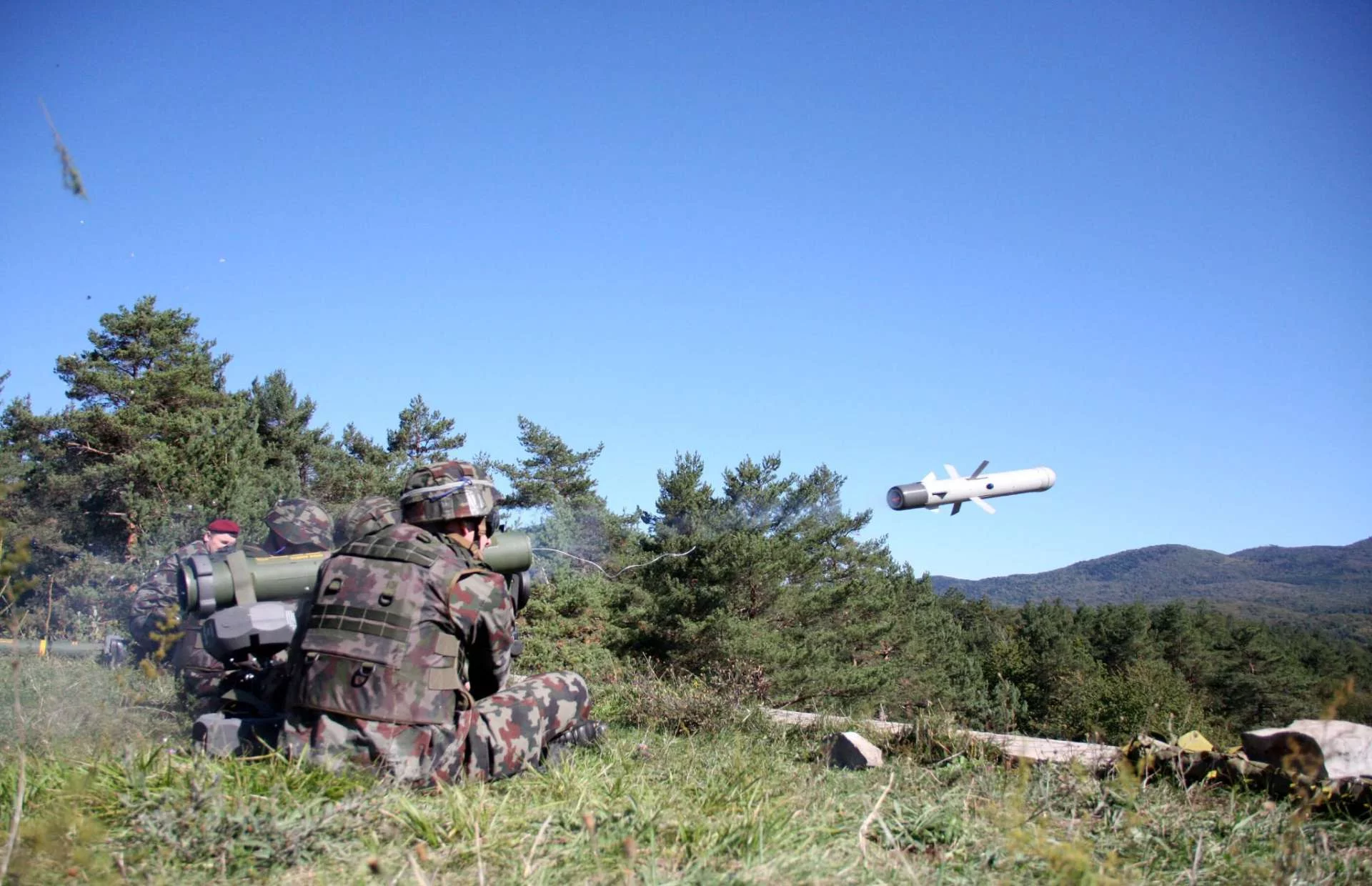
Germany has signed an approximately €2 billion procurement framework with EuroSpike through NATO’s Support and Procurement Agency (NSPA), a move aimed at replenishing anti-armor stocks and stabilizing long-term defense production. The package pairs missile deliveries with through-life support, training and documentation, and ranks among NSPA’s larger recent awards.
Central to the purchase is the MELLS-configured Spike LR2 — a fifth-generation, fiber-optic guided missile with an electro-optical seeker enabling in-flight retargeting, fire-observe-update modes, and a mix of top-attack and direct-attack profiles. Ground-launched range is around 5.5 km, while helicopter-launched employments extend to roughly 10 km. Warhead options include tandem-HEAT for defeating ERA and multipurpose blast-fragmentation rounds for urban targets; round weight is near 13 kg, easing dismounted handling.
Germany has already fielded MELLS with infantry formations and integrated the launcher on the Puma IFV as part of upgrades to restore credible anti-tank capability at small-unit level. The new EuroSpike framework scales that effort, combining tripod, vehicle-mounted and rotary-wing employment to build layered engagement options and higher launcher-to-missile ratios needed for sustained operations.
The fiber-optic data link preserves man-in-the-loop control during flight, allowing aimpoint refinement, collateral-damage checks and aborts — features that are especially valuable in a battlespace characterized by electronic warfare and obscurants. Commonality across the Spike family simplifies sustainment and lets Germany leverage a broad user base for training and urgent upgrades.
Parliamentary watchdogs have repeatedly highlighted ammunition shortfalls even after Germany’s post-2022 rearmament funding surge; stockpiles depleted by training and transfers require replenishment to meet NATO posture demands. Procuring through NSPA and using EuroSpike — a vehicle whose ownership blends Rheinmetall and Diehl majority stakes with a Rafael share — enables European production while limiting political friction over direct Israeli-supplier procurement.
Viewed in context, the order is part of Germany’s broader post-2022 defense build-up and NATO’s push to reinforce the alliance’s northeastern flank: it aims to restore a reloadable, resilient anti-armor backbone for combined arms formations while stabilizing the defense industrial base.
