

Berlin has unveiled an ambitious €80 billion (≈$85B) defense procurement package designed to transition the Bundeswehr from emergency buys to a long-term rearmament path. According to Politico, the plan—prepared for the Bundestag budget committee—channels most near-term funding to European industry and sets the tone for a sustained force buildup.
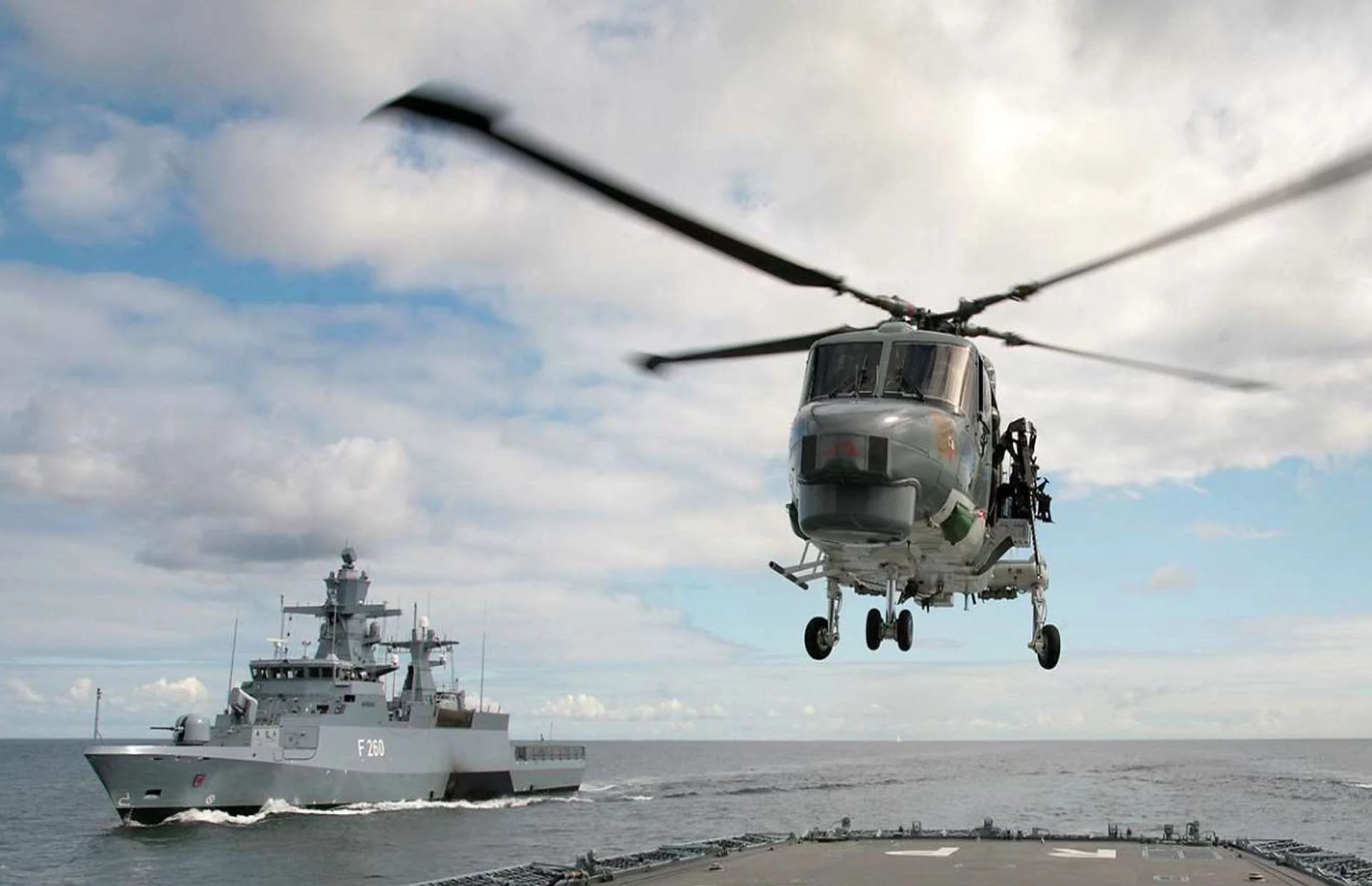
At the top of the list sits the F127 next-generation air and missile defense frigate program, now expected to grow to as many as eight ships. The class is intended to shield sea lanes, amphibious groups, and reinforcement convoys with high-end sensors and long-range missile interceptors—key to NATO operations in the North and Baltic Seas.
In the air domain, the centerpiece is Eurofighter Tranche 5, paired with radar and electronic warfare upgrades for the existing fleet. Roughly 20 new aircraft will be acquired, integrating E-Scan AESA radar and advanced avionics to enhance detection range, tracking accuracy, and survivability. Germany is also advancing a €1.2B package with Saab and Northrop Grumman to add next-generation SEAD (Suppression of Enemy Air Defense) capabilities—highlighted as a critical gap by recent conflicts.
The package funds a major refresh of the TAURUS KEPD 350 long-range cruise missile stockpile and early work on a next-gen TAURUS NEO variant. Updates will cover guidance, propulsion, and seeker systems while restarting production capacity, giving the Luftwaffe a credible standoff strike option against hardened targets.
For ground forces, the plan includes thousands of Boxer 8×8 vehicles, engineering assets, and recovery platforms to sustain heavy brigade mobility. These investments complement earlier Puma IFV and Patria 6×6 purchases and aim to generate well-equipped, high-readiness brigades for NATO’s regional defense plans.
Air and missile defense will be expanded through additional Patriot PAC-3 MSE interceptors and IRIS-T SLM batteries, creating a multi-layered shield over critical sites and maneuver units. On the maritime side, Berlin is maturing its uMAWS distributed sensor-and-shooter architecture, increasing the number of launchers and magazines available to sustain defense under prolonged salvos.
Strategically, the package emphasizes European-built solutions, reinforcing continental industry and reducing dependence on U.S. systems. For NATO, a better-equipped Germany is a net benefit, but the procurement tilt toward European primes could spark debates in Washington over burden-sharing, tech cooperation, and export rules.
If the Bundestag approves the plan and schedules hold, Germany will gain a more robust naval shield, upgraded airpower, and a modernized missile arsenal by 2026—significantly improving NATO’s northern deterrent. Delays, however, risk widening the gap between Berlin’s stated ambition and its available combat power at a time when Europe needs credible hard power most.
