

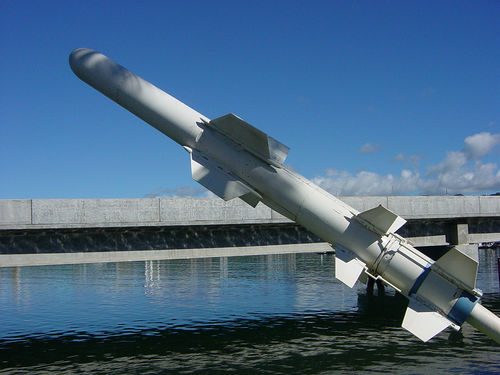
The Harpoon is a versatile, all-weather, subsonic anti-ship missile developed by the United States. Designed to launch from fixed-wing aircraft, surface ships, submarines, and coastal batteries, the Harpoon has remained one of the most widely deployed and combat-proven anti-ship missiles since its introduction in 1977. Developed initially by McDonnell Douglas and now produced by Boeing Defense, over 7,500 Harpoon missiles have been manufactured to date.
Multi-Platform Launch Capability
The Harpoon missile is fielded in several variants based on the launch platform:
- AGM-84: Air-launched variant, without solid-fuel booster.
- RGM-84: Surface ship-launched, with a solid-fuel booster for initial thrust.
- UGM-84: Submarine-launched, housed in a protective capsule for underwater launch and equipped with a solid-fuel booster.
- Coastal Defense Variant: Can also be launched from land-based batteries using solid-fuel boosters.
This adaptability across multiple domains makes the Harpoon a central component of naval deterrence for many countries.
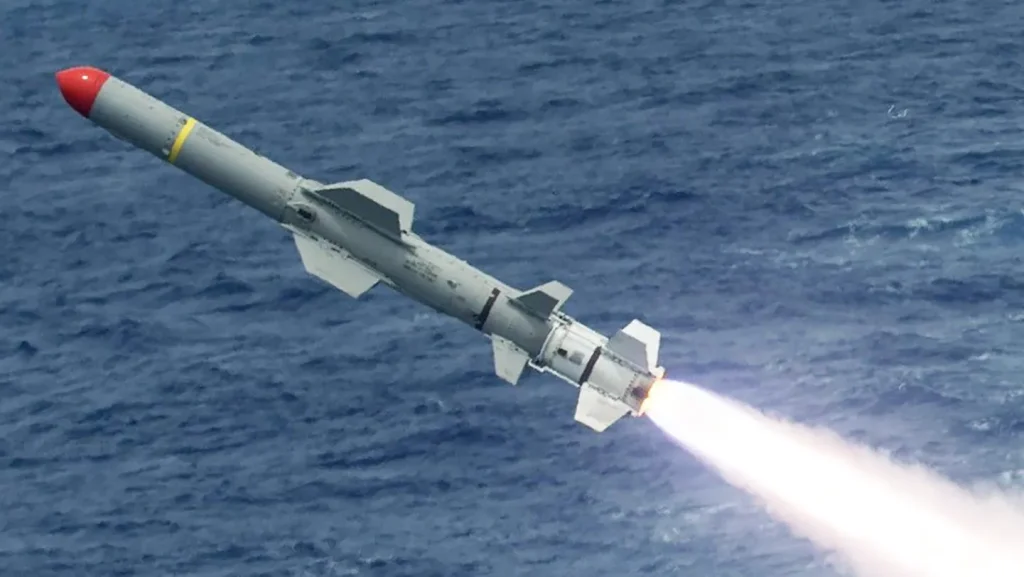
Key Specifications
- Origin: United States
- Type: Anti-ship missile
- Weight: 690 kg
- Length:
- 3.84 m (air-launched variant)
- 4.57 m (surface/submarine-launched variant)
- Warhead: 221 kg high-explosive
- Propulsion: Teledyne CAE J402 turbojet
- Speed: Mach 0.71 (approx. 864 km/h)
- Range:
- 124–139 km (Block I & II, sea-launched)
- Up to 220 km (air-launched Block IC)
- Guidance: Inertial navigation with active radar homing
- Flight Profile: Sea-skimming to reduce detection and interception
Combat and Strategic Relevance
The Harpoon uses active radar guidance and flies just above the sea surface to avoid radar detection and interception, making it ideal for engaging frigates, corvettes, and other surface warships. It can also follow programmable waypoint paths, allowing the missile to approach its target from unpredictable angles.
Over its decades of service, the Harpoon has been exported to numerous allied nations and integrated into joint military exercises and real-world operations. With the introduction of updated blocks like the Harpoon Block II, featuring improved GPS guidance and targeting systems, the missile continues to remain relevant against both traditional naval threats and emerging littoral combat scenarios.
A symbol of enduring firepower and strategic flexibility, the Harpoon remains one of the most trusted sea-skimming weapons in modern maritime warfare.
