

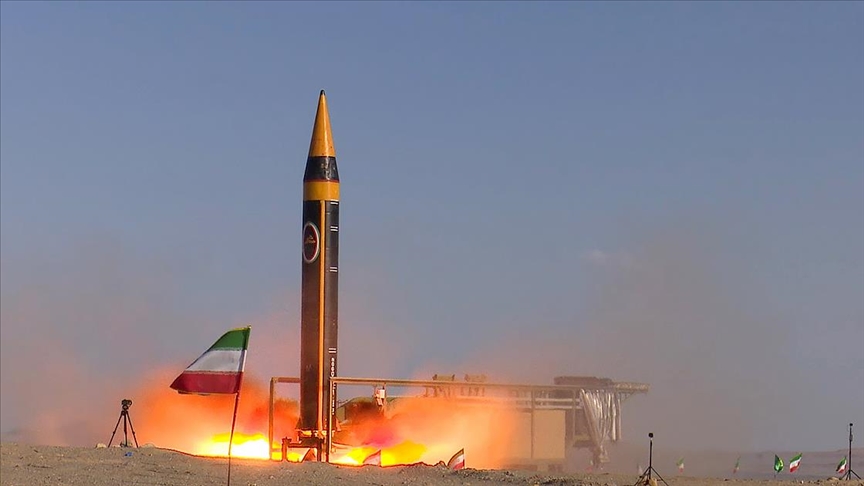
According to a report by Mehr News on July 27, 2025, Iran may have developed or be preparing to test its first intercontinental ballistic missile (ICBM), designated Khorramshahr-5. Claimed to have a range of up to 12,000 kilometers, a top speed of Mach 16 (approximately 20,000 km/h), and the ability to carry a two-ton warhead, the missile—if confirmed—would place Iran among the small group of nations with transcontinental strike capability. However, no official test confirmation has been issued by Iran’s Ministry of Defense or the Islamic Revolutionary Guard Corps (IRGC).
The alleged range would allow the Khorramshahr-5 to strike targets anywhere in the continental United States, marking a dramatic leap from the 2,000–3,000 km range of earlier Khorramshahr models. Reports describe the missile as liquid-fueled, around 12 meters long, and weighing 14–15 tons at launch. Building on the Khorramshahr-4 unveiled in 2023—which featured hypergolic fuel, a sub-15-minute launch readiness, and improved mid-course guidance—the new model is said to incorporate multi-stage propulsion technology, a key requirement for ICBM-class systems.
Iranian officials have previously claimed successful tests of a two-ton hypersonic warhead, but no direct link to an ICBM has been established. The Khorramshahr series traces its origins to North Korea’s BM-25 Musudan, itself derived from the Soviet R-27 submarine-launched missile, with Iran’s first test occurring in 2017.
For years, Tehran maintained a self-imposed range cap of 2,000 km to avoid escalating tensions with Europe, while keeping regional targets within reach. However, following Israeli strikes and U.S. operations against Iranian nuclear facilities, IRGC commanders have hinted at a potential policy shift.
Internationally, the United States, Israel, and NATO members are closely monitoring the situation. During a recent visit to Washington, Israeli Prime Minister Netanyahu reportedly urged Washington to impose stricter missile limits on Iran. Iranian sources, however, frame the missile’s extended range as a deterrent measure against what they describe as “unprovoked aggression” by foreign powers. The missile’s operational status remains unverified, and some analysts believe the ambiguity may be intentional—preserving strategic uncertainty and complicating adversaries’ defense planning.
