

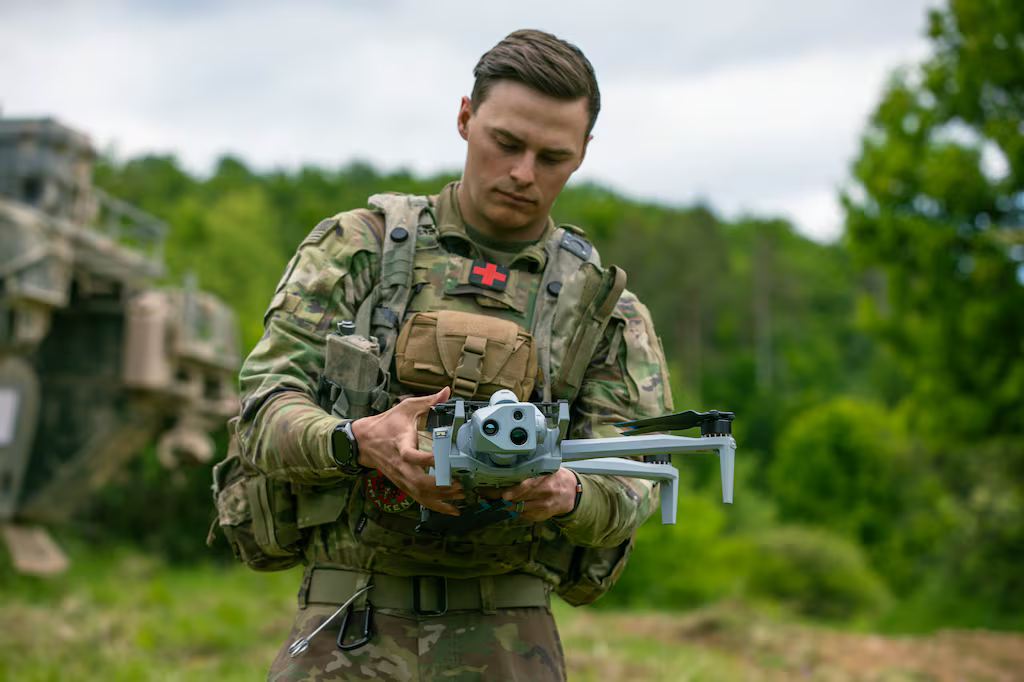
In a dramatic and unconventional rollout, Defense Secretary Pete Hegseth has unveiled a transformative shift in the Pentagon’s approach to acquiring and deploying uncrewed aerial systems (UAS), aiming to secure American dominance in drone warfare by 2027.
Against a soundtrack of Metallica’s “Enter Sandman”, a drone delivered a signed policy memo on the Pentagon lawn—symbolizing the urgency and innovation behind the new directive. “Our rivals have flooded the skies with swarms of cheap drones while we’ve been tangled in layers of bureaucracy,” Hegseth declared via a video on his official X account. “That ends now.”
The newly issued memo sets forth three cornerstone objectives: revitalizing the domestic drone production base, supplying military units with thousands of cost-effective drones in the near term, and embedding drone operations into core military training—including simulated drone-versus-drone combat by next year.
This sweeping reform builds upon a recent executive order from the White House issued in June, which emphasized the normalization of drone use across civilian, commercial, and national defense sectors.
Crucially, the memo nullifies restrictive drone procurement policies from 2021 and 2022 that had hampered acquisitions due to concerns about Chinese-made components. It empowers frontline units with the autonomy to purchase, test, and train with compliant UAS and encourages grassroots innovation, such as 3D printing drone parts in the field.
Also central to the reform is the expansion of the Blue UAS initiative, run by the Defense Innovation Unit (DIU). In coordination with the Defense Contract Management Agency, DIU will now be responsible for maintaining and updating the “Blue List” — a living inventory of drones that meet military standards in terms of components, performance, and supply chain integrity.
The memo is sharply critical of the Pentagon’s slow pace in fielding UAS and calls for a department-wide restructuring of procurement and training pipelines. It instructs each military branch to establish dedicated drone units by September, with the first wave of systems to be deployed to the Indo-Pacific Command by 2026.
Additionally, it mandates the formation of independent program offices focused solely on rapid drone acquisition, and requires an audit of existing programs to determine if UAS alternatives would better fulfill operational needs. These evaluations will feed into the fiscal 2027 budget planning process.
To ensure sustainable funding, Hegseth has directed the Office of Strategic Capital and the Department of Government Efficiency to explore innovative financing mechanisms—such as direct loans or advance purchases—to energize the U.S. drone manufacturing sector.
“We may be behind now, but by combining our innovative spirit with bold action, we’ll leapfrog ahead and claim dominance in the small UAS arena,” Hegseth emphasized. “This mission demands risk-takers and warriors—not bureaucrats. We need a true Department of War mindset to win the drone battles of tomorrow.”
