

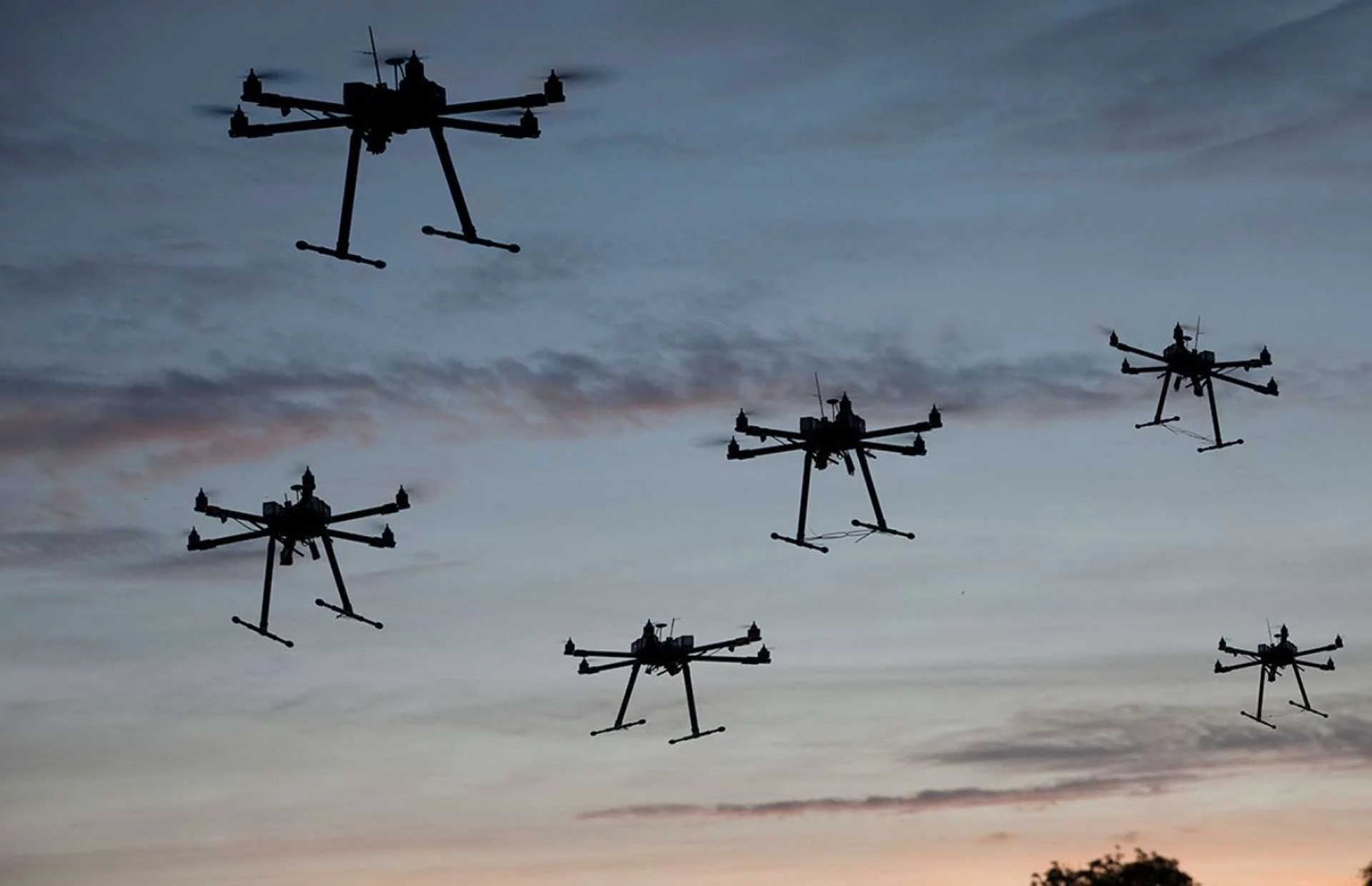
On 9 October 2025, the Indian Army began fielding SAKSHAM, an AI-enabled counter-UAS command and control grid developed with Bharat Electronics Limited. The system is designed to detect, track, classify, and neutralize hostile drones above frontline formations, marking a significant step in India’s effort to control the “air littoral” and shield troops and assets from cross-border drone threats.
SAKSHAM (Situational Awareness for Kinetic Soft and Hard Kill Assets Management) integrates radar and electro-optical sensors with AI-driven command software to detect and defeat drones in real time. The networked system coordinates both soft-kill (jamming) and hard-kill (interceptor) responses across units, providing a unified operational picture and reducing the risk of isolated engagements.
Sensor- and effector-agnostic by design, SAKSHAM can cue existing and future jammers, spoofers, directed-energy systems, and kinetic interceptors through a single command layer. Operating on the Army Data Network, it scales across formations while maintaining secure data paths and standardized target identification rules. Its open architecture allows rapid integration of new sensors, RF libraries, or effectors as drone threats evolve from hobbyist quadcopters to low-signature loitering UAVs.
SAKSHAM is being fast-tracked, with deployment measured in months rather than years. Early operationalization will extend from sector headquarters to forward brigades, using standardized playbooks to streamline detection-to-defeat processes and leverage local emitters and cameras in the battlespace.
Tactically, the system compresses the kill chain against low-RCS, numerous, and often autonomous drones. By fusing multi-sensor tracks into a single truth source and automating parts of the decision loop, SAKSHAM shortens the time from detection to engagement, allowing commanders to apply the most efficient response and conserve interceptors for swarm attacks. The “air littoral” concept treats 0–3,000 meters above ground as maneuver space, protecting logistics, artillery, armored units, and air defense radar sites while deconflicting friendly UAS operations.
SAKSHAM will integrate into India’s broader Sudarshan Chakra national air and missile defense architecture, creating a continuous shield from multiple sensors and layered effectors. This enhances forward-edge counter-UAS resilience and enables seamless integration with strategic-level air defense.
Amid ongoing drone-counter-drone competition with Pakistan, SAKSHAM demonstrates India’s intent to dominate the near-earth battlespace, deny adversaries cheap aerial advantages, safeguard operational tempo, preserve artillery mass, and ensure that border crises do not favor low-cost unmanned threats.
