

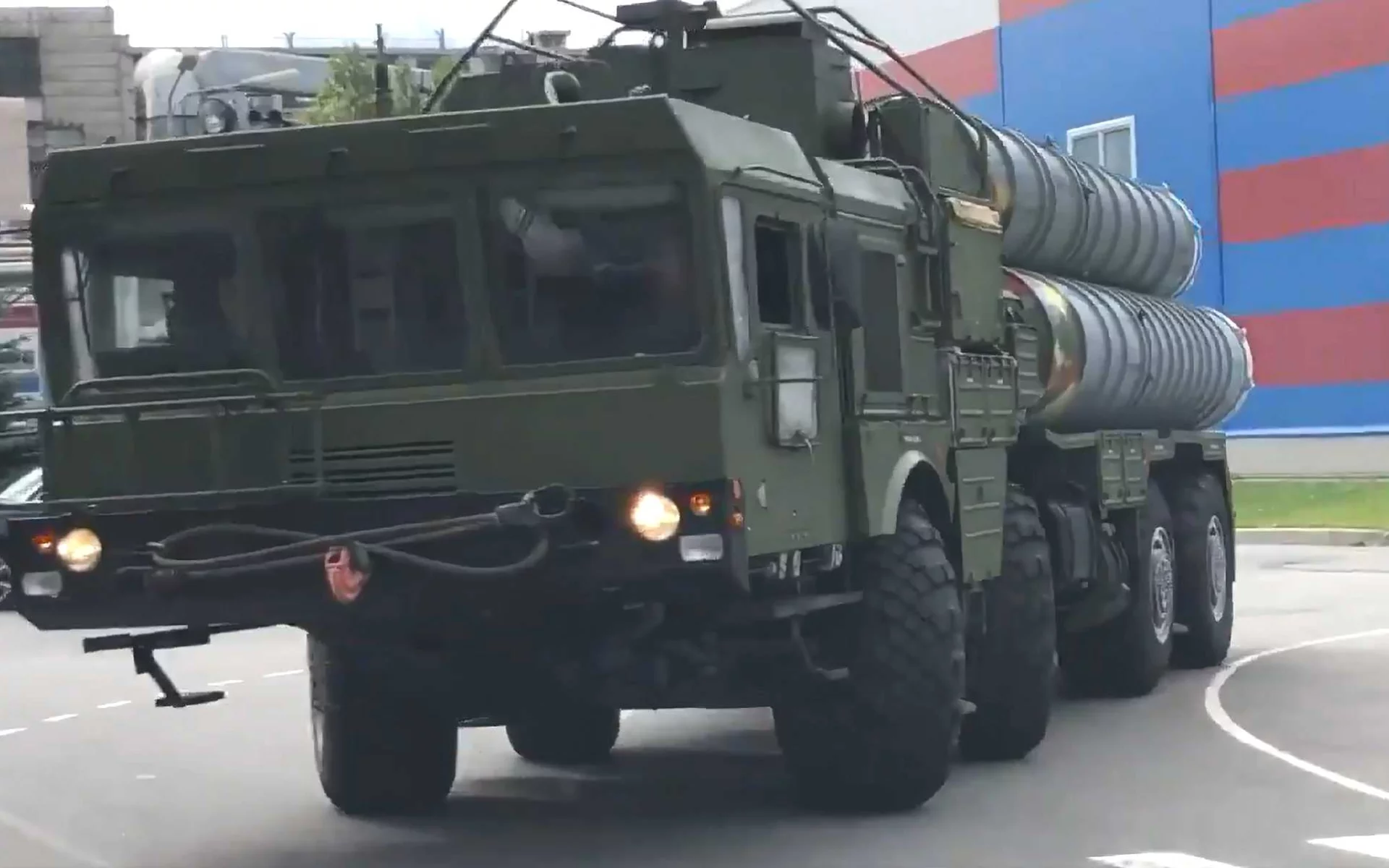
India is set to sign a $1.2 billion defense contract with Russia to acquire additional missile rounds for its S-400 Triumf air defense systems, according to the Indian News Agency (INA). The deal follows the system’s reported success during Operation Sindoor, when Indian forces intercepted multiple Pakistani aircraft and drones along the western frontier.
Conducted in August 2025, Operation Sindoor was a tightly coordinated air defense mission launched in response to Pakistani incursions near the Line of Control. Indian commanders said forward-deployed S-400 batteries were activated in a “preemptive containment maneuver,” successfully downing a JF-17B fighter jet and two medium-altitude UAVs. Though Pakistan has not confirmed the losses, Indian intelligence sources claim satellite data and radar logs corroborate the results.
Unlike the original procurement, this latest package focuses exclusively on replenishing and expanding missile inventories rather than acquiring new launch units. The deal is expected to receive final approval from the Defence Acquisition Council (DAC) and the Cabinet Committee on Security (CCS) before being signed later this month.
India’s initial $5.5 billion agreement in 2018 for five S-400 systems marked a major milestone in Indo-Russian defense relations. Three systems are already operational, while the remaining two are scheduled for delivery by late 2026. Analysts interpret this new missile-only deal as part of India’s transition toward sustained operational readiness and long-term force endurance.
Developed by Russia’s Almaz-Antey, the S-400 Triumf is one of the world’s most advanced long-range surface-to-air missile systems, capable of engaging multiple aerial threats — from aircraft and cruise missiles to drones and ballistic weapons — at ranges up to 400 kilometers. Its radar network can track over 300 targets simultaneously, ensuring layered protection across strategic regions.
Sources suggest that the $1.2 billion order includes a mix of 40N6E, 48N6DM, and 9M96E2 interceptors, along with spare parts, diagnostic tools, and software upgrades to improve multi-target tracking capabilities.
The purchase aligns with India’s broader air defense modernization strategy, integrating the S-400 with indigenous systems like Akash and QR-SAM, and foreign platforms such as Israel’s SPYDER. Together, they form a comprehensive A2/AD (anti-access/area denial) shield designed to neutralize airborne threats before they enter Indian airspace.
While the deal is structured to focus solely on munitions — minimizing the risk of U.S. sanctions under CAATSA — it may still draw diplomatic scrutiny. Washington has so far avoided penalizing New Delhi, citing shared interests in countering China, but this new transaction could again test that balance.
Additionally, the agreement could expand industrial cooperation between Indian firms and Russian defense manufacturer Almaz-Antey, potentially including local testing, maintenance, and partial co-production under the “Make in India” initiative.
Regionally, the deal underscores India’s determination to maintain air superiority and credible deterrence amid heightened border tensions. For Pakistan, it signals a stronger defensive barrier; for China, it reflects India’s readiness along the Line of Actual Control.
Ultimately, the $1.2 billion S-400 missile acquisition represents more than just another purchase — it reaffirms India’s commitment to layered air defense, operational resilience, and strategic deterrence in an increasingly contested regional airspace.
