

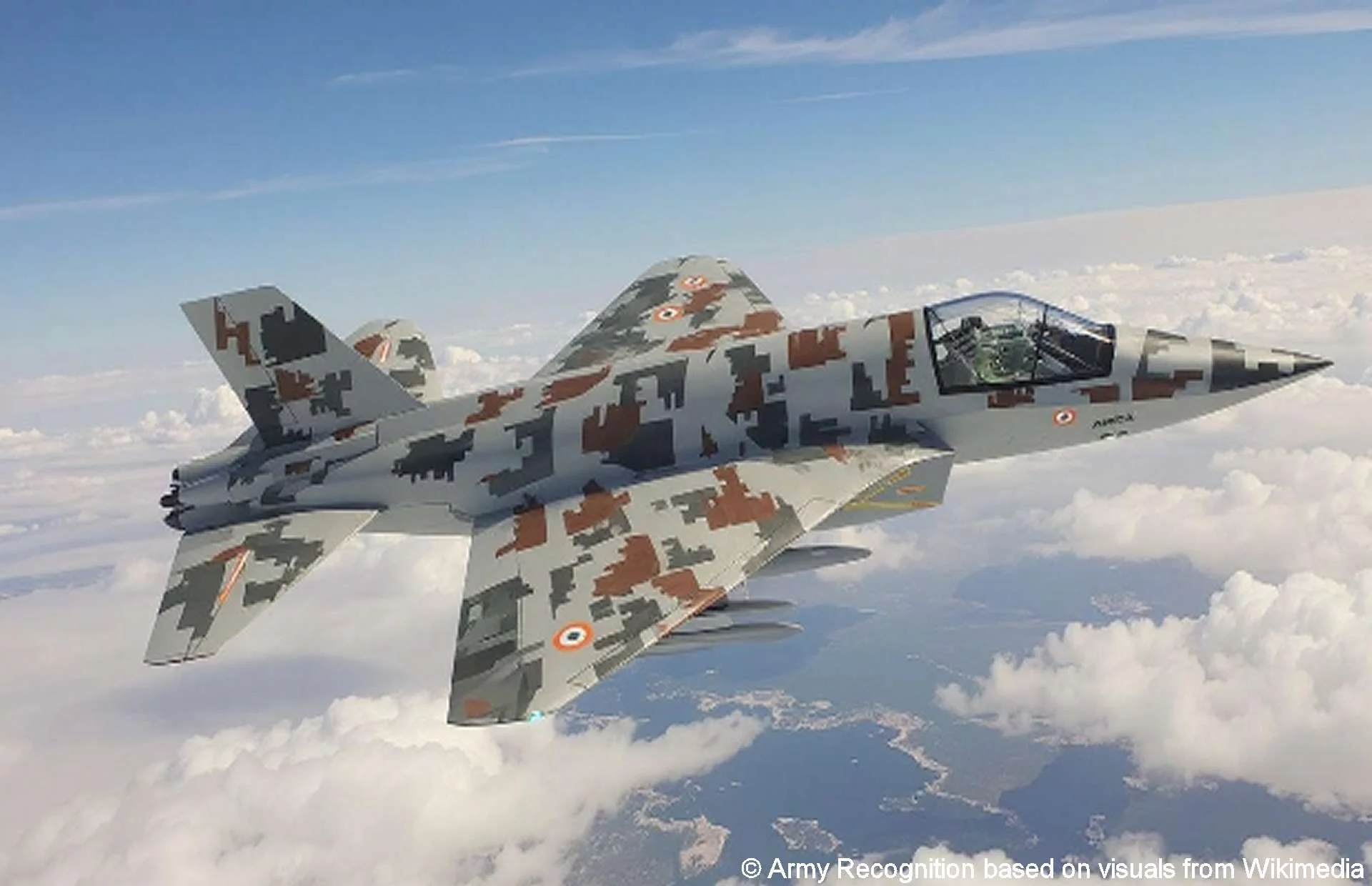
India and France are set to embark on an unprecedented partnership to jointly develop and produce a next-generation fighter jet engine for India’s Advanced Medium Combat Aircraft (AMCA). Valued at $7 billion, the agreement unites India’s Defence Research and Development Organisation (DRDO) with French aerospace leader Safran. Under the program, a 120-kilonewton-class engine will be fully designed, tested, and manufactured in India, with complete technology transfer.
The engine, a 120 kN afterburning turbofan, will power the AMCA stealth fighter and represents a landmark step toward India’s goal of defense self-reliance. Safran’s proposal, approved by DRDO, was selected as the most technically and economically viable solution, to be executed in collaboration with the Gas Turbine Research Establishment (GTRE). For the first time, India will produce a high-thrust fighter engine domestically, joining a select group of nations capable of manufacturing advanced propulsion systems for fifth-generation aircraft.
The engine design emphasizes a high thrust-to-weight ratio, reduced radar and infrared signature for stealth compatibility, and sustained supercruise performance. Five prototypes are expected by 2027, with the first flight test in 2028, certification in 2032, and series production by 2035. The new engine will equip the AMCA Mk II variant, while the earlier Mk I will continue to use the US-built GE F414 engine.
Beyond operational benefits, the project is transformative for India’s defense industry. Previous attempts like the Kaveri program fell short, but full technology transfer from Safran will create a sustainable domestic propulsion ecosystem encompassing design, testing, assembly, and lifecycle support. This reduces reliance on foreign suppliers, strengthens the “Make in India” initiative, and lays the groundwork for high-tech exports.
Strategically, the program comes at a time when India faces simultaneous challenges from China and Pakistan, highlighting the need for advanced airpower. The Indo-French collaboration, following the Rafale Marine acquisition, strengthens bilateral defense ties and reinforces India’s strategic autonomy in the increasingly competitive Indo-Pacific region.
