


India has taken a significant leap in indigenous defense technology with the development of a 6 KW Solid State Power Amplifier (SSPA) designed for next-generation radar systems. Developed by DRDO’s Electronics & Radar Development Establishment (LRDE) in partnership with Aidin Technologies Pvt. Ltd., this state-of-the-art amplifier is built using Gallium Nitride on Silicon Carbide (GaN on SiC) technology setting new benchmarks in performance, reliability, and operational flexibility.
Revolutionizing Radar Power with Solid State Technology
The new 6 KW SSPA marks a major evolution from legacy vacuum tube-based radar systems, offering greater efficiency, faster response times, and significantly longer operational life. At its core, the system features a modular, multi-drawer design housed within an 18U, 19-inch rack, capable of scaling output as needed while ensuring system redundancy.
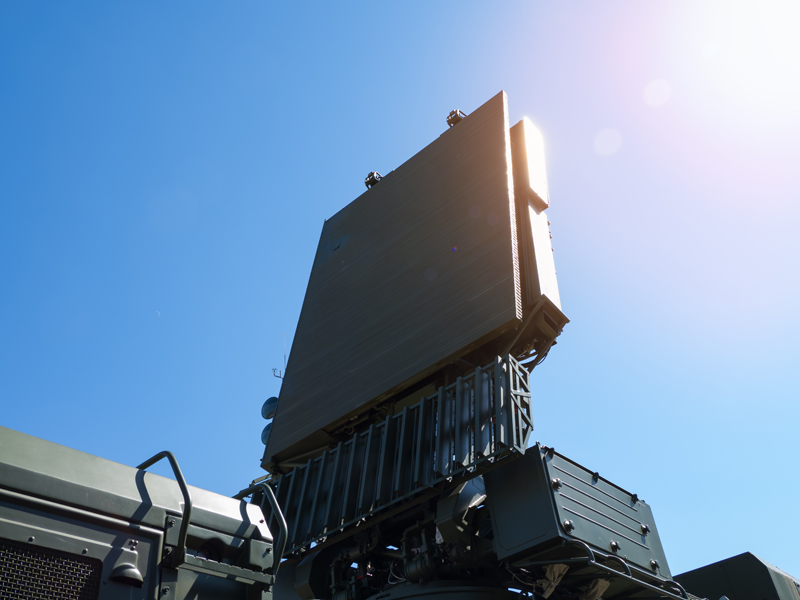
Operating in the S-band (2.9 to 3.3 GHz), the amplifier is tailored for advanced radar platforms, including Air and Missile Defence Radar (AMDR) systems deployed by the Indian Navy. With a 100-microsecond pulse width and 10% duty cycle, the amplifier delivers high peak power essential for precision tracking and long-range detection.
Why GaN on SiC Matters
The use of GaN on SiC semiconductors represents a cutting-edge choice in microwave electronics. Compared to traditional silicon or GaAs-based systems, GaN on SiC offers:
- Higher power density
- Superior thermal conductivity
- Wider frequency range
- Increased efficiency and reliability
These advantages enable the amplifier to operate under intense power loads with minimal heat stress, making it ideal for rugged military environments.
Modular, Scalable, Mission-Ready
The 6 KW output is achieved by combining eight 1.5 KW amplifier modules each independently capable and fault-tolerant. This modular approach ensures graceful degradation: if one module fails, the system continues to operate at reduced capacity without total shutdown.
Each module is air-cooled and operates on industrial-grade three-phase AC power (380V/440V), ensuring compatibility with diverse field setups. Built-in diagnostics and remote control via Ethernet and RS422 protocols allow seamless integration with modern radar command systems.
Operational Edge Over Legacy Technologies
Compared to traditional tube-based radar transmitters (like magnetrons or klystrons), the solid state SSPA offers major advantages:
- Instant power-up – No warm-up time required
- Lower operating voltage – Safer and more energy efficient
- Improved MTBF – Over 250,000 hours versus ~3,000 hours for tubes
- Enhanced phase stability – Better clutter rejection and signal clarity
- Smaller footprint – No need for oil-filled high-voltage systems
These features make solid state amplifiers not only more reliable but also easier to maintain in the field, reducing lifecycle costs and downtime.
Strategic Role in India’s Defense Future
The 6 KW SSPA currently serves as a backup transmitter in Stage 1 and Stage 2 AMDR configurations, but its modular architecture allows scaling for a wide range of applications — from surveillance radars to fire control and electronic warfare systems.
This development places India in an elite group of nations capable of designing and manufacturing high-power solid state radar transmitters based on GaN technology. It also reflects LRDE’s growing ecosystem of public-private collaboration, with support from key defense players like Bharat Electronics Limited (BEL).
Looking Ahead: A Platform for Innovation
With the success of this 6 KW amplifier, DRDO has laid the foundation for future SSPA-based radar systems operating across various bands (including X, Ku, and Ka). The adaptable platform can be tailored for both land-based and naval applications, addressing evolving strategic threats and providing the Indian military with a decisive edge.
