

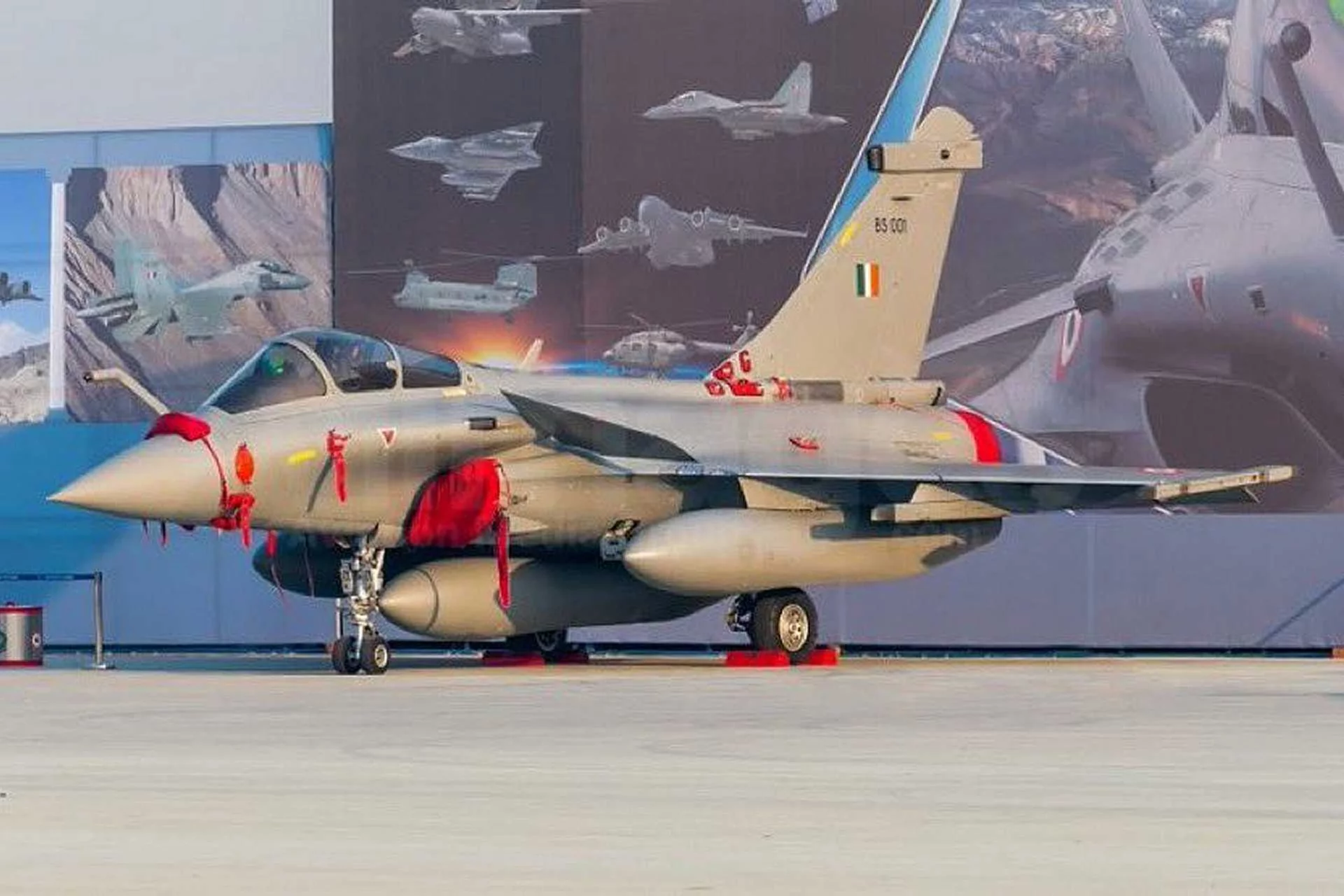
The Indian Air Force has formally urged the government to acquire 114 additional Rafale multirole fighters through a direct state-to-state agreement with France, bypassing a global tender process. Modeled on the 2016 deal for 36 Rafales, the proposed purchase would become one of Asia’s largest fighter jet procurements and a key step in strengthening India’s aerial combat capabilities under the long-delayed MRFA (Multi-Role Fighter Aircraft) program.
The MRFA initiative is one of India’s most ambitious defense projects, designed to provide the Air Force with next-generation aircraft capable of air superiority, ground attack, reconnaissance, and maritime operations. Beyond fleet modernization, the program seeks to expand domestic aerospace production in line with the government’s “Make in India” policy, requiring foreign partners to establish assembly lines, transfer technology, and support long-term self-reliance.
India’s experience with Rafale dates back to the €7.8 billion agreement with France in 2016, under which 36 fighters were delivered between 2020 and 2022. These jets, now deployed at Ambala and Hasimara air bases, are equipped with Indian-specific enhancements such as advanced electronic warfare systems, helmet-mounted displays, and long-range Meteor missiles—transforming the Air Force’s operational reach. In 2023, New Delhi also approved the purchase of 26 Rafale Marine fighters for the Navy’s INS Vikrant aircraft carrier, extending the platform’s role into naval aviation.
With both China and Pakistan advancing their air forces with next-generation platforms, expanding the Rafale fleet provides India a decisive edge in air dominance, deep strike, and maritime roles. Standardizing on a single aircraft type also simplifies maintenance, pilot training, and logistics across squadrons.
Industrial and geopolitical implications are equally significant. A direct deal with France would strengthen Dassault Aviation’s integration with Hindustan Aeronautics Limited (HAL) and Indian defense firms, reinforcing the country’s ambition to build a domestic aerospace ecosystem with export potential. While this path could sideline competitors like Boeing, Lockheed Martin, Saab, and Eurofighter, it would accelerate procurement and ensure predictable delivery.
For France, securing 114 additional orders would mark the largest overseas Rafale contract, solidifying its position as one of the world’s leading fighter exporters. For India, it represents a historic step in military modernization and deepens its strategic partnership with Paris, already a trusted supplier of submarines, radars, and space systems.
If approved, negotiations could begin later this year, paving the way for one of the most consequential defense acquisitions in India’s history.
