

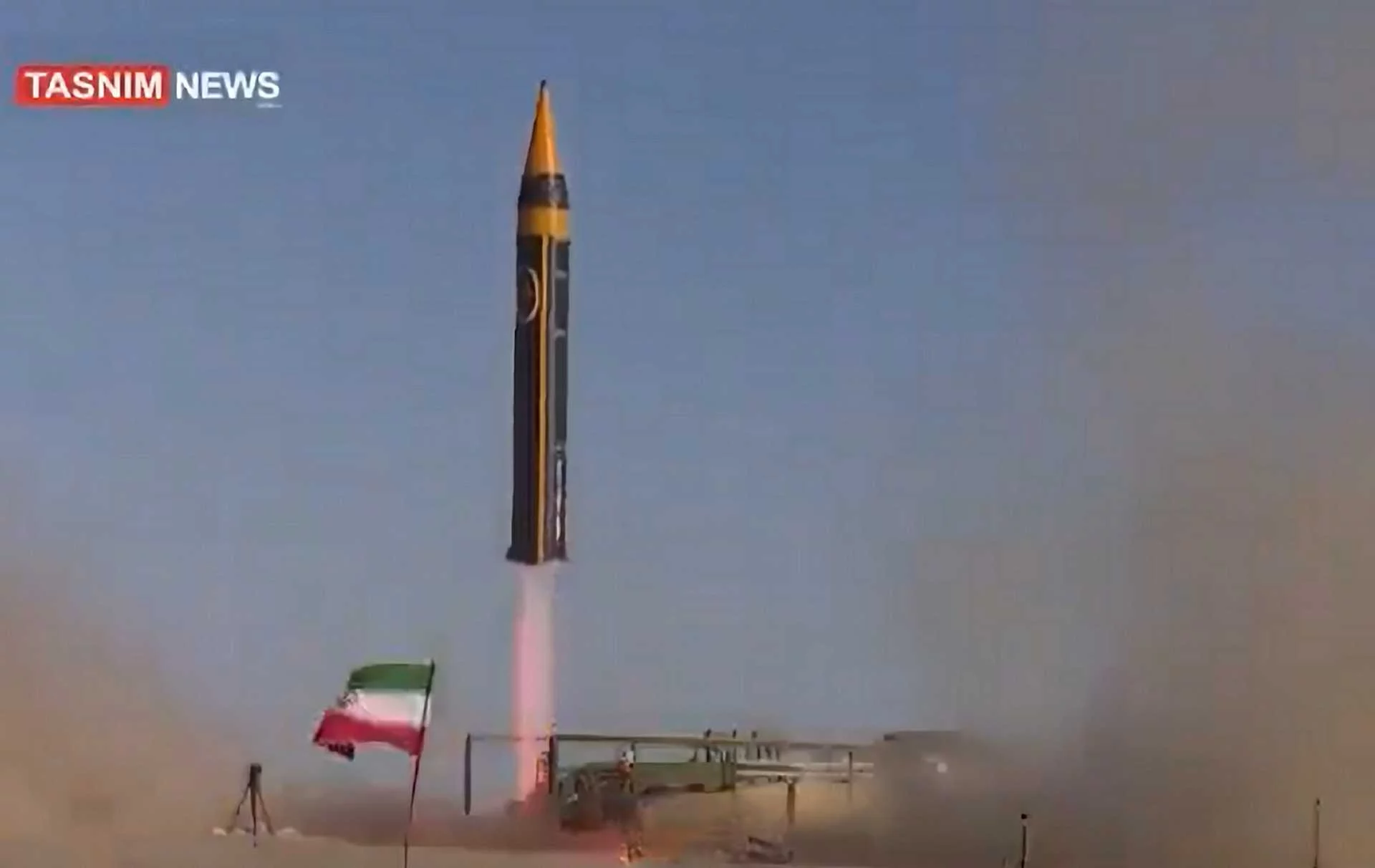
Iran has claimed to possess an intercontinental ballistic missile (ICBM) capable of striking targets up to 10,000 kilometers away — potentially reaching the continental United States. The announcement, made by the state-affiliated Tasnim News Agency on November 7, 2025, suggests the missile is “almost ready for service,” signaling a dramatic escalation in Tehran’s global deterrence posture.
Iran Announces New Long-Range Missile Through State Media
Tasnim News Agency, quoting unnamed defense sources, claimed that the missile’s range would cover not only all of Europe but also large parts of North America. If true, this would mark Iran’s entry into the elite group of nations capable of global strike. However, Western intelligence agencies and defense officials have not verified the claim, and there is no independent evidence confirming a successful 10,000 km test flight.
Footage released by Iranian media showed dramatic visuals of launch silos, mobile launchers, and night-time missile tests. The system was reportedly developed under the supervision of the Islamic Revolutionary Guard Corps (IRGC), though the technical specifications remain undisclosed.
A Shift Beyond Iran’s Traditional 2,000 km Limit
If accurate, this claim represents a historic leap from Iran’s previously stated missile range cap of 2,000 km — a limit long maintained to avoid direct confrontation with Western powers. Current systems like the Khorramshahr-4 can reach up to 3,000 km, but a 10,000 km missile would require major breakthroughs in multi-stage propulsion, guidance accuracy, and re-entry vehicle survivability.
Western analysts note that such progress may stem from Iran’s satellite launch vehicle (SLV) programs, such as Simorgh and Qased, which use similar multi-stage designs. The U.S. Department of Defense has repeatedly warned that Iran’s space launch technology is “dual-use,” meaning it could easily be adapted for long-range missile purposes.
Potential Strategic Reach to U.S. Territory
A missile with a 10,000 km range could theoretically target Washington D.C., New York, or Los Angeles from Iranian soil, a capability that would fundamentally alter global deterrence dynamics. U.S. homeland defense systems — including the Ground-based Midcourse Defense (GMD) interceptors in Alaska and California — are designed to counter limited threats from North Korea, not a simultaneous long-range threat from Iran.
Defense experts warn that such a system could force Washington to re-evaluate its missile defense posture, while NATO allies may need to strengthen early warning and coordination mechanisms across Europe.
Technical and Operational Challenges Remain
Despite the bold claims, experts urge caution. There is no telemetry, satellite imagery, or test data to verify a 10,000 km flight. It remains unclear whether the missile is liquid- or solid-fueled, or if it can carry a nuclear warhead. Solid-fuel ICBMs would provide faster readiness and greater survivability but are far more complex to engineer at intercontinental range.
Iran continues to deny pursuing nuclear weapons, stating its missile program is purely defensive. Nonetheless, the announcement carries psychological weight, signaling Tehran’s intent to position itself as a global deterrent power capable of reaching distant adversaries.
Broader Geopolitical Implications
This development aligns with the IRGC’s recent messaging portraying Iran as a rising global military power. Beyond its technical validity, the claim itself serves a strategic purpose: to project strength amid economic sanctions and domestic unrest.
If even partially true, Iran’s missile could reshape U.S.–Iran relations, accelerate missile defense investments, and influence arms control diplomacy worldwide. Western intelligence agencies are now closely monitoring launch ranges, satellite imagery, and procurement movements for signs of further testing or production.
Whether bluff or breakthrough, Iran’s message is unmistakable: the boundaries of its deterrence strategy no longer stop at the Middle East.
