

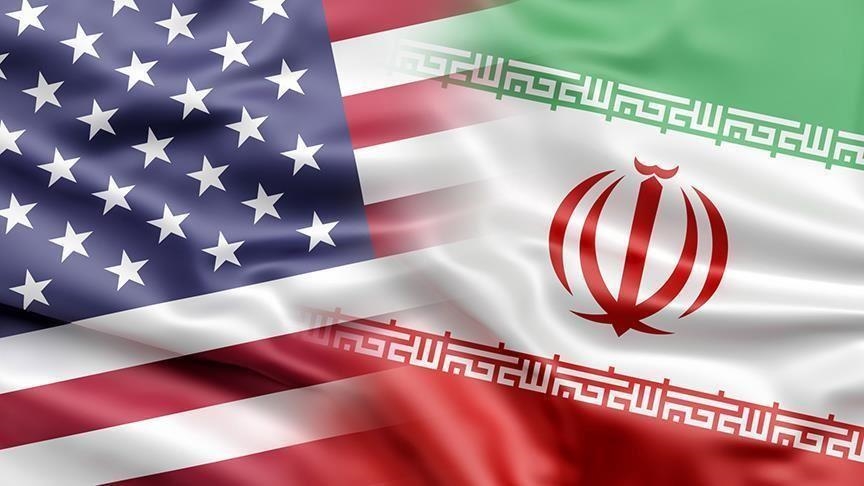
Iran fired a limited number of missiles at a U.S. military base in Qatar on Monday, responding to recent American airstrikes targeting its nuclear infrastructure. Despite the bold move, Iran signaled a desire to avoid further escalation in the tense Middle East climate.
According to President Donald Trump, Tehran gave advance warning before the attack, resulting in no injuries. Trump downplayed the incident, calling it a “very weak response.”
“They’ve likely released their anger,” Trump posted on Truth Social, “and hopefully, this means no more hate or aggression.”
Qatar sharply criticized the missile strike on Al Udeid Air Base, labeling it a “blatant breach” of its sovereignty and international law. Qatari officials reported that all but one of the incoming missiles were intercepted, though the impact of the remaining one remains unclear.
Iran stated the number of missiles fired was equal to the bombs dropped by the U.S. on Iranian nuclear facilities over the weekend. The regime also emphasized that the base was targeted because it was located away from populated areas.
These statements, issued shortly after the attack, hinted that Iran might be seeking to ease tensions with Washington. Trump echoed a similar tone after the initial U.S. strikes on Sunday.
Qatari Maj. Gen. Shayeq Al Hajri reported that 19 missiles were launched at the base, which houses both the Combined Air Operations Center and the 379th Air Expeditionary Wing — the largest of its kind globally. However, Trump claimed that only 14 missiles were launched, 13 were intercepted, and one was intentionally left to land as it posed no threat.
Trump expressed hope that Iran could “move toward peace and harmony,” and added that he would urge Israel to follow suit.
Despite that, Israel continued its offensive against Iran, expanding operations on Monday to include symbolic targets associated with Iran’s ruling theocracy.
Iranian state TV broadcast news of the missile launch with military music playing in the background, referring to it as a “powerful and successful” retaliation against American aggression.
President Masoud Pezeshkian commented on social platform X just before the missile strike: “We didn’t start this war, nor do we want it, but any attack on our great nation will be met with a response.”
Previous reports that an American base in Iraq was also targeted were later dismissed. A U.S. military official confirmed that what appeared to be an attack was actually debris from a malfunctioning Iranian missile headed toward Israel.
Israel Strikes Symbolic Iranian Targets
Now into the 11th day of the conflict, both Iran and Israel continued to exchange airstrikes, dragging civilians in both countries into the crossfire. Iran targeted Israel with drones and missiles, while Israel struck key government sites in Tehran linked to Iran’s theocratic leadership.
Israeli leaders clarified they were not aiming to overthrow the Iranian regime, which has been hostile since the Islamic Revolution of 1979.
The back-and-forth came just hours after Trump alluded to possible regime change in Iran, following U.S. airstrikes on three nuclear sites.
“If the current Iranian regime cannot MAKE IRAN GREAT AGAIN, why not consider a regime change?” Trump wrote on Truth Social. The White House later said he was merely “posing a question,” according to press secretary Karoline Leavitt.
The American attacks over the weekend raised concerns of a broader regional war. Tehran accused the U.S. of crossing a major red line by using bunker-busting bombs in its strikes.
While Israel has indicated it would like to conclude the military campaign soon, officials said this depends on Iran’s actions. An Israeli official said a ceasefire and renewed nuclear talks would be the ideal outcome, but the country is prepared for a drawn-out, low-intensity conflict if necessary.
A New Phase in the Conflict
Israel’s military has warned Iran it will continue to strike military locations around Tehran and has begun targeting more symbolic infrastructure. This comes as internet access remains heavily restricted in Iran.
Among the sites hit was the headquarters of the security force responsible for cracking down on recent protests. Another target was the Evin prison — notorious for detaining political prisoners and dual nationals — where a missile blast damaged a gate.
Iranian state television released surveillance footage from the site, claiming all prisoners remained secure. Still, the Abdorrahman Boroumand Center, a Washington-based human rights organization, reported that many families are worried about the welfare of their detained relatives.
Israel also confirmed attacks on roads near the Fordo nuclear facility — one of the sites hit by the U.S. on Sunday. Though Israel gave few details, the head of the U.N. nuclear watchdog said the Fordo site likely suffered heavy damage.
Iranian officials claimed nuclear materials had already been removed from the sites prior to the U.S. strike.
Iran Keeps Pressure on Israel
Iran characterized its Monday assault on Israel as part of “Operation True Promise 3,” aiming at major cities like Tel Aviv and Haifa. Explosions were also heard in Jerusalem, likely due to Israel’s air defense systems.
No injuries were reported, according to Israel’s emergency service, Magen David Adom.
The human toll continues to rise: At least 24 Israelis have died and over 1,000 have been wounded since the conflict began. On the Iranian side, Israeli strikes have reportedly killed 950 people and injured another 3,450, according to Human Rights Activists, a U.S.-based group.
Among the Iranian dead are said to be 380 civilians and 253 members of security forces, based on the group’s records from past incidents such as the 2022 Masha Amini protests.
