

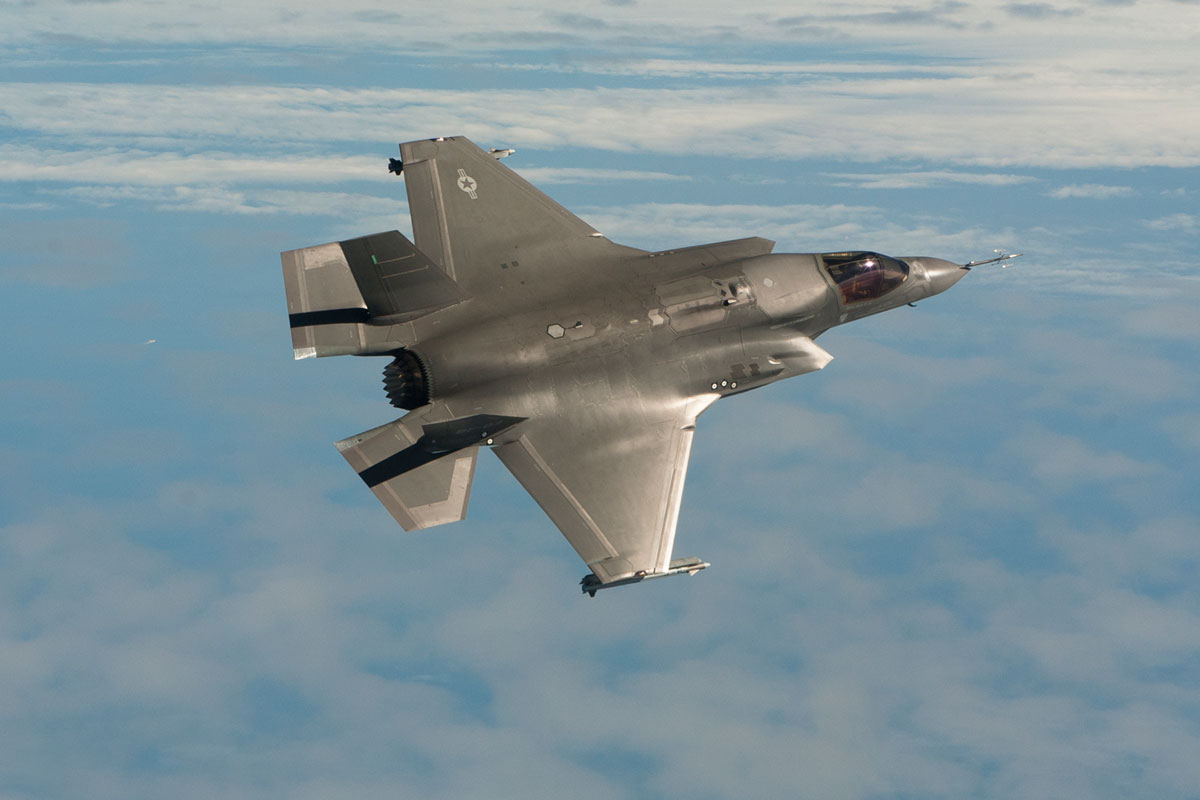
On July 29, 2025, Japan’s Ministry of Defense confirmed plans to begin the deployment of its first F-35B Lightning II Short Takeoff and Vertical Landing (STOVL) fighter jets, with operations commencing on August 7, 2025. The first four American-made stealth aircraft will be stationed at Nyutabaru Air Base in Miyazaki Prefecture on the southern island of Kyushu, marking their operational debut in Japan’s Air Self-Defense Force.
This deployment is a pivotal step in Japan’s defense modernization strategy outlined in the 2018 National Defense Program Guidelines and Mid-Term Defense Plan. As part of this initiative, Japan committed to acquiring 42 F-35B aircraft in addition to expanding its F-35A fleet, reaching a total of 147 fifth-generation jets—making Japan the largest F-35 operator outside the United States. The sale of the F-35Bs was authorized under the U.S. Foreign Military Sales program in July 2020, including training, spare parts, and support infrastructure.
The decision to acquire the F-35B reflects Japan’s need for versatile airpower capable of operating from short runways or naval vessels in regions with limited infrastructure. Built by Lockheed Martin, the F-35B is the only stealth fighter in the world with vertical landing and short takeoff capabilities, giving Japan the flexibility to project airpower from both land and sea—particularly vital for remote or forward-deployed missions.
A cornerstone of this initiative is Japan’s transformation of its Izumo-class helicopter destroyers—JS Izumo and JS Kaga—into light aircraft carriers. Once fully modified, these vessels will be capable of launching and recovering F-35Bs at sea, reintroducing fixed-wing naval aviation to Japan for the first time since World War II. The STOVL design of the F-35B eliminates the need for traditional carrier launch systems, allowing seamless operations in the Indo-Pacific’s maritime corridors.
Stationing the F-35Bs at Nyutabaru enhances Japan’s defensive posture in the southwestern region, especially across the Nansei (Ryukyu) Islands, which stretch from Kyushu to near Taiwan. This area forms part of the first island chain used by U.S. allies to counterbalance China’s expanding military footprint. Increased Chinese naval and aerial activity, including regular transits through the Miyako Strait and near the contested Senkaku Islands, has raised concerns of escalation. China’s frequent incursions and surveillance flights have tested Japan’s readiness, making the deployment of stealth-capable jets a timely response.
Equipped with low-observable technology, advanced sensors, electronic warfare systems, and seamless networking capabilities, the F-35B brings a significant edge in contested environments. Its forward-operating capabilities also align with Japan’s focus on survivability and agility in the face of modern missile threats and anti-access strategies.
Beyond tactical impact, the arrival of the F-35B symbolizes Japan’s commitment to a robust, multi-domain defense strategy in a region marked by increasing strategic volatility. It positions Japan not just as a technologically advanced military power but as a proactive ally in maintaining Indo-Pacific security alongside the United States and other partners.
