

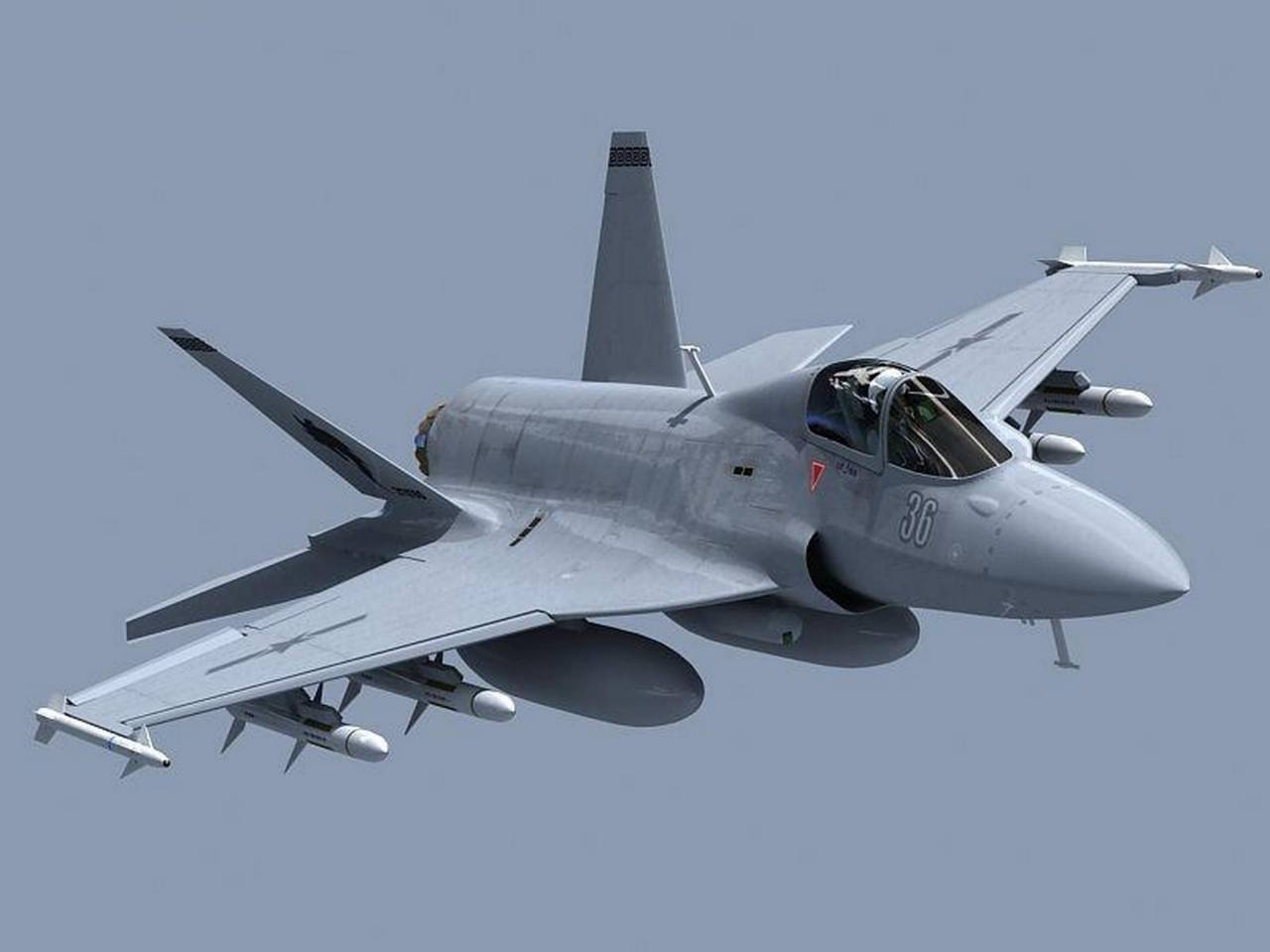
The JF-17 Thunder is a lightweight, single-engine, multirole combat aircraft developed jointly by Pakistan Aeronautical Complex (PAC) and China’s Chengdu Aircraft Corporation (CAC). Designed to replace aging fleets in the Pakistan Air Force, the JF-17 performs a variety of roles including air superiority, ground attack, anti-ship missions, and reconnaissance.
Powered by a Klimov RD-93 afterburning turbofan, the JF-17 can reach speeds of up to Mach 1.6. It is equipped with a 23mm twin-barrel GSh-23-2 automatic cannon and supports a wide arsenal of air-to-air and air-to-ground missiles, as well as guided and unguided bombs. The aircraft benefits from modern avionics and systems, including the latest Block 3 variant with AESA radar, helmet-mounted display (HMD), and enhanced electronic warfare capabilities.
Serial production is led by Pakistan, where 58% of the airframe is manufactured locally, with the remaining 42% produced in China. This collaboration enables Pakistan to build and maintain a significant number of jets domestically, supported by ongoing technology transfer agreements.
In 2021, Pakistan expanded its fleet with a deal for 50 additional JF-17s, increasing its total number to 200. The aircraft is also operated by several other countries such as Iraq, Myanmar, Nigeria, and Azerbaijan.
General Specifications and Performance of JF-17 Thunder
| Category | Details |
|---|---|
| Crew | 1 (JF-17A single-seat) or 2 (JF-17B two-seat) |
| Length | 14.3 m (47 ft 0 in) |
| Wingspan | 9.44 m (31 ft 0 in) |
| Height | 4.57 m (15 ft 0 in) |
| Wing Area | 24.43 m² (263 sq ft) |
| Empty Weight | 7,965 kg (17,560 lbs) |
| Maximum Takeoff Weight | 13,500 kg (29,762 lbs) |
| Fuel Capacity | 3,000 L internal + up to 2,700 L external tanks |
| Powerplant | 1 × Klimov RD-93 afterburning turbofan (49.4 kN dry, 84.4 kN with afterburner) |
Performance
| Category | Details |
|---|---|
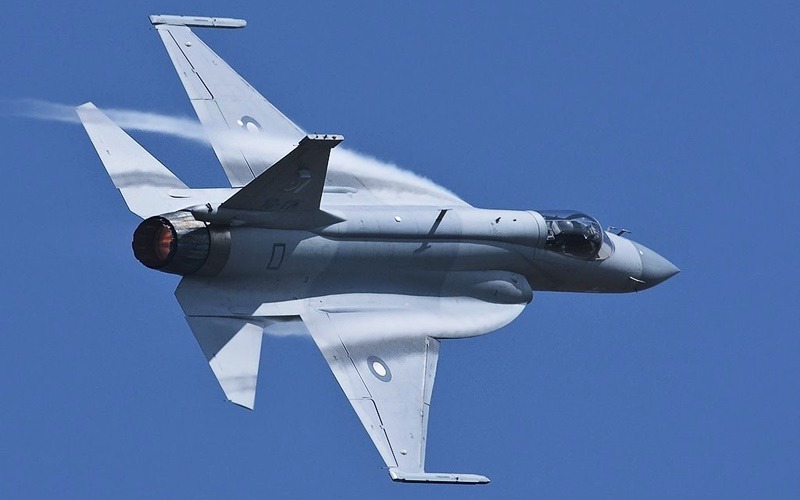
| Maximum Speed | Mach 1.6 (~1,910 km/h / 1,190 mph) |
| Cruise Speed | 1,359 km/h (844 mph) |
| Combat Radius | ~1,200 km (750 miles) without refueling |
| Service Ceiling | 16,920 m (55,510 ft) |
| Rate of Climb | 300 m/s (59,000 ft/min) |
| G Limits | +8 / -3 (limited by flight control system) |
| Thrust-to-Weight Ratio | ~1.07 (with RD-93 engine) |
Armament and Avionics
- Guns: 1 × 23 mm GSh-23-2 or optional 30 mm cannon
- Hardpoints: 8 external weapon stations (wingtip, underwing, fuselage)
- Payload Capacity: Up to 3,700 kg (8,200 lbs) of weapons and external fuel tanks
- Missiles: Air-to-air (PL-5EII, PL-9C, PL-10E, PL-12/SD-10A, PL-15E), air-to-ground (CM-102, Ra’ad-II, HD-1A), anti-ship (C-802AK, CM-400AKG)
- Bombs: Guided (GBU-10, GBU-12, GBU-16) and unguided bombs
- Radar: KLJ-7 multimode pulse Doppler radar; AESA radar on Block 3
- Other Systems: Infrared Search and Track (IRST), Electronic Warfare (EW) suite, Helmet-Mounted Display (HMD), Link-17 datalink
Operational Use & Export
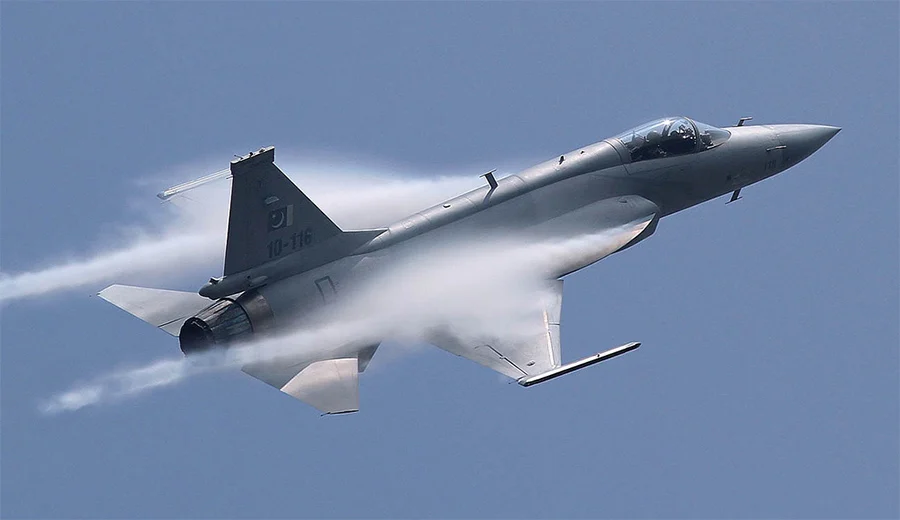
The JF-17 has been deployed effectively in Pakistan’s counterterrorism operations and border patrols. It has gained international interest for offering modern combat capabilities at a fraction of the cost of Western fighters.
Export customers include:
- Iraq: 12 jets ordered
- Myanmar: 7 delivered, 9 more ordered
- Nigeria: 3 delivered
- Azerbaijan: 24 Block III jets ordered
JF-17 Thunder: Key Specialties and Strengths
1. Cost-Effectiveness
- One of the most affordable modern combat jets on the market, with Block 2 variants costing around $25 million per unit, making it accessible for countries with limited defense budgets.
- Low operational and maintenance costs compared to Western counterparts.
- Local production in Pakistan with technology transfer reduces dependence on foreign suppliers.
2. Multirole Capability
- Designed as a true multirole fighter, the JF-17 excels in air-to-air combat, air-to-ground strikes, anti-ship missions, and reconnaissance.
- Flexible weapons loadout allows rapid mission reconfiguration, ranging from precision-guided bombs to a wide array of missiles.
- Dual-seat JF-17B variant provides advanced training capabilities as well as combat versatility.
3. Modern Avionics and Sensor Suite
- Latest Block 3 variant is equipped with cutting-edge avionics:
- Active Electronically Scanned Array (AESA) radar, offering superior target detection, tracking, and engagement.
- Infrared Search and Track (IRST) system for passive detection of aerial targets.
- Helmet-Mounted Display (HMD) enables pilots to target weapons by simply looking at the target.
- Advanced electronic warfare (EW) suite enhances survivability in contested environments.
4. Performance and Agility
- Maximum speed of Mach 1.6, sufficient for most air combat scenarios.
- High thrust-to-weight ratio (~1.07) provides strong acceleration and maneuverability.
- Digital fly-by-wire flight control system enhances handling and stability during complex maneuvers.
5. Operational Versatility
- Successfully used in various real-world operations, such as:
- Counterterrorism missions in North Waziristan, Pakistan.
- Intercepting unauthorized drones on Pakistan’s borders.
- Can carry out both day and night operations with precision.
- Equipped for aerial refueling (Block 2 onward), increasing mission endurance and range.
6. Advanced Weapon Systems
- Compatible with a broad spectrum of indigenous and imported weapons:
- Air-to-air missiles (PL-5E II, PL-10, PL-12/SD-10, PL-15)
- Air-to-ground guided bombs (GBU series)
- Anti-ship missiles (C-802AK, CM-400AKG)
- Eight external hardpoints allow a payload capacity of up to 3,700 kg.
- Integrated 23 mm twin-barrel cannon for close-range dogfights.
7. Indigenous Production & Export Potential
- Pakistan produces over half of the airframe domestically, supporting local aerospace industry growth.
- Technology transfer agreements allow Pakistan to upgrade and maintain the fleet independently.
- Export success with multiple countries, enhancing Pakistan’s defense diplomacy and aerospace industry profile.
