

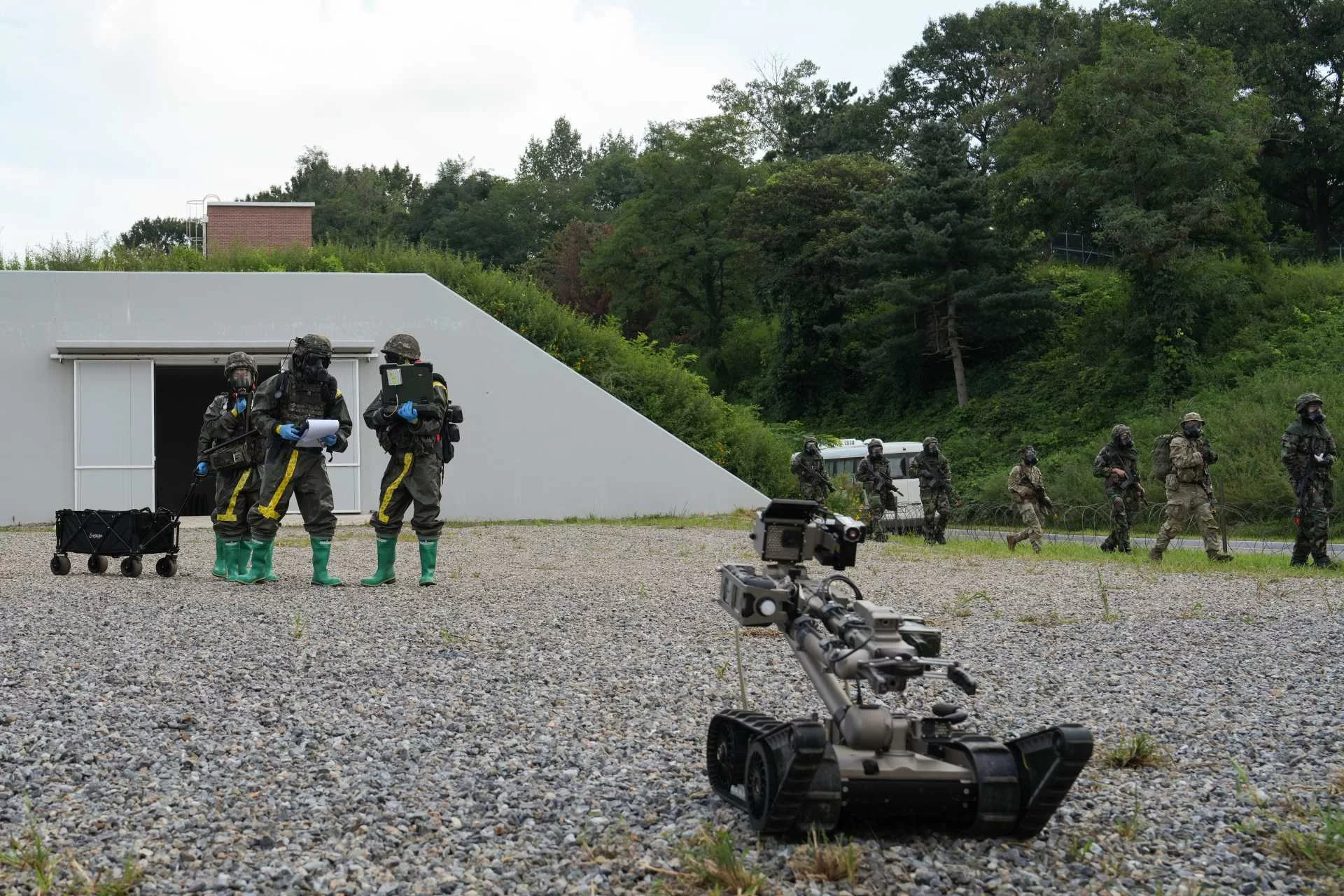
U.S. and South Korean troops conducted intensive counter–Weapons of Mass Destruction (WMD) training as part of Ulchi Freedom Shield 25, focusing on urban combat and hazardous environment operations. Exercises included simulated decontamination drills in densely populated cityscapes, emphasizing allied readiness to respond to chemical, biological, radiological, and nuclear (CBRN) threats.
Urban Combat Preparedness
The Korean Peninsula’s high population density makes urban areas and industrial centers potential hotspots in any conflict scenario. Urban warfare poses unique challenges, including restricted maneuverability, civilian safety, and protection of critical infrastructure. By practicing decontamination and containment in city-like environments, soldiers enhance their ability to neutralize hazardous materials while safeguarding both military personnel and civilians.
Counter-WMD Training and Interoperability
The drills prioritized rapid response, coordination, and interoperability between U.S. and South Korean forces. Troops trained to detect, isolate, and mitigate chemical or biological hazards, reflecting operational realities in which North Korea might employ unconventional weapons. These exercises reinforce the capability of allied forces to operate cohesively in complex, high-stakes environments.
Strengthening Alliances and Regional Security
For the United States, participation underscores its commitment to Indo-Pacific security and alliance readiness. Combined exercises ensure seamless integration of command structures, intelligence sharing, and operational procedures. By presenting a unified front, the two nations reinforce deterrence against North Korean aggression, signaling that any attack would encounter a coordinated and immediate response.
Comprehensive Training for Modern Warfare
Ulchi Freedom Shield 25 also incorporated live-fire drills, missile defense coordination, and cyber defense operations, highlighting the multifaceted nature of contemporary conflict. Integrating conventional, CBRN, and urban warfare scenarios equips forces to respond effectively to the full spectrum of potential threats.
The 2025 edition of the exercise demonstrates both the military capability and political resolve of the U.S.-ROK alliance, ensuring that troops are prepared to adapt rapidly to evolving challenges while promoting stability and security on the Korean Peninsula.
