

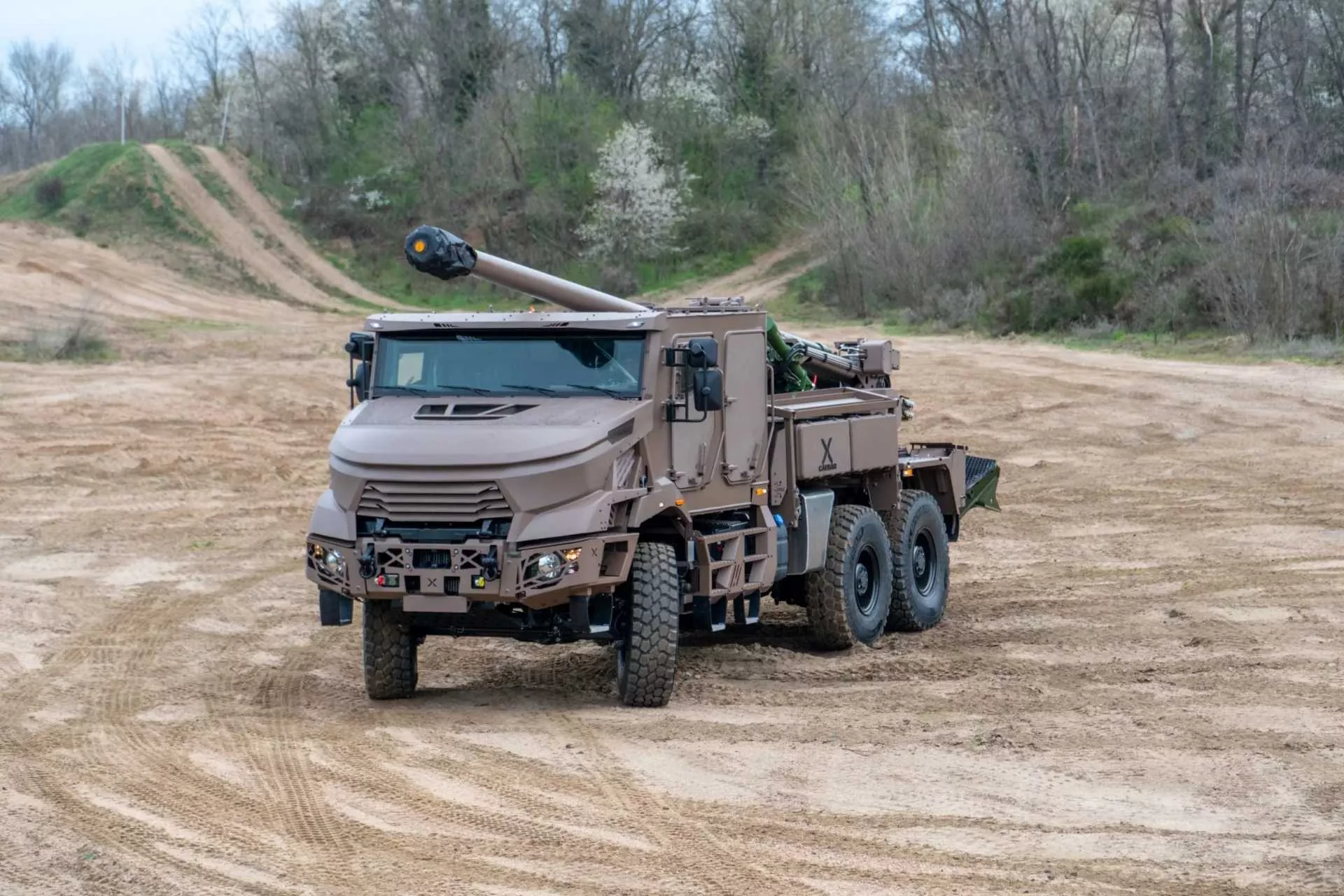
Leonardo DRS and KNDS have officially signed a teaming agreement to propose the CAESAR 155 mm self-propelled howitzer for the U.S. Army’s Self-Propelled Howitzer Modernization (SPH-M) program. Under the partnership announced on October 13, 2025, Leonardo DRS will serve as the prime contractor and system integrator, while KNDS will provide the artillery system and key technologies. The offer is intended to deliver a combat-proven, in-service system compatible with the Army’s 2026–2030 modernization schedule.
The CAESAR 6×6 Mark II introduces major upgrades over earlier models, including a new 460-horsepower engine and enhanced hydraulic systems that increase firing responsiveness and mobility. The howitzer has seen combat use in Afghanistan, Iraq, Syria, and Ukraine, where it demonstrated precision, reliability, and rapid deployment capabilities. The U.S. Army previously evaluated CAESAR at Yuma Proving Ground in 2021, noting its accuracy and adaptability for U.S. tactical platforms.
KNDS will supply the weapon and modular architecture, while Leonardo DRS will integrate the system with U.S.-made truck platforms and domestic command-and-control networks. Leonardo DRS will leverage its expertise in power systems, C5I integration, and platform electrification to ensure seamless compatibility. KNDS, formed by the merger of Krauss-Maffei Wegmann and Nexter, contributes decades of artillery experience through its CAESAR and PzH 2000 product lines.
Originally developed in France, the 155 mm/52-caliber CAESAR combines high mobility and firepower, capable of firing NATO-standard ammunition beyond 40 km with ERFB shells and over 50 km with rocket-assisted rounds. It can deploy for firing in 60 seconds, displace in under 40, and reach road speeds of 100 km/h with an operational range of 600 km.
The new CAESAR 6×6 Mark II, produced under a €600 million contract for France’s DGA, includes an armored cabin, Safran Geonyx navigation system, 460 hp engine, and SCORPION-compatible digital fire control. Despite its improved protection and 25-ton combat weight, it remains air-transportable by C-130 and A400M aircraft. Deliveries of 109 systems to the French Army are set between 2026 and 2030.
The U.S. Army’s SPH-M initiative marks the fourth effort to replace the aging M109 Paladin, following the cancellations of Crusader, NLOS-C, and ERCA programs. After ERCA’s termination due to barrel wear issues, the Army is prioritizing mature, mobile systems with greater range and autonomy. A new nine-month demonstration phase at Yuma Proving Ground is scheduled for early 2026, assessing both tracked and wheeled solutions.
Within this context, the Leonardo DRS–KNDS proposal offers a ready-to-field, combat-proven system that aligns with the Army’s operational goals and industrial requirements. By combining U.S. integration expertise with European artillery design, the partnership aims to deliver a reliable and low-risk modernization path for the future of American field artillery.
