

Lithuania has formally requested stronger NATO air defense deployments following two recent airspace violations by Russian drones originating from Belarus. Authorities believe the incidents highlight increasing risks to NATO’s eastern flank and demand an urgent collective response.
On July 28, a drone carrying approximately two kilograms of explosives crossed into Lithuanian airspace from Belarus and crashed within a military training area. Initial investigations suggest the drone was likely en route to Ukraine but strayed off course, unintentionally breaching NATO territory. Lithuanian Defense Minister Dovilė Šakalienė acknowledged there is no current evidence that Lithuania was targeted, but called for a “swift and proportionate” response due to the potential danger.
Earlier in the month, on July 10, a Russian Gerbera drone—a newer model loitering munition—also crashed about one kilometer inside Lithuanian territory. Originally developed as a decoy to confuse air defense systems, the Gerbera is now armed with small warheads, cameras, and anti-jamming modules. Constructed with inexpensive materials such as polystyrene and plywood and using off-the-shelf components, it costs about one-tenth of a Shahed-136 drone, making it ideal for swarm attacks. Its affordability makes interception costly and technically challenging for NATO and Ukrainian forces alike.
In response to these incursions, Lithuanian Defense and Foreign Ministers Šakalienė and Kęstutis Budrys jointly appealed to NATO Secretary-General Mark Rutte, requesting additional and potentially experimental air defense assets to be deployed in Lithuania. Their appeal reflects growing concern over the country’s vulnerability to modern, low-cost aerial threats.
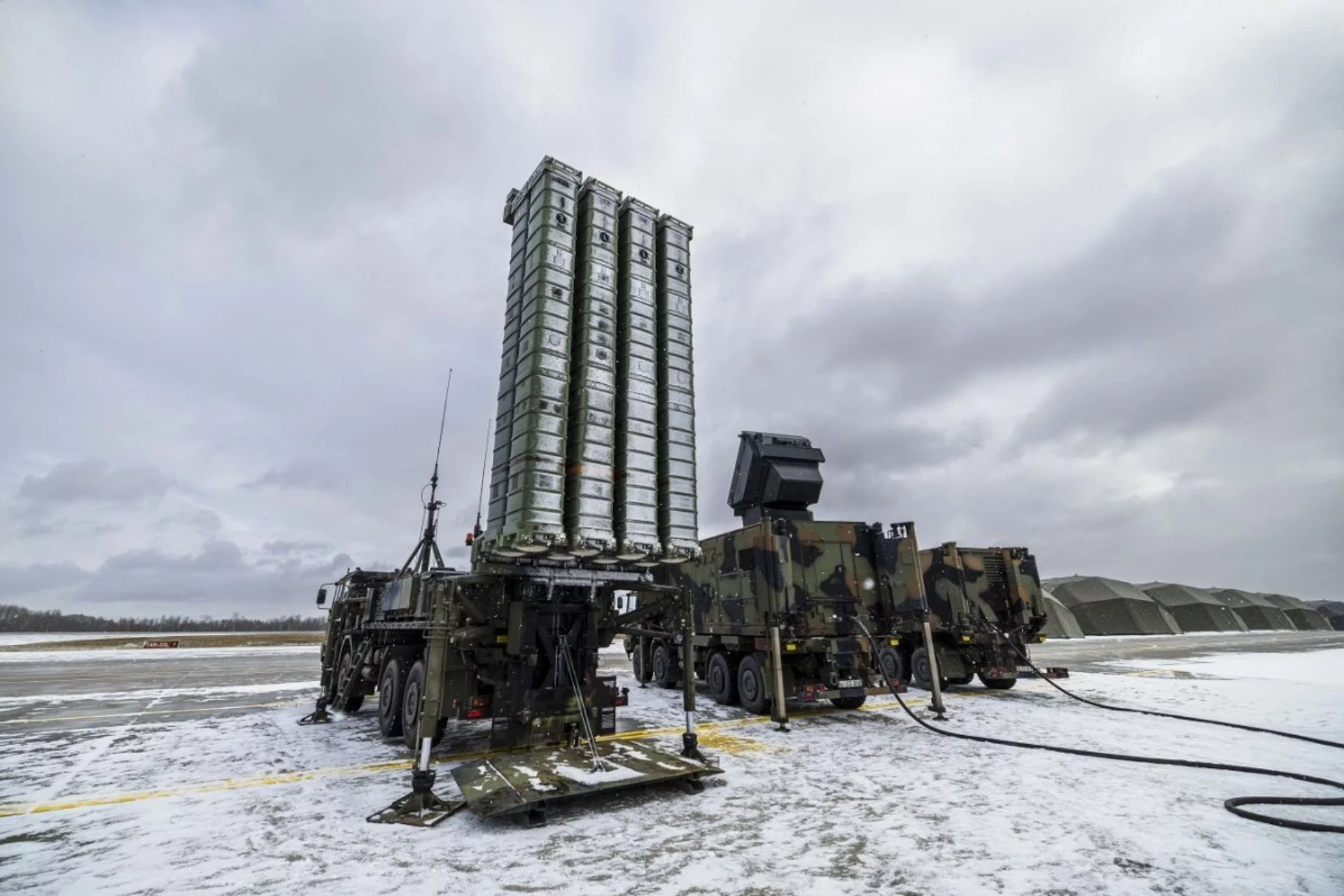
Currently, Lithuania’s air defense relies on a combination of short- and medium-range systems, including U.S.-made FIM-92 Stinger MANPADS, Swedish RBS 70s, and the more advanced Norwegian NASAMS system. NASAMS forms the core of Lithuania’s medium-range air defenses and is fully integrated with NATO’s command and surveillance infrastructure. However, the country lacks long-range systems like the U.S. Patriot or Franco-Italian SAMP/T, and thus depends on NATO forces for high-altitude coverage. NATO’s Baltic Air Policing mission, operated from Šiauliai and Ämari air bases, continues to play a critical role in protecting the region’s airspace.
Lithuanian officials argue that these drone incidents are not isolated, noting that similar violations have occurred in Poland, Romania, and Latvia. With Russian drone activity escalating in Ukraine, the risk of accidental or intentional incursions into NATO territory continues to grow. Foreign Minister Budrys emphasized the broader implications: “This is not just about Lithuania’s airspace or security. This concerns NATO’s collective security and the European Union as a whole.”
As the war in Ukraine persists, Lithuania’s appeal underscores a deeper strategic concern: the increasing vulnerability of NATO’s front-line states to asymmetrical, low-cost threats such as drones. According to Vilnius, meeting this challenge requires enhanced cooperation, innovation, and a collective response from the entire Alliance.
