

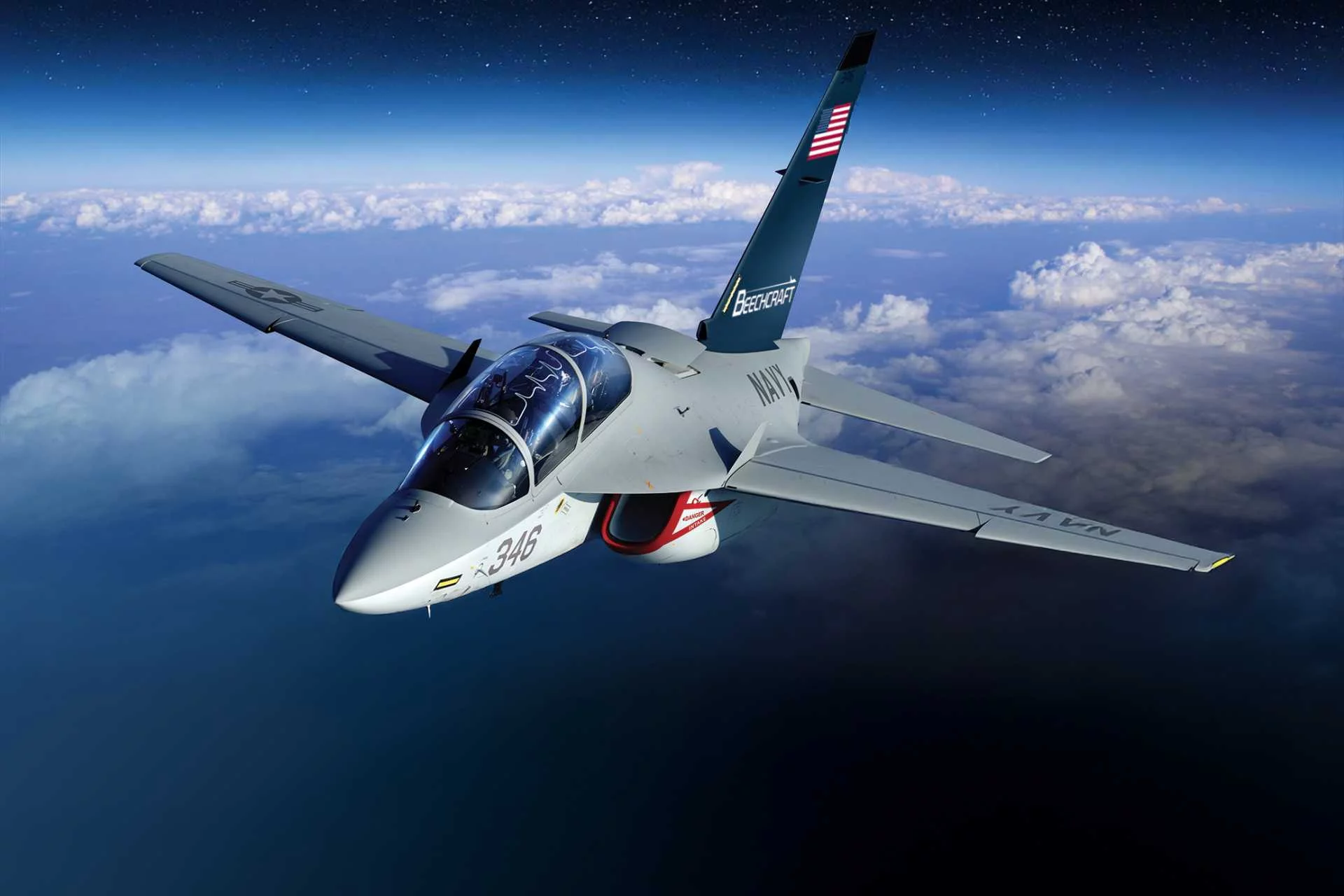
The M-346N trainer was built without arresting gear or a catapult launch system — a deliberate design choice.
Instead, it enables Field Carrier Landing Practice (FCLP), allowing pilots to simulate carrier landings onshore, performing wave-offs without actually touching down.
This supports the U.S. Navy’s new training model, which aims to reduce aircraft wear, cut costs, and shift more training from sea to land.
A Shift in Training Doctrine
Carrier landings are no longer mandatory for basic jet training.
Modern jets like the F-35C and Super Hornet use Precision Landing Mode (PLM), reducing pilot workload and allowing accurate land-based instruction.
This means pilots can practice carrier-style approaches using M-346N — without ever landing on a carrier.
Advanced Systems and Integrated Simulation
The M-346N is equipped with high-fidelity technologies designed to mimic real combat scenarios:
- Live-Virtual-Constructive (LVC) architecture combining simulators, live aircraft, and AI-driven threats
- Helmet Mounted Displays (HMDs) with Augmented Reality
- Embedded Tactical Training System (ETTS) for simulating radar, weapons, and adversary threats
These features create an F-35C-like environment without needing early exposure to a carrier deck.
Built for Transition to Frontline Fighters
Already in use by air forces like Italy and Israel, the M-346 helps bridge the gap to advanced jets like the F-35 and Eurofighter.
It includes HOTAS controls, fly-by-wire systems, and 5th-gen-style cockpit displays — giving pilots a realistic preview of what’s to come.
Saving Money, Reducing Risk
Transferring early training hours to a cost-effective platform like M-346N reduces operational expenses and preserves expensive F-35C airframes.
It also minimizes the risks of conducting carrier operations during early training stages.
M-346N offers a next-gen training solution for future F-35C pilots — focusing on shore-based instruction, precision landing simulation, and mission-grade virtual training.
While it won’t replace final carrier qualification, it delays and streamlines that process — making FCLP and PLM the new foundation of early naval aviation training.
