

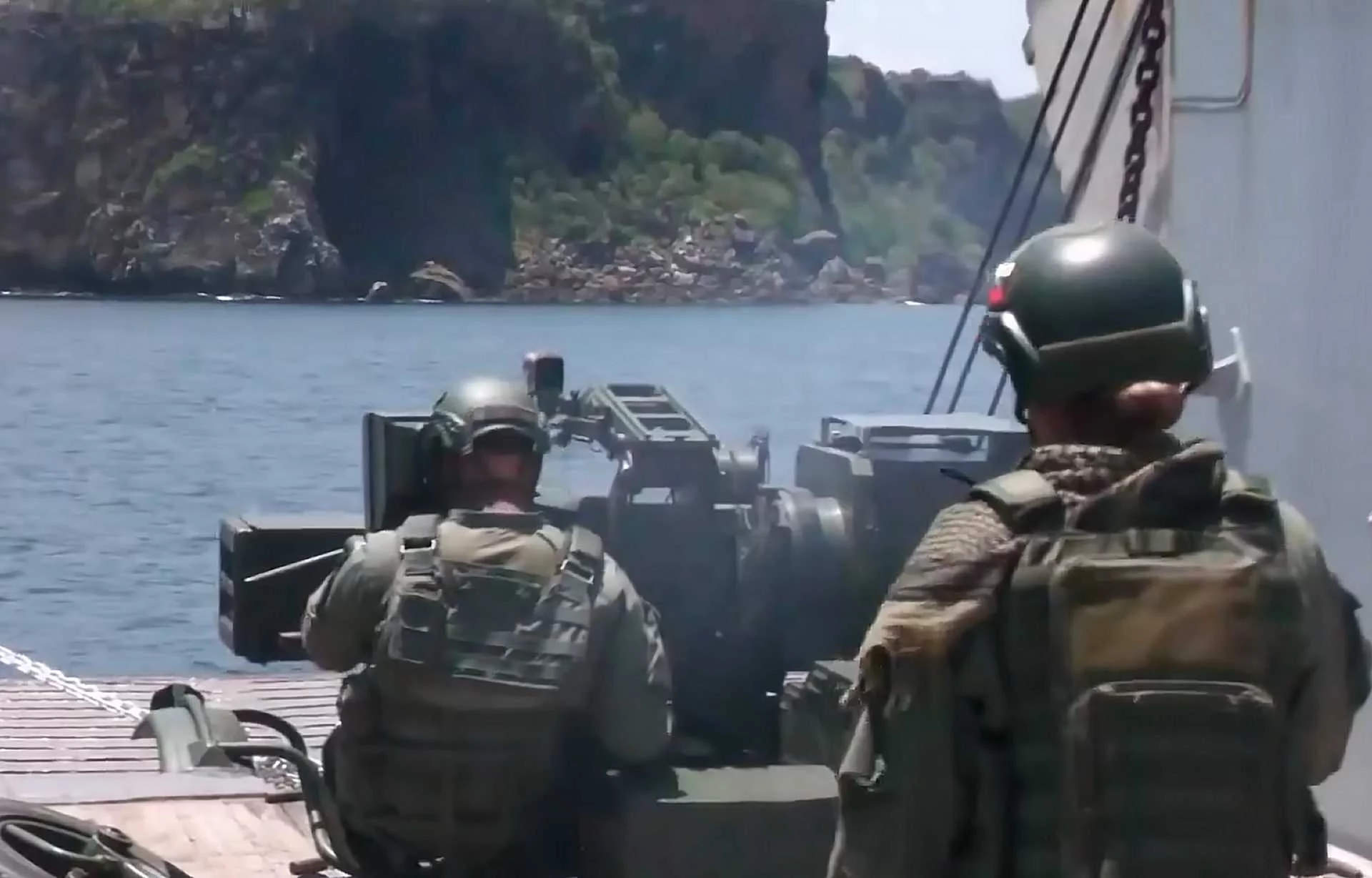
On September 30, 2025, Venezuelan President Nicolás Maduro declared a nationwide “state of emergency against external threats,” placing the armed forces on full wartime footing. The decision was announced as a response to the United States’ growing military activity.
Under the new decree, land, air, naval, and cyber defense elements were placed under full mobilization. Military units activated coastal defense systems, while naval assets and air defense batteries were deployed around critical facilities. Satellite imagery revealed increased activity at military bases in Falcón, Sucre, and Nueva Esparta.
Approximately 3.7 million reservists and militia members were integrated into the army under the Plan República Emergencia. These forces were assigned to urban warfare, guerrilla tactics, and infrastructure defense. Reports also indicate the distribution of anti-tank weapons and modernized armored vehicles.
The Venezuelan Navy intensified patrols in strategic maritime corridors with Guaiquerí-class patrol vessels, Type-209 submarines, and fast attack craft. This move also grants authority to use force against foreign vessels within the country’s Exclusive Economic Zone (EEZ).
For the United States, the development significantly raises operational risks in the Caribbean. U.S. forces stationed in Curaçao, Aruba, and Puerto Rico, along with the USS Wasp amphibious assault group, are now viewed as being under direct threat. Caracas has described U.S. surveillance flights and naval patrols as potential preparations for attack.
Reports indicate the Pentagon is reassessing the Rules of Engagement (ROE) for U.S. units operating within 250 nautical miles of the Venezuelan coast. Additionally, the activation of Russian- and Chinese-made radar and electronic warfare systems has further complicated U.S. operations in the region.
Analysts stress that this marks the first time since the Cold War that a Latin American country has adopted a full-scale wartime posture against the U.S. In the coming days, potential airspace violations or radar lock-ons at sea could increase the risk of direct confrontation between the two sides.
The regional balance now hinges on upcoming developments. The next 72 hours will be decisive in determining whether tensions in the Caribbean escalate into open armed conflict.
