

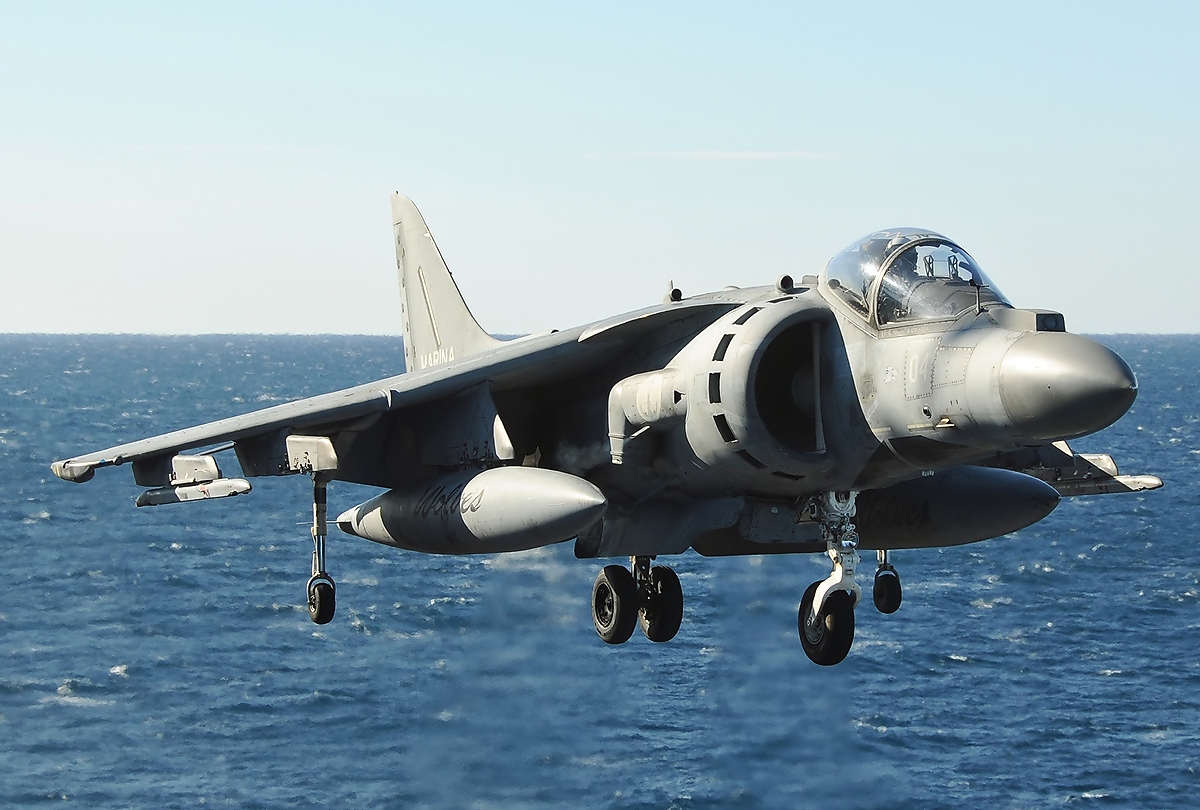
One of the most recognized and successful V/STOL (Vertical and Short Takeoff and Landing) fighter jets in the world, the McDonnell Douglas AV-8B Harrier II holds a distinguished place in aviation history. Powered by the British Rolls-Royce Pegasus II engine and known for its high maneuverability, it has been effectively used for both attack and reconnaissance missions for many years. The AV-8B made its first flight in 1981 and is essentially considered an advanced successor to the Hawker P.1127, which was originally designed in 1957.
A Development Process Spanning from History to Today
Following the P.1127, this platform was developed in the 1960s with joint funding from Britain and the United States, attracting interest from the RAF and the U.S. Marine Corps. The aircraft, introduced in the 1970s under the name “Harrier,” was also supported by a limited number of two-seat training versions. Throughout the evolution from the AV-8A to the AV-8B, continuous improvements were made in critical technologies such as the engine, radar, and night vision systems.
Users and Current Status
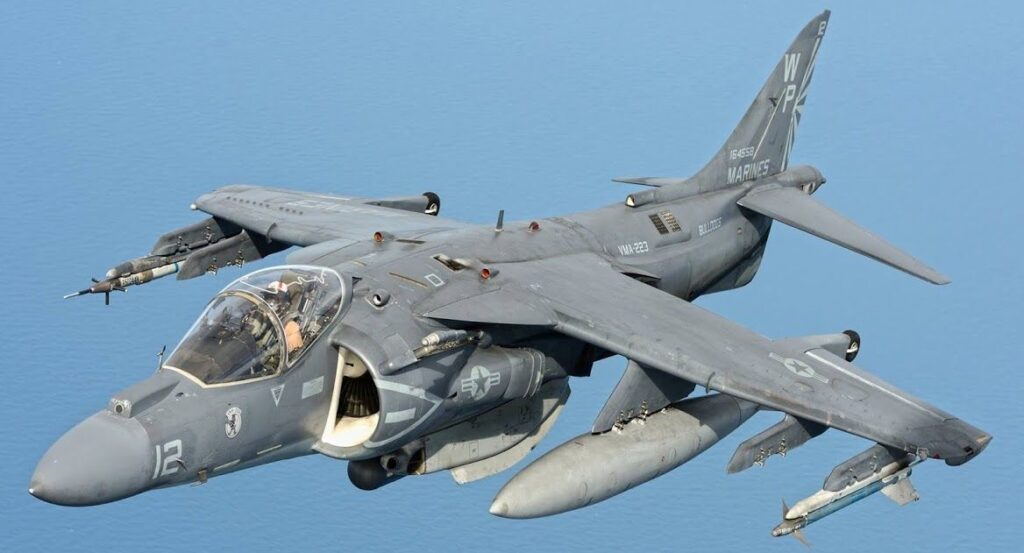
Its main users include the U.S. Marine Corps, Spanish Navy, Italian Navy (operating from the Giuseppe Garibaldi aircraft carrier), as well as the British Royal Navy and Royal Air Force. Today, the Harrier II is increasingly being replaced by the more modern F-35B Lightning II platform. The UK and the U.S. have begun deploying the F-35B on aircraft carriers and amphibious assault ships, gradually phasing out their Harrier fleets.
Technical Specifications
| Feature | Value |
|---|---|
| Crew | 1 |
| Length | 14.12 m |
| Height | 3.55 m |
| Wingspan | 9.25 m |
| Wing Area | 22.61 m² |
| Empty Weight | 6,745 kg |
| Loaded Weight | 10,410 kg |
| Maximum Takeoff Weight | Conventional takeoff: 14,000 kg Vertical takeoff: 9,415 kg |
| Engine | 1× Rolls-Royce F402-RR-408 (Mk 107) vectored thrust turbofan (96.75 kN) |
| Maximum Speed | Mach 0.89 (1,085 km/h) at sea level |
| Range | 2,200 km |
| Rate of Climb | 4,485 m/min |
| Wing Loading | 460.4 kg/m² |
Key Features and Significance of the AV-8B Harrier II
Thanks to its unique V/STOL capabilities, the Harrier II can take off and land without the need for conventional runways. This feature provides a strategic advantage, especially on aircraft carriers and amphibious assault ships. The engine’s central placement and surrounding air intakes offer aerodynamic efficiency in the aircraft’s design.
As the Harrier II fleet is being retired, more advanced and multi-role platforms like the F-35B are coming to the forefront. Nevertheless, the Harrier remains a pioneering and highly successful example of the vertical takeoff and landing concept in military aviation history.
