

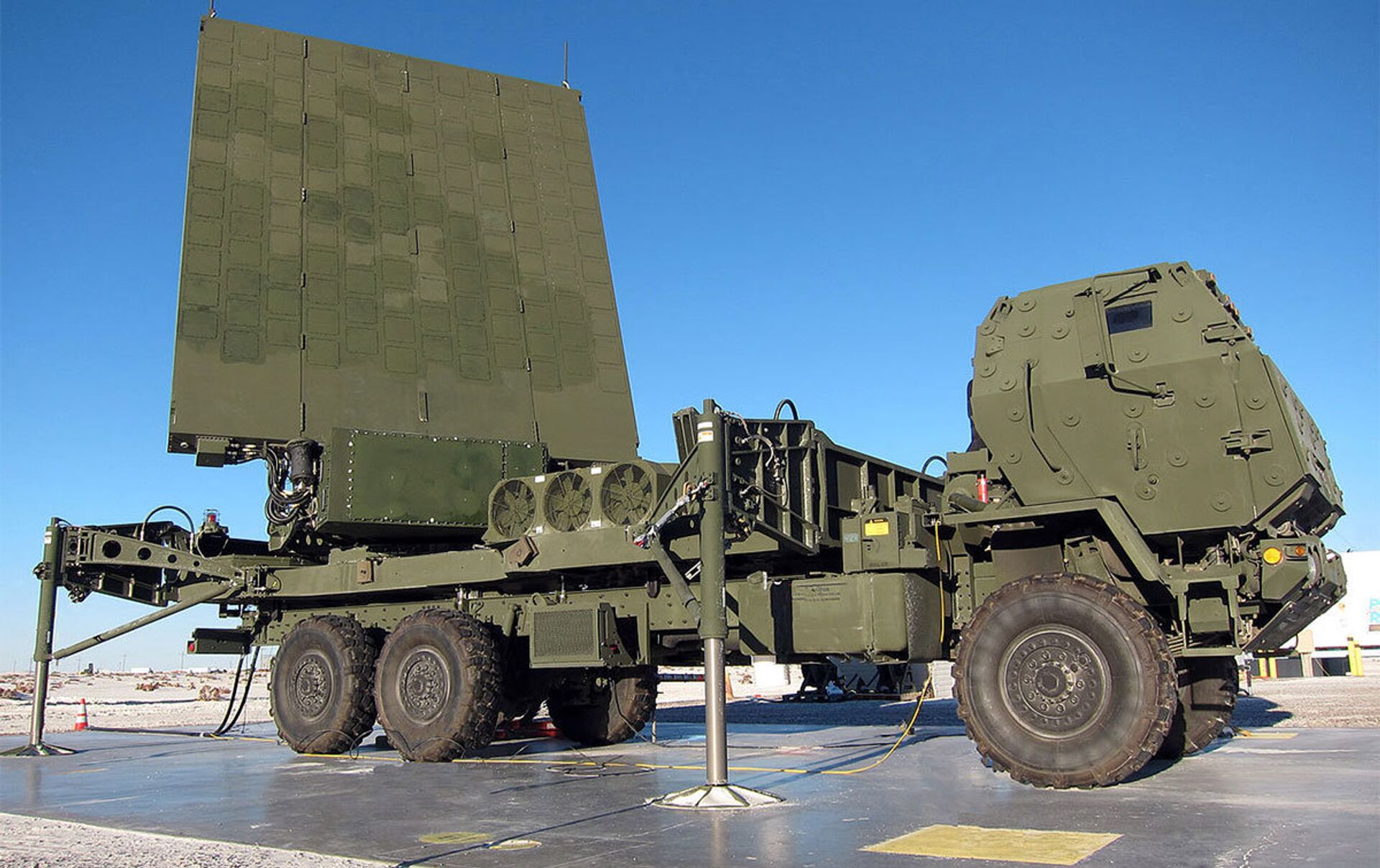
The Medium Extended Air Defense System (MEADS) is a next-generation mobile air and missile defense platform developed collaboratively by the United States, Germany, and Italy. Designed to bridge the gap between short-range systems and high-altitude long-range solutions like THAAD, MEADS provides comprehensive protection against aircraft, cruise missiles, tactical ballistic missiles, and unmanned aerial vehicles (UAVs). Germany has adopted MEADS as the foundation for its TLVS (Taktisches Luftverteidigungssystem), intending to modernize its air defense capabilities by 2025.
Core Capabilities
360-Degree Defense & Modular Architecture
MEADS features an innovative “Plug-and-Fight” architecture, allowing radars, launchers, and command units to join or leave the network without interrupting operations. This modularity ensures continuous coverage and rapid deployment across dynamic battlefields.
Radar and Targeting Systems
- MFCR (Multi-Function Fire Control Radar): X-band AESA radar providing precision tracking and missile guidance, including Mode 5 IFF.
- UHF 360° Surveillance Radar: Active electronically scanned array capable of wide-area threat detection.
Launchers and Interceptors
Each vehicle-mounted launcher can carry up to eight PAC-3 MSE missiles, an enhanced version of the Patriot PAC-3 with superior agility and range. In some German configurations, IRIS-T SLM missiles are added to counter advanced air-breathing threats.
Command & Control (BMC4I)
The system’s Tactical Operations Center (TOC) enables fully networked operations. All elements—radars, launchers, and command modules—are connected via wireless links, offering high redundancy, resilience, and interoperability with allied systems.
Development and Operational Milestones
- Origins: Began in the 1990s as the Corps SAM program and was rebranded MEADS in 1995.
- Germany’s Selection: In 2015, MEADS was chosen for TLVS, with plans to deploy 8–10 batteries. The system was favored for its lower lifecycle costs, estimated at around €5.6 billion over 30 years.
- Technical Achievements: In 2013, MEADS demonstrated the ability to intercept two simultaneous threats from opposite directions—an unprecedented feat for a medium-range system.
System Overview
| Feature | Specification |
|---|---|
| Program Origin | Joint U.S., Germany, Italy project, successor to Patriot system |
| Architecture | Mobile, modular “Plug-and-Fight” design with 360° coverage |
| Radars | X-band MFCR (tracking), UHF surveillance; both AESA |
| Missiles | PAC-3 MSE primary; IRIS-T SLM secondary option |
| Launcher | Vehicle-mounted, 8 missiles per unit |
| Command & Control | BMC4I for distributed networked operations |
| Operational Edge | Dual simultaneous intercepts, full 360° coverage, high mobility |
| Germany’s Role | Basis for TLVS, 8–10 batteries planned, modernized air defense |
MEADS represents a significant step forward in modern air defense. Its modularity, mobility, and advanced radar-missile integration make it well-suited to protect maneuvering forces and provide resilient, scalable defense against a wide spectrum of aerial threats.
If you like, I can also create a direct comparison table between MEADS, Khordad‑3, and S-300 systems to illustrate their strengths, ranges, and capabilities side by side.
