


The Mikoyan MiG-29, known by its NATO reporting name “Fulcrum”, is a twin-engine, all-weather fighter aircraft developed by the Soviet Union in the late 1970s. Designed by the Mikoyan Design Bureau, the MiG-29 was created to counter U.S. air superiority fighters like the F-15 Eagle and F-16 Fighting Falcon. It officially entered service with the Soviet Air Forces in 1983.
Originally intended solely for air-to-air combat, the MiG-29 evolved over time into a versatile multi-role platform. Modern variants are capable of launching a range of air-to-ground missiles and precision-guided munitions, transforming it into a formidable fighter-bomber. The aircraft has been developed into numerous variants including the MiG-29M, a modern multirole version, and the MiG-29K, a carrier-capable model. The most advanced iteration is the MiG-35, featuring upgraded engines, a digital glass cockpit, modern radar systems, infrared search and track (IRST) sensors, and increased fuel capacity. Some variants also support aerial refueling.
Following the collapse of the Soviet Union, many of its successor states continued operating the MiG-29, with Russia becoming the primary user. Although there were plans to upgrade the fleet to the MiG-29SMT standard, economic constraints limited the program’s scope. The MiG-29 has also been widely exported, having served in the air forces of over 30 countries. According to Flight Global data from 2024, there are 809 MiG-29s in active service worldwide, making it the fifth most common fighter jet in operation today
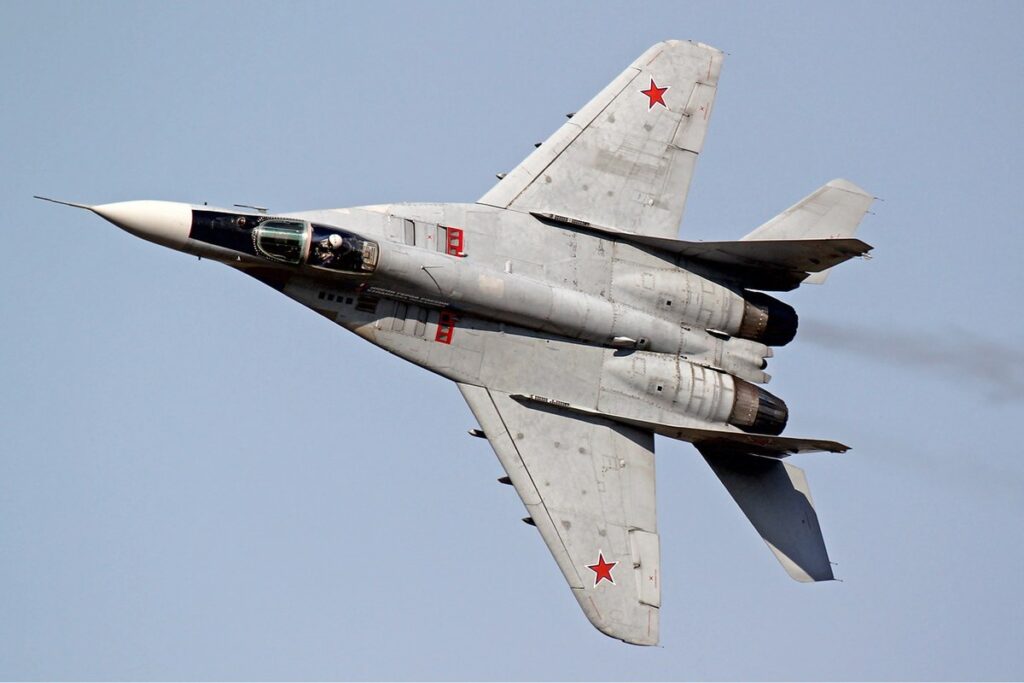
Global Operators of the MiG-29 (Active Service)
- Russia – 256 units
- India – 101 units (MiG-29UPG & MiG-29K)
- Ukraine – 70 units
- Syria – 46 units
- Belarus – 44 units
- North Korea – 40 units
- Myanmar – 31 units
- Poland – 31 units
- Uzbekistan – 30 units
- Kazakstan – 23 units
- Turkmenistan – 20 units
- Iran – 19 units
- Bulgaria – 19 units
- Peru – 19 units
- Malaysia – 12 units
- Slovakia – 12 units
- Sudan – 24 units
- Azerbaijan – 9 units
- Bangladesh – 8 units
- Yemen – 25 units
- Eritrea – 4 units
- Serbia – 4 units
- Chad – 3 units (donated by Ukraine)
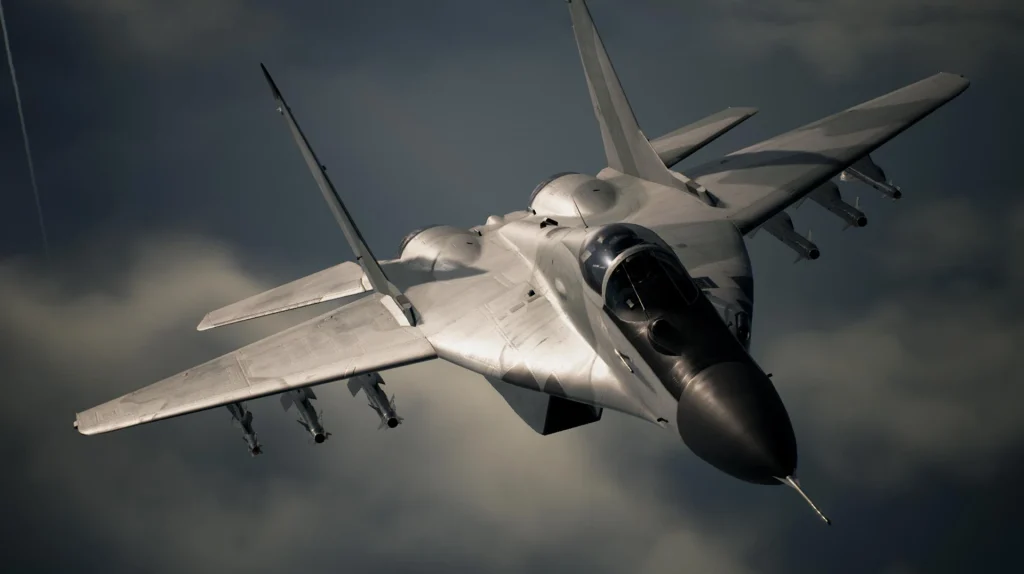
Former Operators
Countries that once used the MiG-29 but retired it from service include East Germany, Germany, Czech Republic, Slovakia, Romania, Hungary, Iraq, Moldova, Czechoslovakia, Yugoslavia, and the Soviet Union.
Specifications of the MiG-29
| Category | Specification |
|---|---|
| Crew | 1 |
| Length | 17.32 m (57 ft 10 in) |
| Height | 4.73 m (15 ft 6 in) |
| Wingspan | 11.36 m (37 ft 3 in) |
| Wing Area | 38 m² (410 ft²) |
| Empty Weight | 11,000 kg (24,251 lb) |
| Loaded Weight | 14,900 kg (32,849 lb) |
| Max Takeoff Weight | 18,000 kg (39,683 lb) |
| Engines | 2 × Klimov RD-33 turbofan, afterburning |
| Thrust (each) | 8,300 kgf (18,300 lbf) |
| Max Speed | Mach 2.25 (2,400 km/h or 1,490 mph) |
| Range (internal fuel) | 1,430 km (890 mi) |
| Service Ceiling | 18,000 m (59,000 ft) |
| Rate of Climb | 330 m/s (initial), 109 m/s average |
| Wing Loading | 403 kg/m² (82 lb/ft²) |
| Thrust-to-Weight Ratio | 1.09 |
Armament
- Gun: 1× 30mm GSh-30-1 cannon
- Air-to-Air Missiles: AA-8, AA-10, AA-11
- Air-to-Ground Missiles: AS-12, AS-14
The MiG-29 remains a symbol of Soviet aerospace engineering—renowned for its agility, speed, and combat performance. It continues to serve across the globe in frontline roles, reflecting both its durability and the adaptability of its many modernized variants.
