

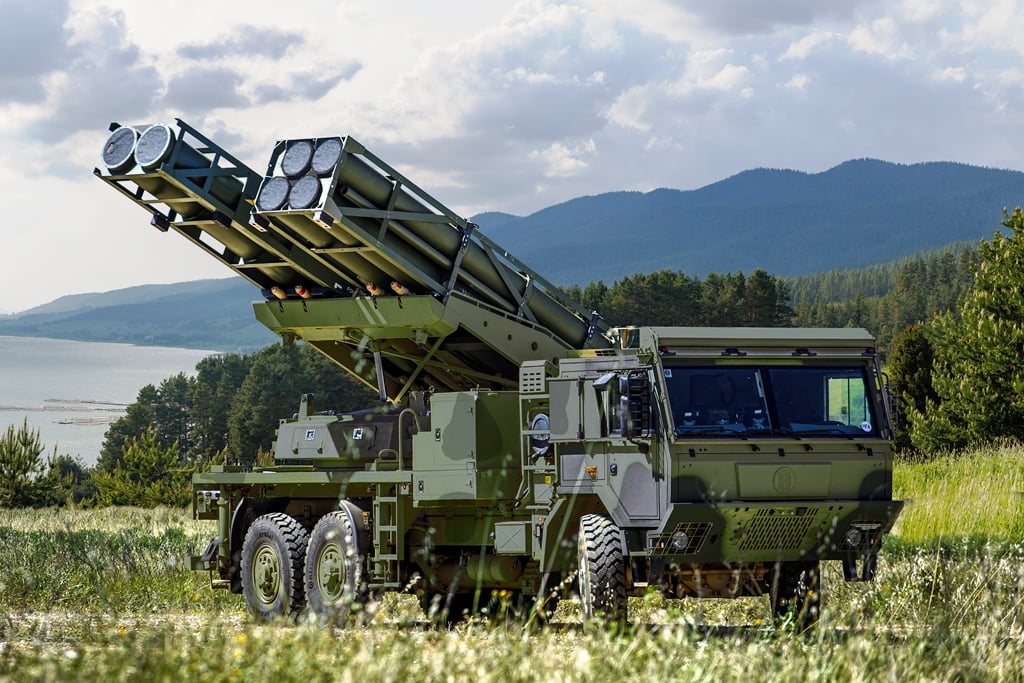
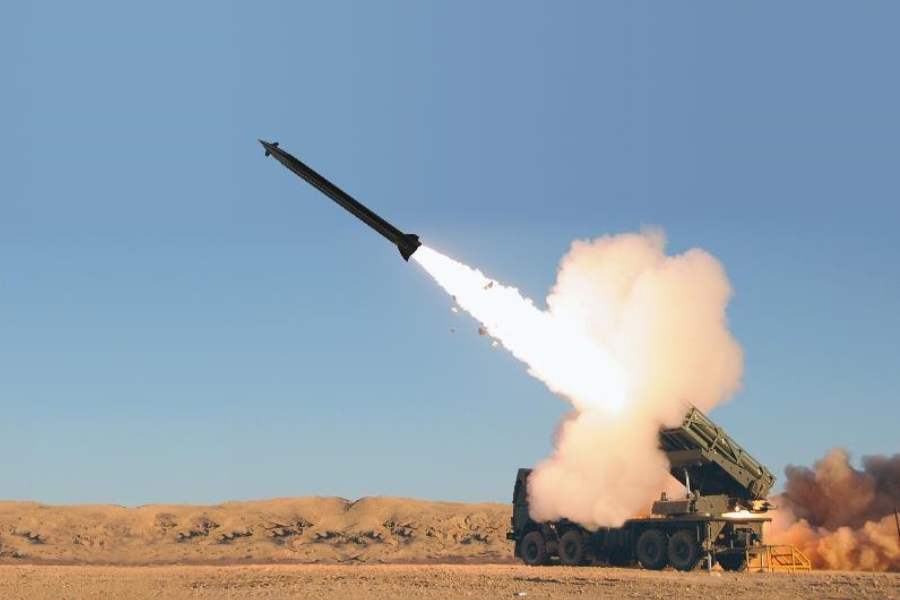
After nearly two decades without a rocket artillery capability, the Royal Netherlands Army has officially ushered in a new era of precision long-range firepower. Over two days at Breezanddijk along the Afsluitdijk, Dutch artillery units successfully completed their first live-fire validation of the Israeli-made PULS (Precise and Universal Launch System). All sixteen rockets fired landed safely within the designated impact zone, confirming both the technical readiness of the new system and the certification of its operators. This trial marks a pivotal milestone since the delivery of the first four PULS units in early 2024 and reestablishes the Netherlands as a player in modern deep-strike warfare.
The acquisition of PULS is part of a €515 million modernization initiative, which includes not only 20 rocket launchers but also advanced fire control systems, Scania Gryphus 8×8 trucks, autoloading cranes, training simulators, secure communications infrastructure, and initial stocks of various precision munitions. While the initial systems were delivered on Tatra 6×6 platforms, future PULS launchers will feature Dutch-standard Gryphus chassis with enhanced armor and automated loading features, scheduled for delivery through 2026.
Organizationally, the 20 PULS units will form the backbone of two new artillery batteries — assigned to the 11th Horse Artillery Battalion and the 41st Field Artillery Battalion — both falling under the 43rd Mechanized and 13th Light Brigades. Four additional systems will serve as logistics and training reserves. The reactivation of rocket artillery capability will also see a structural shift, gradually phasing out the Vuursteun Commando and reorganizing artillery training infrastructure at ’t Harde to accommodate expanded force needs.
PULS’s strength lies in its modular firepower. Each launcher can carry two pods loaded with a wide array of guided rockets or tactical missiles — from short-range Accular 122mm rockets to 300+ km-range Predator Hawk missiles, and even 250 km-range Delilah cruise missiles. The system is also compatible with SkyStriker loitering munitions, offering surveillance and strike capabilities in a single platform. With the ability to fire multiple rounds in under a minute and operate under all weather conditions, PULS gives Dutch forces a rapid, flexible precision-strike option deep behind enemy lines.
The Netherlands’ decision to go with PULS over the American HIMARS system stemmed from procurement speed, availability, and open architecture. HIMARS, while widely used by NATO allies, depends on proprietary munitions. PULS, by contrast, offers future compatibility with European-made ordnance — an attractive feature as the EU seeks greater defense industrial autonomy. With partners like Denmark and Spain also investing in PULS, and Germany exploring co-production with Elbit and KNDS, a European rocket artillery ecosystem is beginning to take shape.
PULS fills a critical range gap in Dutch ground combat capability. While the army already fields 120mm mortars and PzH2000NL self-propelled howitzers (max 50 km), PULS extends this reach up to 400 km, depending on the selected munition. This reinstates capabilities lost when the Netherlands retired its 22 M270 MLRS systems in 2004. It also aligns with broader goals outlined in the 2022 Defence White Paper — namely, strengthening the ability to strike high-value targets like command centers, logistics hubs, and air defense systems at range.
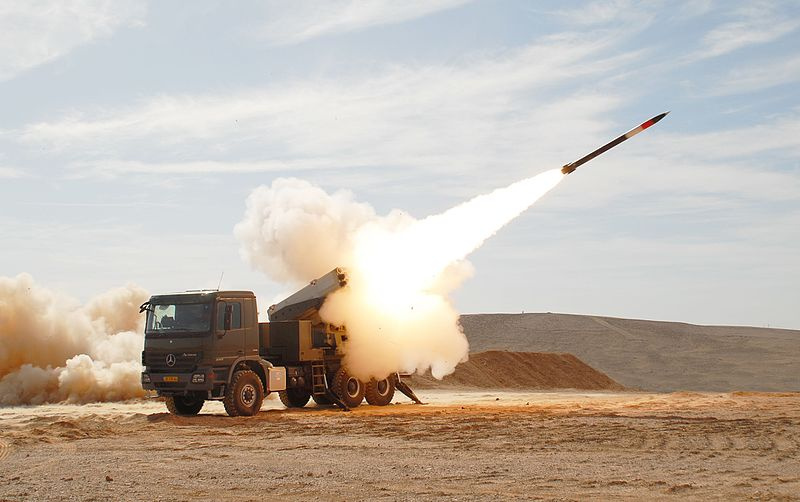
The Netherlands’ precision strike revival extends beyond land forces. In parallel with PULS, the country is acquiring Tomahawk cruise missiles for naval platforms and JASSM-ER standoff weapons for its F-35 fighter jets. Both systems offer ranges exceeding 1,000 km and will enable cross-domain deep strike capabilities — from submarines and frigates to stealth aircraft.
Together, these systems mark a renaissance in Dutch strategic firepower. With stealthy, guided munitions now spanning land, sea, and air platforms, the Netherlands is restoring its long-range strike posture while enhancing NATO’s collective deterrence architecture. Full integration of the PULS systems is expected by 2026, setting the stage for a new era of Dutch artillery precision — one that’s fast, flexible, and firmly embedded within the alliance’s future battlefield doctrine.
