

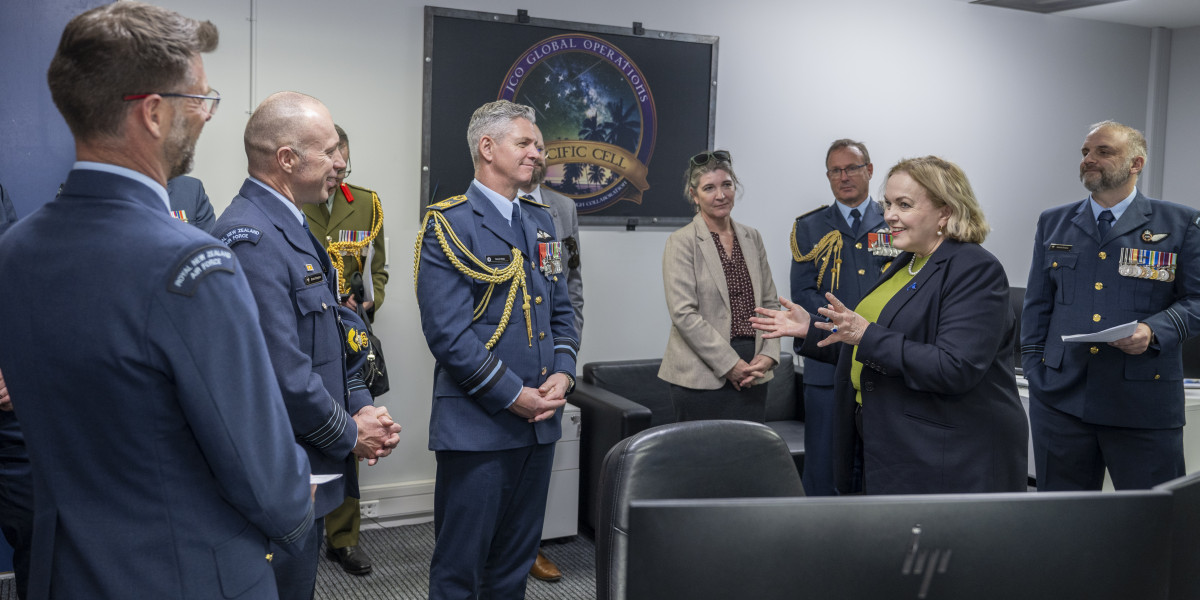
New Zealand has officially entered the space defense arena with the reactivation of No. 62 Squadron, marking the Royal New Zealand Air Force’s (RNZAF) first military unit dedicated entirely to operations in space. The unit was formally stood up on July 4 at Auckland’s Whenuapai Airbase, signaling a new chapter in the nation’s defense strategy.
“Space is no longer the final frontier – it’s a critical domain for our security and daily life,” said Judith Collins, New Zealand’s Minister for Space and Defence, at the inauguration ceremony. She was joined by Chief of Defence Force Air Marshal Tony Davies and Chief of Air Force Air Vice-Marshal Darryn Webb, underscoring the strategic importance of the new unit.
From Orbit to Operations: A Strategic Leap
No. 62 Squadron’s mission is clear: monitor, interpret, and secure space-based activity to protect both New Zealand’s national interests and contribute to global space security. “We rely on space for everything from GPS navigation to secure communications and disaster monitoring,” Collins noted. “Protecting that access is no longer optional.”
Vice-Marshal Webb emphasized that New Zealand’s inclusion in the U.S.-led Operation Olympic Defender, a coalition of seven nations promoting responsible behavior in space, represents a major milestone: “This isn’t just symbolic—New Zealand now has both a seat at the table and eyes on the sky.”
Small Unit, Big Impact
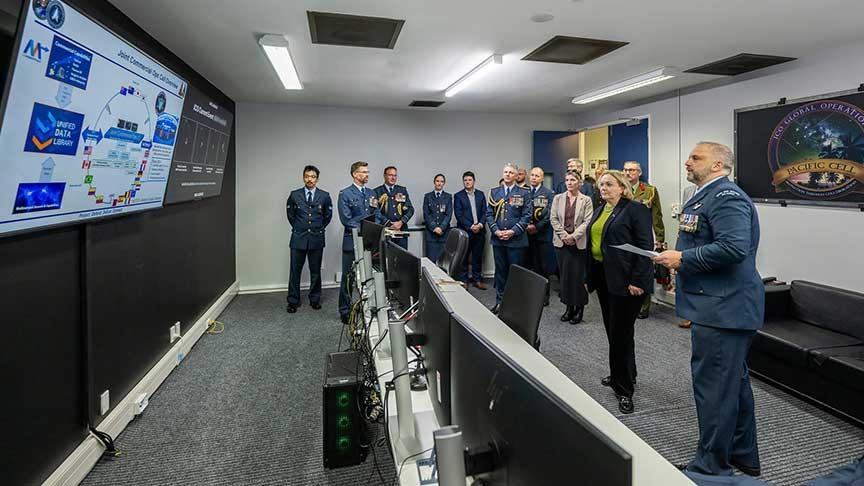
The squadron currently comprises just 12 personnel, but is expected to expand and evolve as it builds deeper collaborations with industry and academia. According to Air Commodore Andy Scott, the team is already playing a leadership role in the Pacific Cell, a key strategic grouping involving Australia, Japan, and South Korea, operating in close coordination with the U.S. Space Force.
“We’re not starting from scratch,” Scott noted. “This is a natural progression of our growing involvement in space operations over the last decade.”
A Decade of Building Space Credibility
New Zealand’s journey into military space operations began in earnest in 2015, when it joined the Combined Space Operations (CSpO) initiative alongside long-time allies like the U.S., U.K., France, and Germany. In 2017, the country contributed to the launch of the WGS-9 military satellite, securing access to the Wideband Global SATCOM network.
Additionally, New Zealand has participated regularly in the Schriever Wargames, a high-level simulation exercise led by the U.S. Space Force that tests allied responses to potential space-based security threats.
A Legacy Reborn
First established in 1943, No. 62 Squadron initially supported Allied forces with radar operations across the Pacific during World War II, including critical missions in Bougainville, Guadalcanal, and the Solomon Islands. Now, eight decades later, the squadron returns with a new purpose — not to defend against threats on land or sea, but in the vast and increasingly contested domain of space.
New Zealand’s bold step into space defense signals not only its commitment to allied security, but also its readiness to help shape the rules and resilience of 21st-century warfare—from the ground to the stars.
