

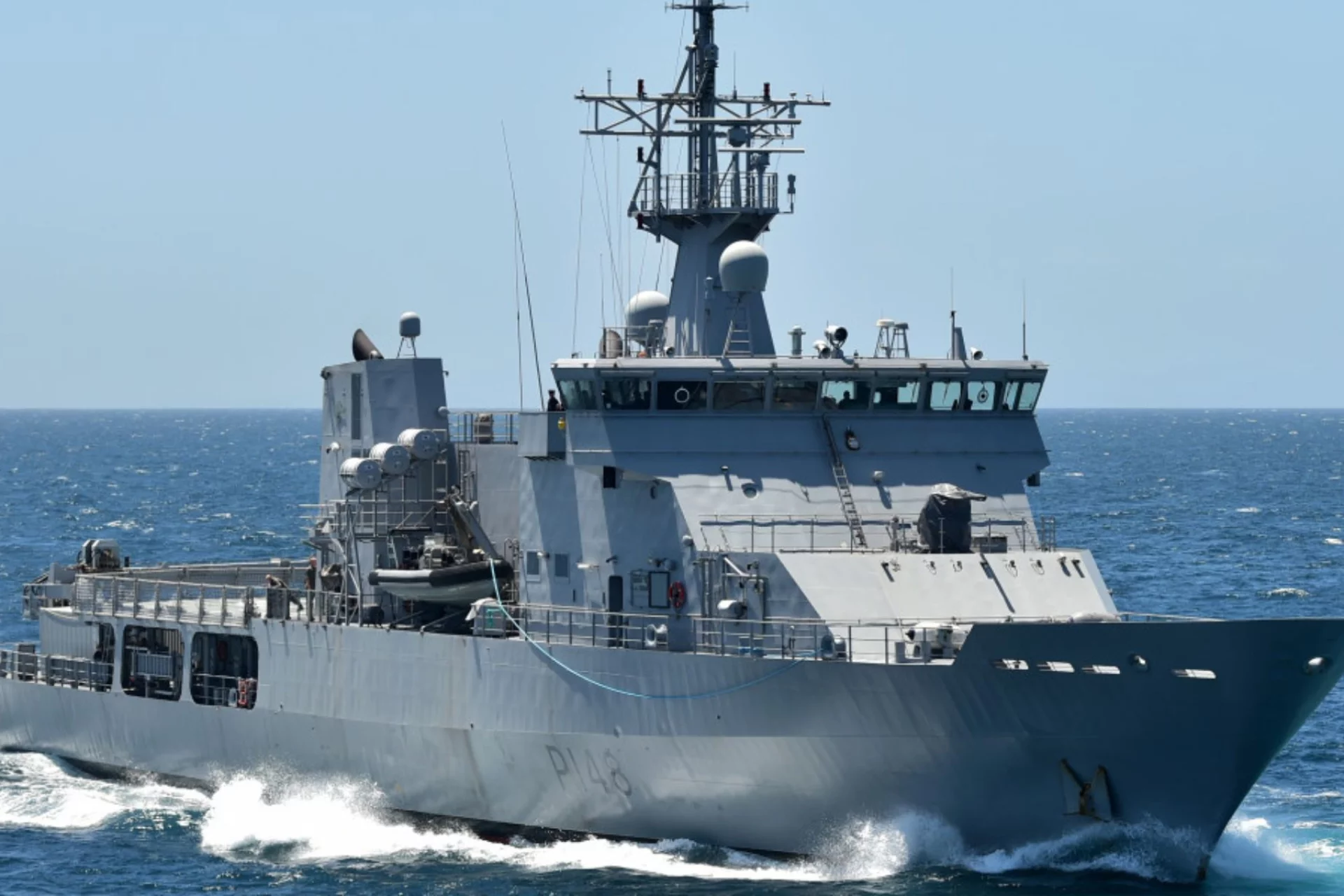
Babcock and the Royal New Zealand Navy (RNZN) have begun reactivation work on HMNZS Otago at Devonport, creating an integrated team to overhaul engines, replace obsolete systems, and upgrade navigation, sensors, and controls. The Offshore Patrol Vessel (OPV) is scheduled to rejoin the fleet in early 2026, enhancing New Zealand’s maritime presence and law enforcement capabilities across the South Pacific.
Otago is an 85-meter, 1,900-ton OPV designed for Exclusive Economic Zone (EEZ) surveillance and maritime law enforcement tasks. Propulsion relies on two MAN B&W 12RK280 diesel engines, giving a top speed of 22 knots and a range of about 6,000 nautical miles. Main armament is a stabilized Rafael Typhoon 25 mm gun, remotely operated from the bridge, complemented by small arms for boarding teams. Aviation facilities support a Kaman SH-2G(I) Super Seasprite helicopter for surveillance, winching, and logistics.
Within RNZN service, the OPV combines endurance, fuel efficiency, and deck space for multi-agency operations. Otago carries two rigid-hull inflatable boats and a flight deck sized for the Super Seasprite, allowing liaison officers from fisheries, customs, police, and conservation agencies to extend the Recognised Maritime Picture / Common Operating Picture (RMP/COP). Crews can also implement EMCON to minimize detectability in contested environments.
Importance of Modernization
The reactivation addresses limited offshore unit availability caused by maintenance and training cycles. The work package covers engine and generator overhaul, obsolete system replacement, and modernization of navigation, sensors, and control automation. Goals include restoring baseline performance, improving reliability, extending mean time between failures, and reducing corrective maintenance at sea.
Otago’s return strengthens presence in the South Pacific, where long transits, sparse infrastructure, and variable weather pose challenges. Its 6,000-nautical-mile range and operational flight deck enable sustained patrols near sub-Antarctic islands and rapid response after cyclones. Stabilized weapon systems and boarding capabilities allow effective maritime law enforcement. Returning Otago to the rotation helps balance assignments across inshore patrol vessels, Anzac-class frigates, and the fleet tanker Aotearoa, freeing time for training, maintenance, and interoperability.
Strategic Significance
Devonport is central to New Zealand’s Defence Industrial and Technological Base (BITD). Babcock, as Strategic Maritime Partner, oversees asset management, project planning, and production support with RNZN and NZDF personnel. Modernization, including propulsion refurbishment and control system renewal, shortens maintenance, reduces downtime, and accelerates sea return.
While New Zealand does not seek force projection, reliable OPVs support maritime presence, partner interoperability, and surveillance along critical sea lines and disaster-prone islands. Reactivating Otago restores a key regional security tool, delivering consistent operational effects daily and reinforcing New Zealand’s capability to sustain routine patrols and humanitarian response in the Indo-Pacific.
