

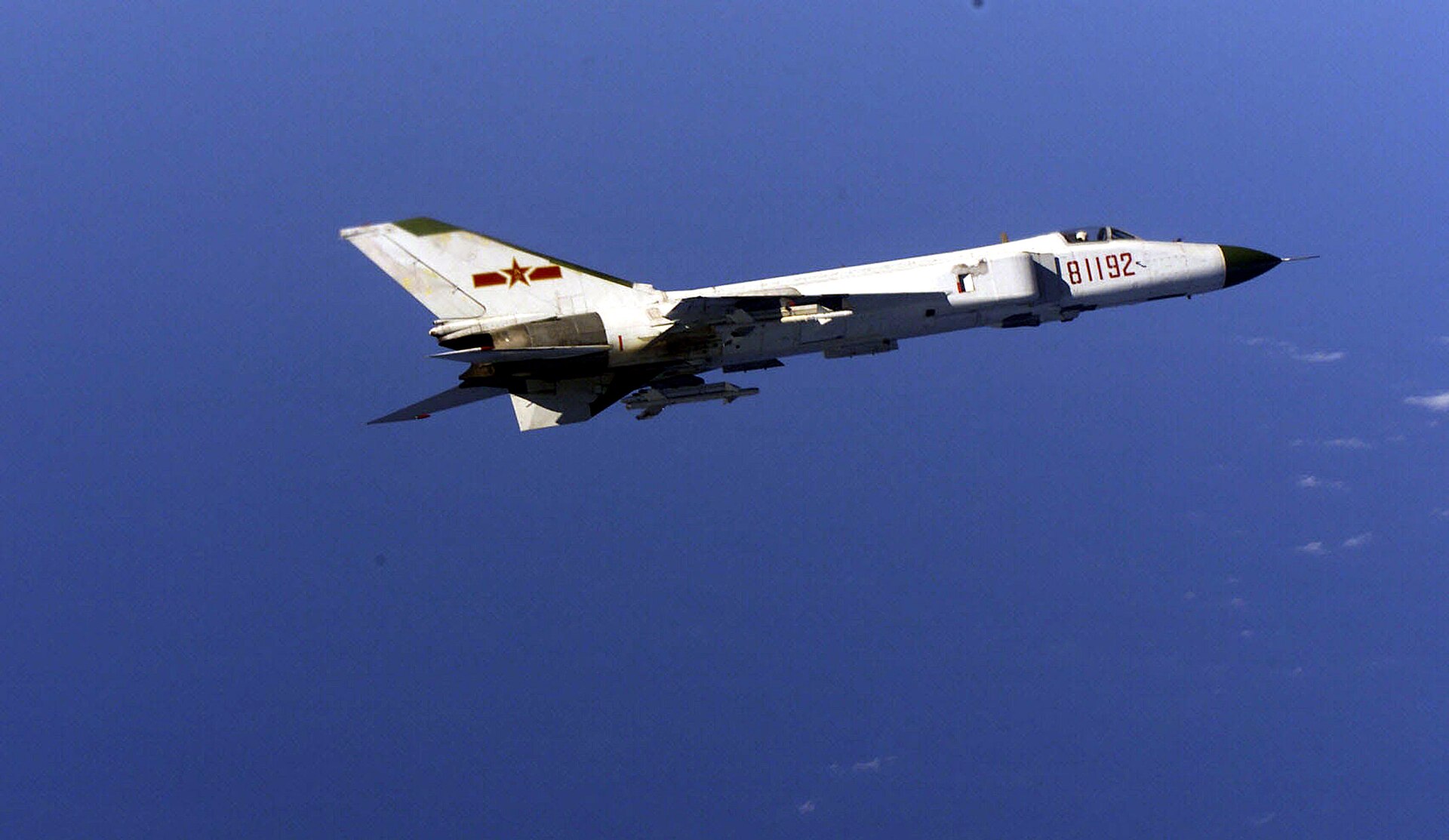
PL-8 Missile
The PL-8 is a Chinese air-to-air missile (AAM) that is based on the Israeli Python-3 missile. The experience gained from the PL-8/Python-3 played a significant role in the development of China’s subsequent missile, the PL-9.
Development Process and History
The success of Israel’s Python-3 missile during the Lebanon War was closely observed by the People’s Liberation Army Air Force (PLAAF). In the 1980s, China signed agreements for licensed production of this missile and approved a plan in 1982 to manufacture all components domestically. This technology transfer accelerated China’s missile development capabilities during the late Cold War period. The program, known as the “Number 8 Project” (八号工程), officially began on September 15, 1983, and the missile entered service in 1986.
The PL-8 was produced by the Xi’an Eastern Machinery Factory (西安东方机械厂). Assembly and production were also carried out at the 014 Bass facility in Luoyang (renamed in 2002 as the China Air-to-Air Guided Missile Research Institute). The technology transfer was completed between 1988 and 1989, and by spring 1989, the fully domestically produced missile received state certification.
An improved and fully domestically produced version, the PL-8A, entered service in 1993 and went into mass production in 1994. The PL-8B variant, developed starting in 1984 and completed in 1989, is equipped with 100% indigenous components. It features an upgraded COPISE (Comando Pishula Seeker) seeker and a more powerful motor providing longer range.
Design Features
The PL-8 is equipped with a wide off-boresight targeting system and a dual-thrust solid rocket motor, enabling it to reach speeds up to Mach 4 and maneuver over 38Gs. Its guidance accuracy is within one meter. China also developed a helmet-mounted sight (HMS) system for the PL-8, giving pilots “look and shoot” capability. This system is likely a licensed or domestically produced version of the Elbit Systems DASH (Display And Sight Helmet).
The original Python-3 seeker could be slaved to either the aircraft’s radar or the HMS. However, early PL-8 models were compatible only with Western-made radars, limiting full integration with Chinese radars. As a result, when used with Chinese radar systems, the PL-8’s seeker was fixed and pointed forward during deployment. This limitation was resolved with the next missile, the PL-9, which was compatible with Western, Chinese, and Russian radars. These improved capabilities were later integrated into upgraded PL-8 versions.
Variants
- PL-8: Licensed version of the original Python-3 missile acquired from Israel.
- PL-8A: Assembled in China with Israeli components under license, later fully domestically produced.
- PL-8B: An improved model made entirely with domestic Chinese components.
- PL-8H: A surface-to-air missile variant with a smaller 10 kg warhead.
China typically assigns Chinese names to missiles only when more than 70% of their components are domestically produced. However, the PL-8 received its Chinese designation from the start, possibly to obscure its Israeli origins and avoid straining China’s relations with Muslim-majority countries.
Due to its larger size, the PL-8 required modifications to Chinese fighter aircraft carrying systems. For example, the wingtip pylons on J-15 carrier-based fighters were extended to accommodate the PL-8, marking a visual distinction from the Su-33.
Technical Specifications
- Users: People’s Liberation Army Air Force (PLAAF), People’s Liberation Army Naval Air Force
- Type: Air-to-air and surface-to-air missile
- Service Entry: 1988
- Manufacturer: Xi’an Eastern Machinery Factory, CATIC
- Weight: 115 kg
- Length: 2.95 m
- Diameter: 160 mm
- Wingspan: 800 mm
- Warhead: 11 kg high explosive
- Detonation Mechanism: Impact and proximity fuse
- Engine: Solid-fuel rocket
- Range: 20 km
- Maximum Speed: Approximately Mach 3.5
- Altitude: Maximum 21 km, minimum 0.5 km
- Guidance: Passive infrared homing
- Launch Platforms: Both air and ground platforms
