

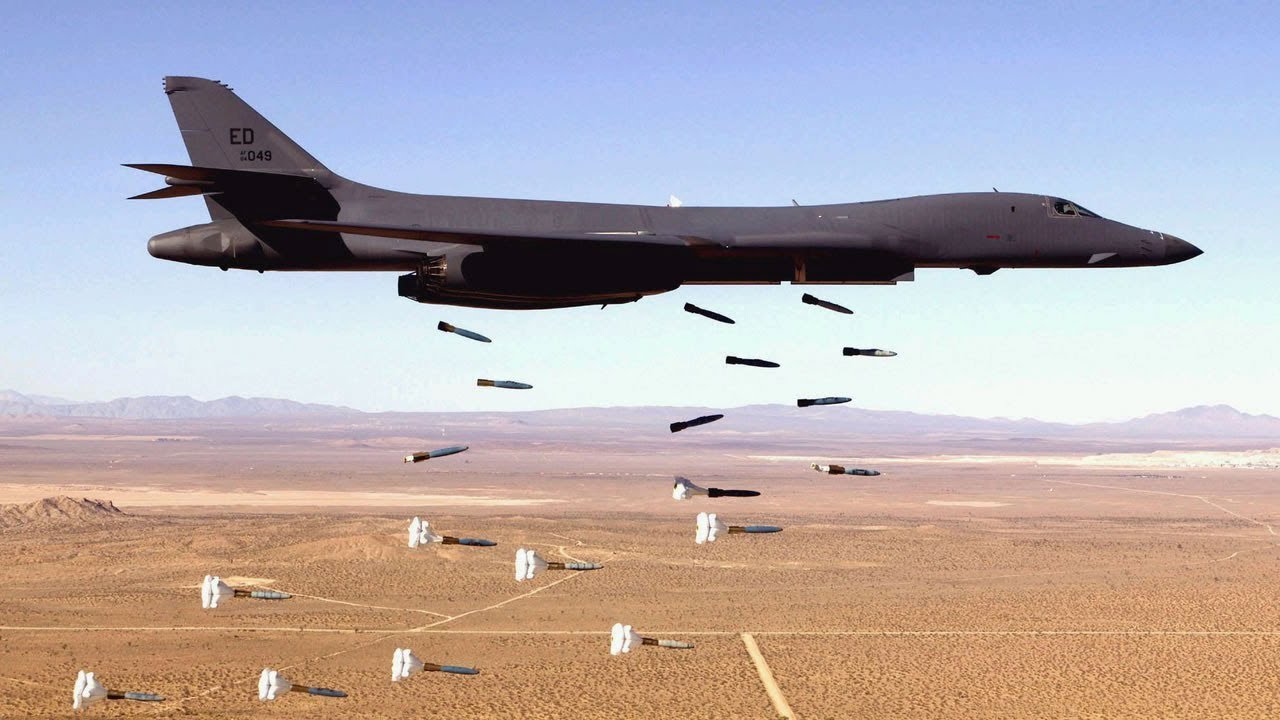
The Rockwell B-1 Lancer is a supersonic, variable-sweep wing heavy bomber operated by the U.S. Air Force, nicknamed the “Bone” from “B-One.” As of 2024, it serves alongside the B-2 Spirit and B-52 Stratofortress as one of the USAF’s three strategic bombers, capable of carrying up to 75,000 pounds (34,000 kg) of ordnance.
Originally conceived in the 1960s to combine the B-58 Hustler’s Mach 2 speed with the B-52’s range and payload, the first version, the B-1A, reached Mach 2.2 at altitude and Mach 0.85 at low level. High costs, advances in cruise missiles, and early B-2 stealth work led to its 1977 cancellation. Revived in 1981 due to delays in the stealth bomber program, the redesigned B-1B entered service in 1986 with reduced top speed (Mach 1.25), stronger electronic systems, more fuel capacity, and an enhanced weapons load.
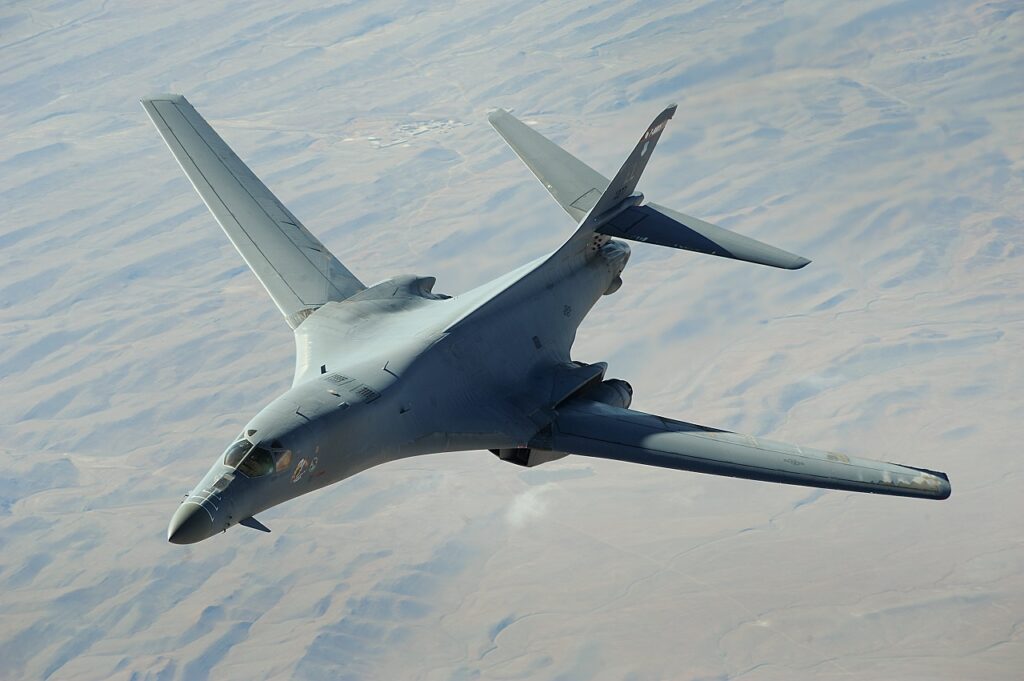
Initially a nuclear deterrent, the B-1B was converted to conventional roles in 1992 after the Strategic Air Command disbanded. It first saw combat in 1998’s Operation Desert Fox and later in Kosovo, Afghanistan, and Iraq. By 2025, the Air Force operates 45 B-1Bs, with retired units stored in the “Boneyard.” The fleet is set to be replaced by the B-21 Raider beginning after 2025, with full retirement planned by 2036.
