

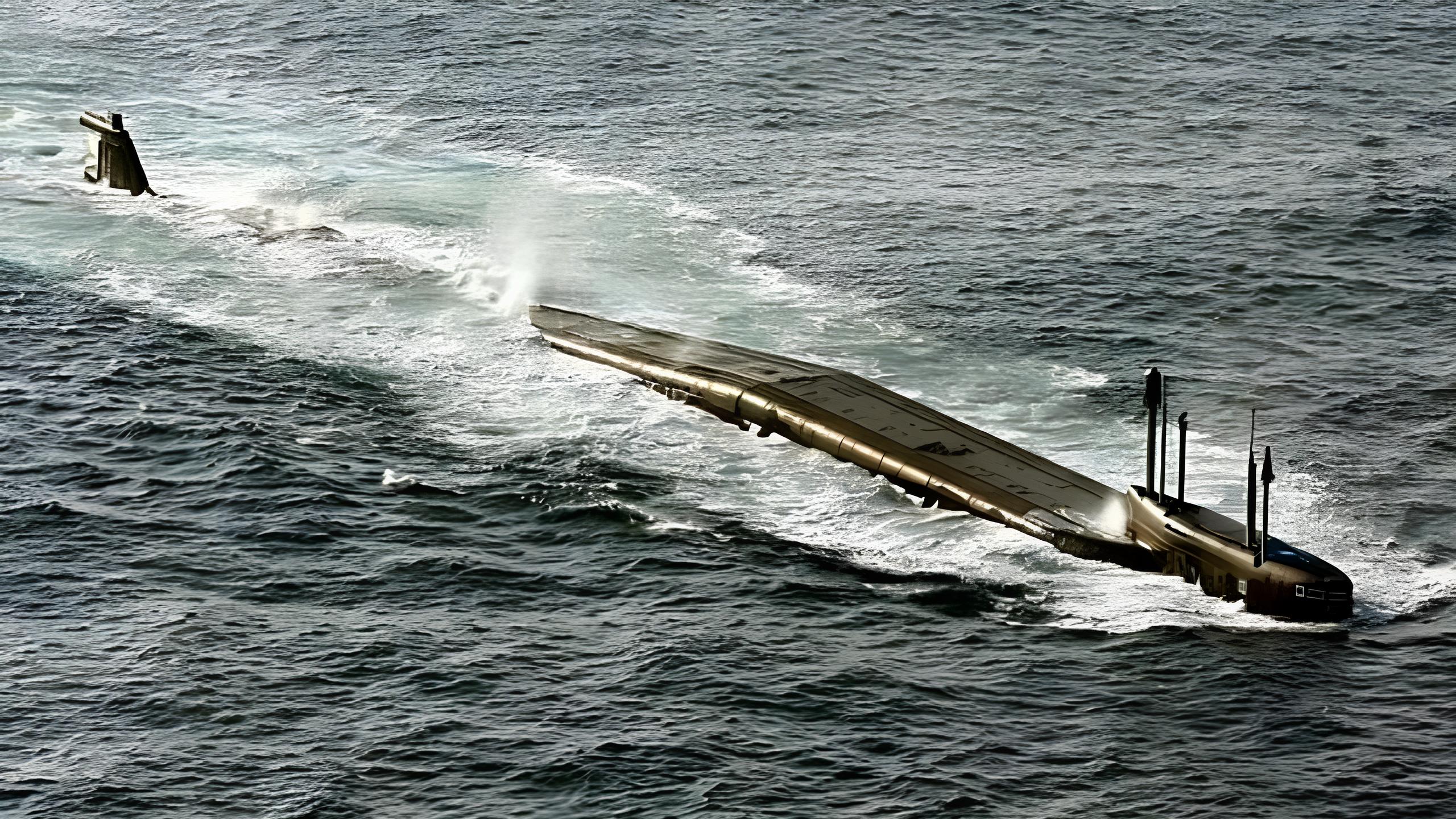
Russian President Vladimir Putin announced that the country has “successfully tested” the Poseidon nuclear-powered unmanned underwater vehicle (UUV), reportedly launched from a submarine and powered by its onboard reactor. Analysts view the move as a strategic signal to the West, underlining both Moscow’s deterrence messaging and the growing challenges for U.S. naval defenses and arms control regimes.
A video released by TASS on October 29 showed Putin confirming that Poseidon was launched from a carrier submarine and that its nuclear propulsion unit had been activated. “This is a major success,” he stated, claiming Poseidon’s power “far exceeds that of the Sarmat ICBM” and that “no system can intercept it.” No data, images, or coordinates from the test were provided by Russian authorities, and the claims remain unverified.
Poseidon, known by NATO as Kanyon, is believed to be a long-range, deep-diving nuclear-powered UUV designed to carry a multi-megaton warhead across oceans to strike coastal targets while evading missile defense systems. Initially leaked in 2015 and officially revealed in 2018, the system represents a new class of strategic underwater weapons. Its first carrier submarine, K-329 Belgorod, entered service in 2022, and the follow-on Khabarovsk class is expected to join the fleet soon.
Defense analysts suggest the test likely focused on propulsion and systems integration rather than demonstrating a full operational capability. Critical aspects such as guidance accuracy, secure deep-sea communications, and the safety of carrying a live nuclear warhead remain unproven.
If fully realized, Poseidon could expand Russia’s second-strike nuclear deterrent beyond traditional ballistic missile systems. However, experts emphasize that for now, the platform serves primarily as a tool of strategic signaling and psychological leverage. Until independent verification emerges, the event should be treated as a step in testing progress rather than a declaration of operational readiness.
