

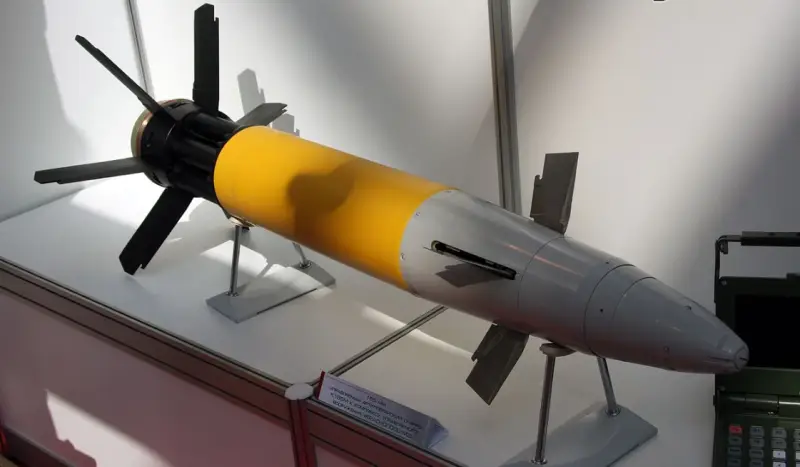
Russia confirmed on November 7, 2025, that frontline units have received new shipments of Krasnopol-M2 laser-guided artillery shells from Rostec’s High Precision Systems. The deliveries underscore Moscow’s increasing reliance on precision firepower to counter Ukrainian counter-battery threats and electronic warfare challenges.
The Krasnopol-M2 is a 155 mm semi-active laser-guided artillery round capable of engaging point targets at 20–25 km with markedly improved accuracy compared to unguided shells. Produced by Rostec’s High Precision Systems, the M2 variant continues Russia’s long-standing tradition of precision artillery.
Operationally, the system uses forward observers and UAVs for target designation, enabling “shoot-and-scoot” tactics. It integrates across a broad range of platforms, from legacy 2S3 Akatsiya and 2A65 Msta-B to 2S19 Msta-S, 2S43 Malva, and 2A36 Giatsint-B, illustrating that guided artillery is becoming a standard feature rather than a niche capability.
Experts claim the Krasnopol-M2 achieves CEP in single-digit meters, with long-barrel systems reaching 30–40 km, while more common platforms operate at 20–25 km. Next-generation systems like 2S35 Koalitsiya-SV can push ranges further under ideal conditions. The core guidance remains semi-active laser homing, independent of satellite navigation.
In Ukraine, operational effectiveness relies on the find-fix-finish cycle at battalion and brigade levels. UAVs or observers lase targets from standoff ranges, while gunlines execute short, timed missions against artillery, armored vehicles, command posts, and fortified positions. This approach reduces rounds-per-effect, narrows counter-battery windows, and complements rapid displacement doctrines.
The M2’s primary advantage under heavy electronic warfare is its GNSS independence in the terminal phase. Unlike GPS/INS-guided rounds, Krasnopol-M2 is largely unaffected by jamming. Limitations include line-of-sight requirements and vulnerability to atmospheric conditions, smoke, or the loss of the laser designator UAV.
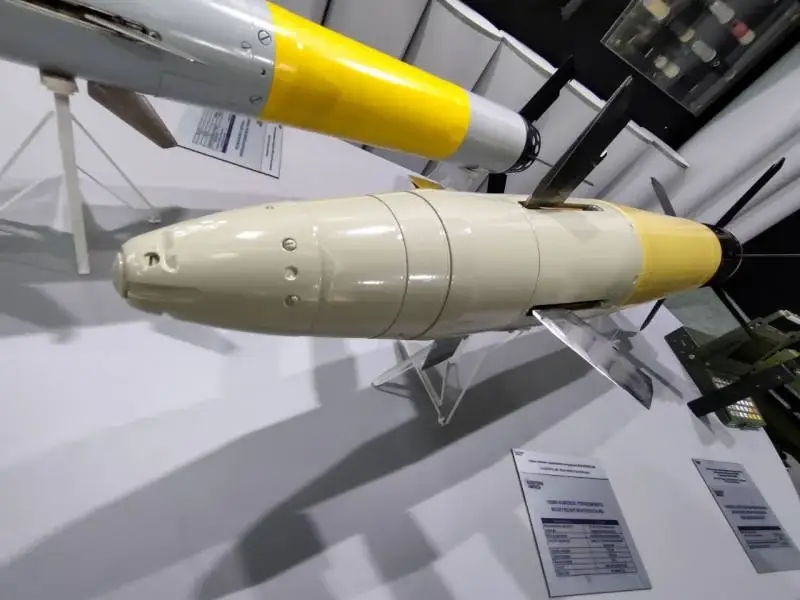
From an industrial perspective, these deliveries reflect Russia’s intent to normalize precision artillery use. Frequent guided fire reduces logistical burden, shortens mission duration, and increases risk for enemy positions behind the front lines. Paired with UAV-enabled designation, Krasnopol-M2 provides reliable, repeatable effects on guns, vehicles, bridges, and command nodes, even under contested conditions.
Strategically, the shipments illustrate Russia’s shift to a fires-dominant doctrine that emphasizes precision at battalion and brigade levels while reserving rocket artillery for deeper or time-sensitive targets. With the November 7, 2025 deliveries, Krasnopol-M2 emerges not as a one-time addition but as a routine tool for precision attrition in ongoing operations.
