

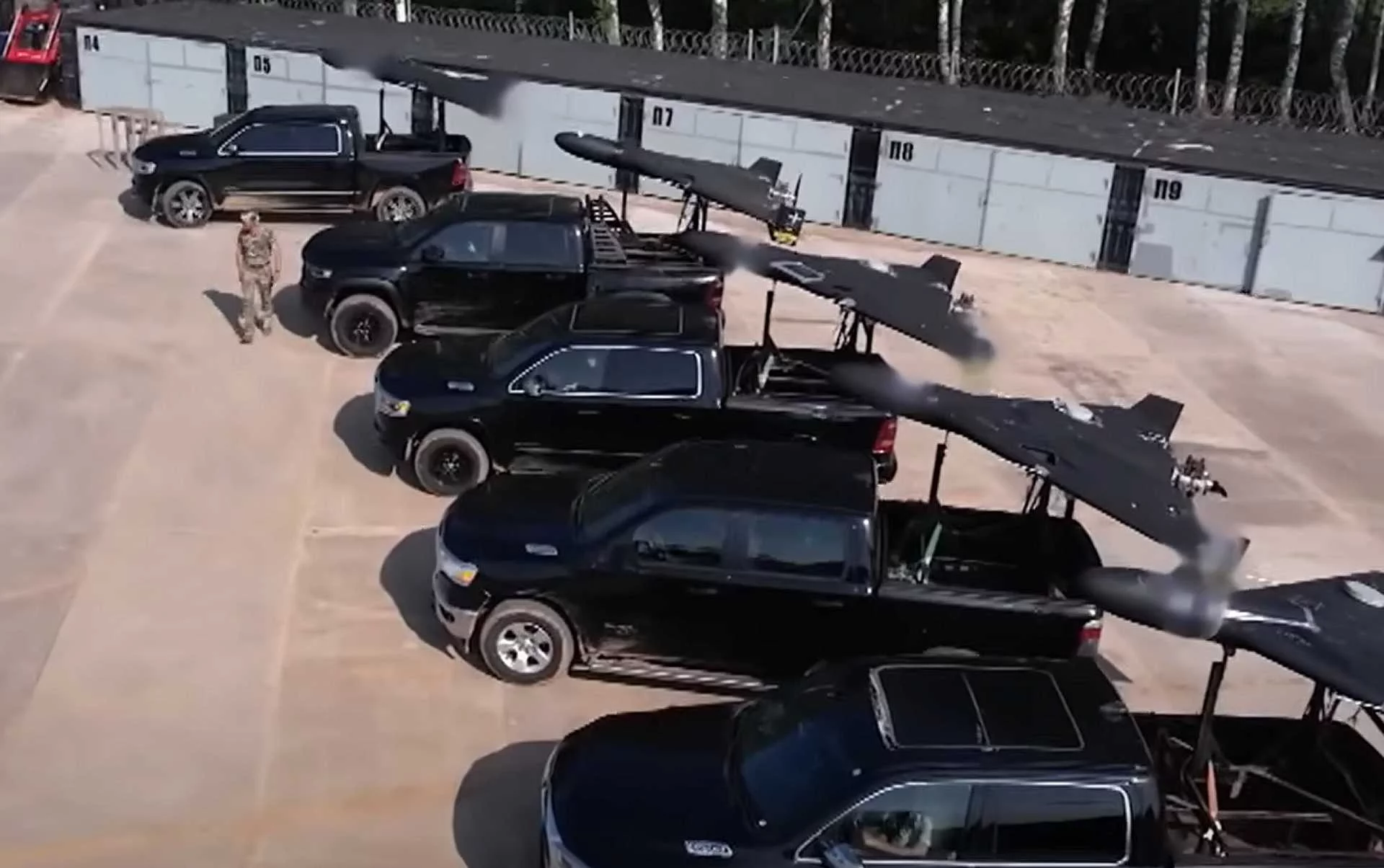
In a significant upgrade to its unmanned aerial capabilities, Russia has unveiled a mobile launch platform for its Geran-2 loitering munitions, adapting the system to civilian-style all-terrain vehicles. This tactical enhancement is designed to enable drone launches from remote or uneven terrain, reducing reliance on fixed infrastructure and improving survivability against targeted strikes.
The revamped Geran-2 now includes an optical guidance suite and remote operation via mobile SIM cards, with a future switch to Russian satellite internet connectivity underway. The system is also reported to function in networked coordination with other drones such as the larger Gerbera UAV, significantly improving situational awareness and joint targeting capabilities on the battlefield.
Technically, the Geran-2 weighs around 200 kilograms and uses a solid-fuel booster-assisted catapult for takeoff. It carries a high-explosive fragmentation warhead weighing up to 90 kg, designed to strike a variety of critical targets like command centers, radar stations, bridges, fuel depots, and fortified positions. With a maximum range of 2,000 kilometers, 12-hour flight endurance, and cruising speeds of up to 180 km/h, the drone poses a persistent threat over large operational zones.
Russia is actively increasing production of these drones, expanding manufacturing lines and manpower despite ongoing Western sanctions. Authorities have reportedly developed domestic technological alternatives and new supply chains to maintain uninterrupted production and scale up capacity.
Geran-2 drones are now a staple of Russia’s strategic operations in Ukraine, frequently used in swarming attacks to target military infrastructure and supply chains. Their cost-effectiveness and psychological impact have further solidified their role in modern warfare, not only for strikes but also for surveillance and electronic warfare operations. The growing dependence on loitering munitions by both Russia and Ukraine reflects a broader doctrinal evolution in contemporary conflict, where UAVs increasingly replace conventional artillery and challenge established defense systems through sheer saturation and agility.
Russia’s continued ability to produce and innovate under economic pressure highlights the resilience of its defense industry—a key factor influencing the dynamics of the war in Ukraine.
