

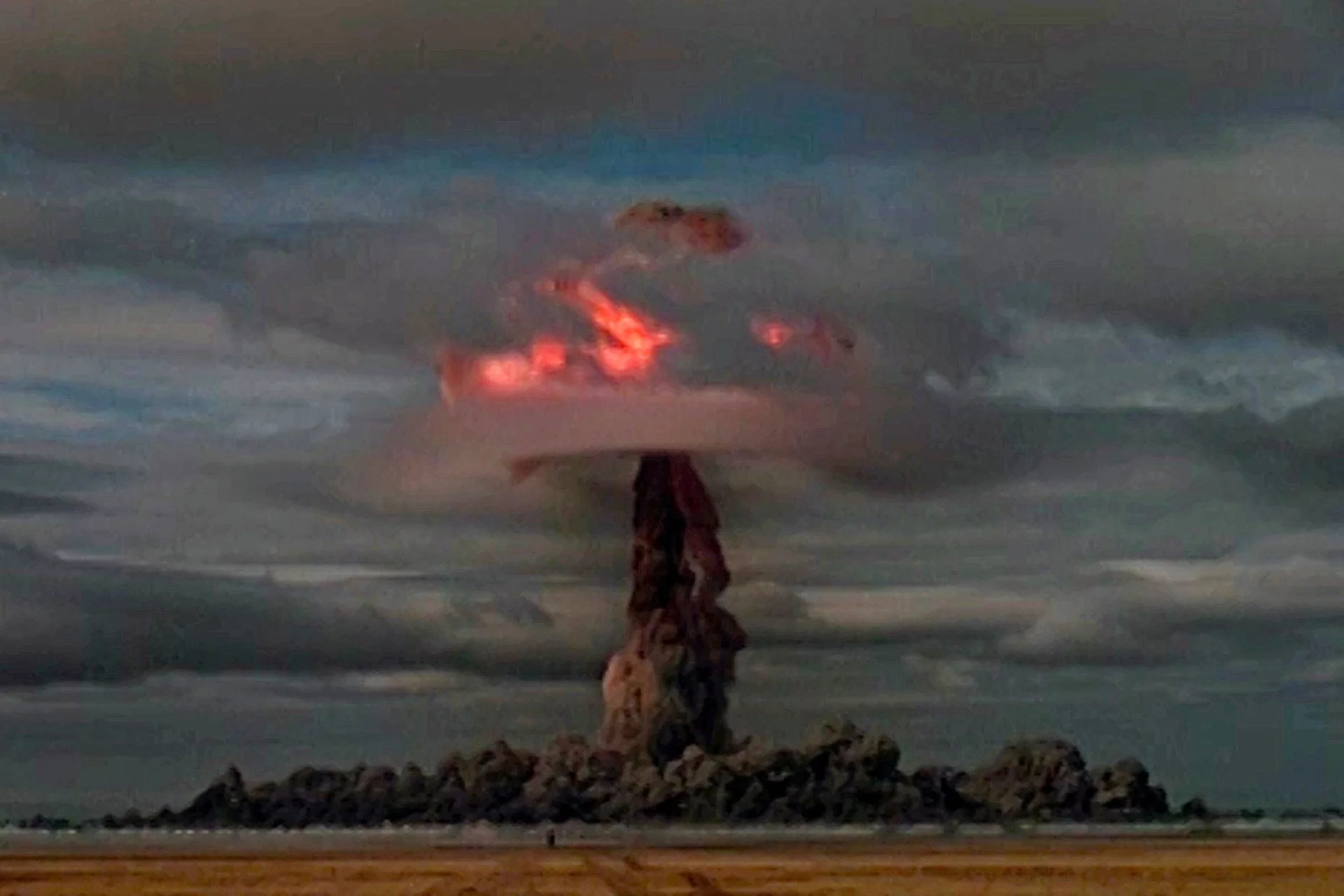
On November 5, 2025, the Kremlin instructed the foreign and defense ministries, intelligence agencies, and civilian institutions to draft coordinated proposals for potential nuclear weapons testing. President Vladimir Putin reiterated that Russia would only mirror another nuclear power’s actions if any resumed explosive testing.
The directive confirms that Russia’s long-maintained technical readiness at the Novaya Zemlya range has now received explicit political backing, signaling a new level of tension for the global nuclear test moratorium.
Echoes of the Cold War Resurface
Recent statements by U.S. President Donald Trump hinting that Washington could restart nuclear tests have reignited strategic competition. Analysts warn this shift risks unraveling decades of restraint that helped preserve nuclear stability since the Cold War.
Novaya Zemlya: From Dormant Site to Active Readiness
During a Security Council meeting, Defense Minister Andrei Belousov described it as “appropriate” to begin preparations immediately, citing the ability to activate Novaya Zemlya on short notice. The site, historically used for Soviet-era detonations, has reportedly been maintained in operational condition.
Possible Testing Pathways
Initial steps would likely involve subcritical or hydrodynamic experiments — zero-yield trials designed to stress-test plutonium cores and modern warhead components without triggering a chain reaction.
Later phases could include low-yield, fully contained underground tests to validate updated designs, including reentry vehicles for Yars, Sarmat, and Bulava missiles, as well as configurations supporting Avangard hypersonic glide systems.
Focus on “Exotic” Capabilities
Moscow has also emphasized programs like the 9M730 Burevestnik nuclear-powered cruise missile and the Poseidon underwater vehicle. While these systems do not immediately require nuclear detonations, underground validation trials could be used to confirm their unique warhead designs and survivability under extreme conditions.
Strategic Implications for Global Security
Russia’s 2023 de-ratification of the Comprehensive Nuclear-Test-Ban Treaty (CTBT) placed it on equal footing with the United States, which signed but never ratified the treaty.
By combining political authorization with technical readiness, Moscow ensures it can move from planning to execution within weeks if others break the testing taboo — a development that could reshape global arms control and return nuclear brinkmanship to the forefront of international security.
