

Russia has inaugurated a new Unmanned Aerial Vehicle (UAV) Control Center in Kamchatka, integrated into its Pacific Fleet, according to reports by Izvestia and cited by the Kyiv Post. The facility is designed to expand Moscow’s surveillance and precision-strike capabilities across the Arctic Ocean and Pacific waters, with a strong emphasis on safeguarding the Northern Sea Route and protecting nuclear submarine bases amid escalating regional tensions.
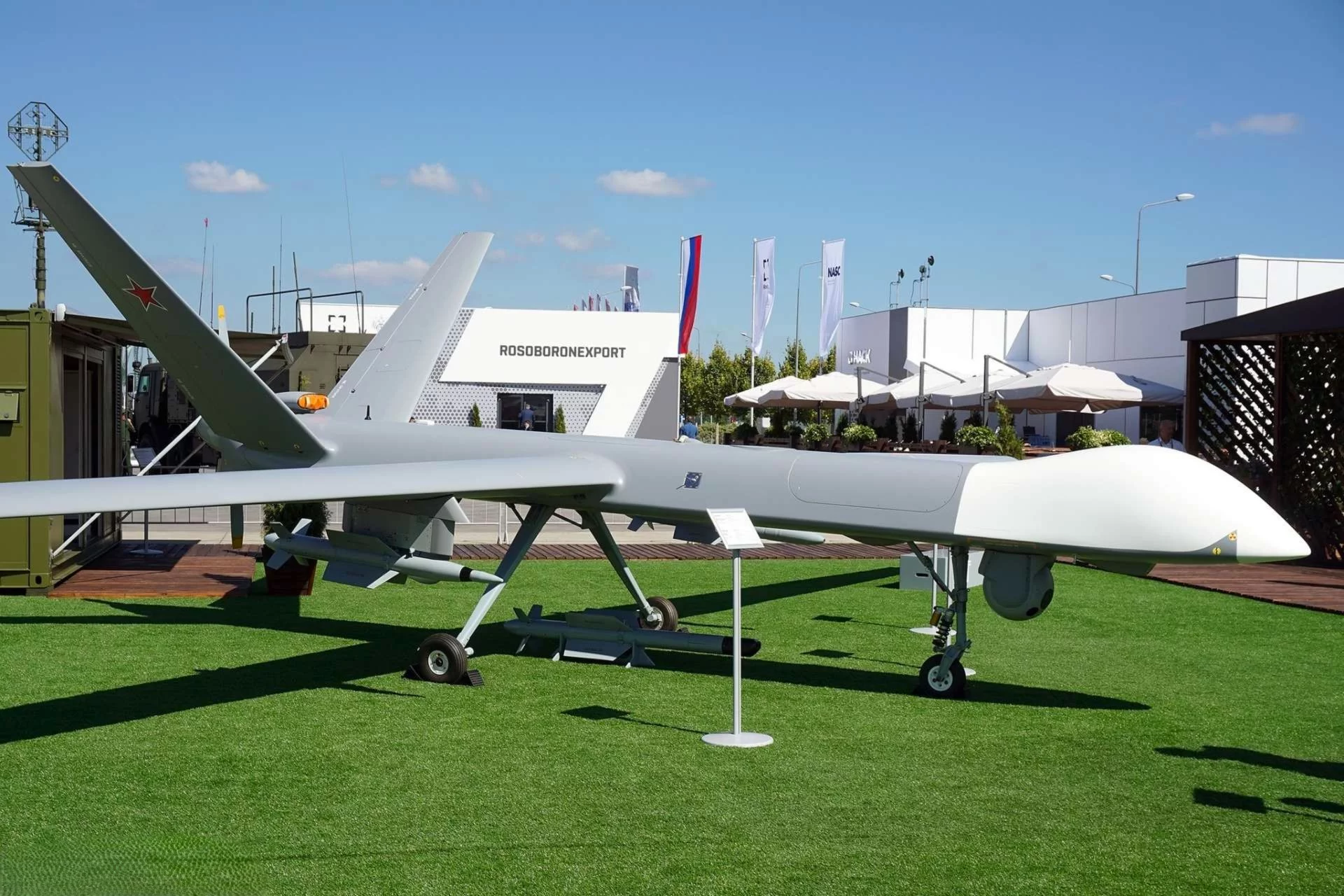
The Kamchatka hub will manage the deployment and missions of several classes of reconnaissance and combat UAVs, with the heavy Forpost and Inokhodets systems forming the initial operational core. These drones will operate from regional airfields, providing extended range over vast maritime and polar areas. The center will centralize mission planning, intelligence gathering, and real-time coordination with the Russian Navy, Aerospace Forces, and other military branches.
The Forpost, originally based on Israel’s Searcher II but redesigned domestically as the Forpost-RU, has a wingspan of 8.5 meters, a takeoff weight of about 450 kg, and an endurance of over 15 hours. It can carry radar, electro-optical systems, and precision-guided weapons. The Inokhodets (Orion) is larger, with a 16-meter wingspan, 200 kg payload capacity, and up to 24 hours of flight time, enabling it to conduct both reconnaissance and strike missions with advanced sensors and guided munitions. Both platforms have been extensively used in Ukraine for surveillance and precision targeting.
By integrating these heavy UAVs into a unified command system, Russia can maintain continuous aerial coverage of sensitive zones without depending solely on manned patrol aircraft. This approach mirrors similar long-endurance UAV strategies developed by the United States and Japan for contested maritime domains.
Kamchatka’s strategic location allows the new facility to directly support the Pacific Fleet’s submarine base in Vilyuchinsk and monitor key chokepoints like the Northern Sea Route and Bering Strait. The move comes in response to increased NATO naval activity and U.S. submarine deployments in the Arctic, further driving Moscow’s push for advanced unmanned capabilities.
The opening of the Kamchatka UAV Command Center reflects a broader Russian shift toward integrated drone warfare in remote theaters. By combining long-range surveillance, strike potential, and centralized control, Moscow aims to strengthen its presence in two of its most strategically important frontiers—the Arctic and the Pacific.
