

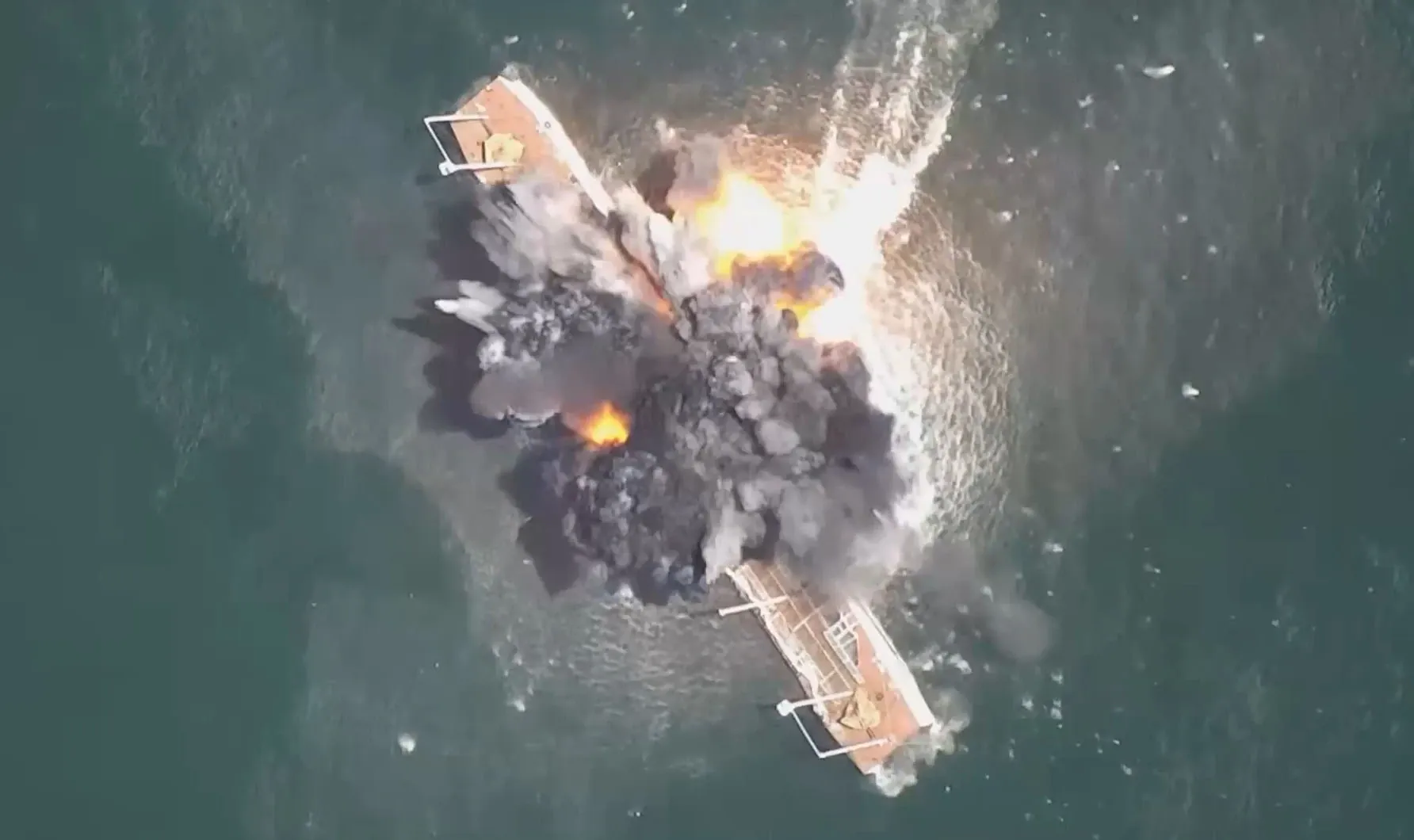
Amid growing naval tensions in Europe, Russia staged a high-profile demonstration of its emerging unmanned surface vessel (USV) capability during the large-scale “July Storm” military exercises in the Baltic Sea. The Russian Ministry of Defense released footage showing a small, explosive-laden sea drone racing toward a mock floating target before detonating in a powerful explosion—mirroring Ukraine’s successful use of similar drones in the Black Sea. However, analysts suggest that this was less a leap in combat technology and more a strategic signaling maneuver aimed at potential adversaries, especially NATO.
The conditions of the exercise—calm waters, a stationary target, and an absence of defenses—point to a carefully orchestrated scenario rather than a test of operational realism. Despite this, the destructive power of the explosion was undeniable. Pro-Kremlin military bloggers claimed the drone can autonomously operate for up to 24 hours and strike targets as far as 300 kilometers away. This would, in theory, place ports like Odesa and Izmail within range if launched from Crimea, although no verifiable evidence of such performance has yet been presented.
The Russian Ministry of Defense did not identify the sea drone by name but noted that the drills included a range of unmanned systems, from FPV drones and aerial UAVs to underwater and rotary-wing platforms. This multi-domain integration suggests a growing focus on autonomous naval warfare and complex threat environments. President Vladimir Putin described the exercise as a way to train naval units in “highly complex, unconventional mission profiles,” while emphasizing the lessons learned from Russia’s ongoing war in Ukraine.
Importantly, the demonstration does not appear to be aimed directly at Ukraine. Kyiv’s conventional navy ceased to exist early in the conflict, having scuttled its own ships to prevent Russian seizure. Instead, Ukraine shifted to asymmetric naval warfare—using homebuilt sea drones and missile attacks to inflict serious damage on Russia’s Black Sea Fleet, prompting Moscow to withdraw most vessels from Sevastopol to Novorossiysk.
In this context, Russia’s new sea drone seems designed for future engagements with state navies, rather than continued asymmetrical duels with Ukraine. Analysts believe that the “July Storm” exercise is best interpreted as preparation for high-intensity conflict against a peer adversary—namely NATO. The inclusion of anti-submarine warfare, mine-laying operations, and missile strikes underscores the doctrinal evolution under way in Russia’s naval planning.
The use of unmanned maritime systems is not confined to the Black Sea. In the Red Sea, Iran-backed Houthi forces have employed similar tactics to target commercial shipping, demonstrating how accessible technologies can disrupt global naval dynamics. Russia’s display in the Baltic follows this broader trend of drone-enabled maritime disruption, but with an added layer of geopolitical signaling.
Ultimately, “July Storm” is not just a display of hardware—it’s a strategic rehearsal. Drawing from Ukraine’s drone warfare playbook, Russia is recalibrating its naval doctrine for a future where crewless platforms, digital command, and asymmetric capabilities define maritime superiority. Whether this proves to be an effective pivot or mere propaganda remains to be seen—but the message to NATO is loud and clear.
