

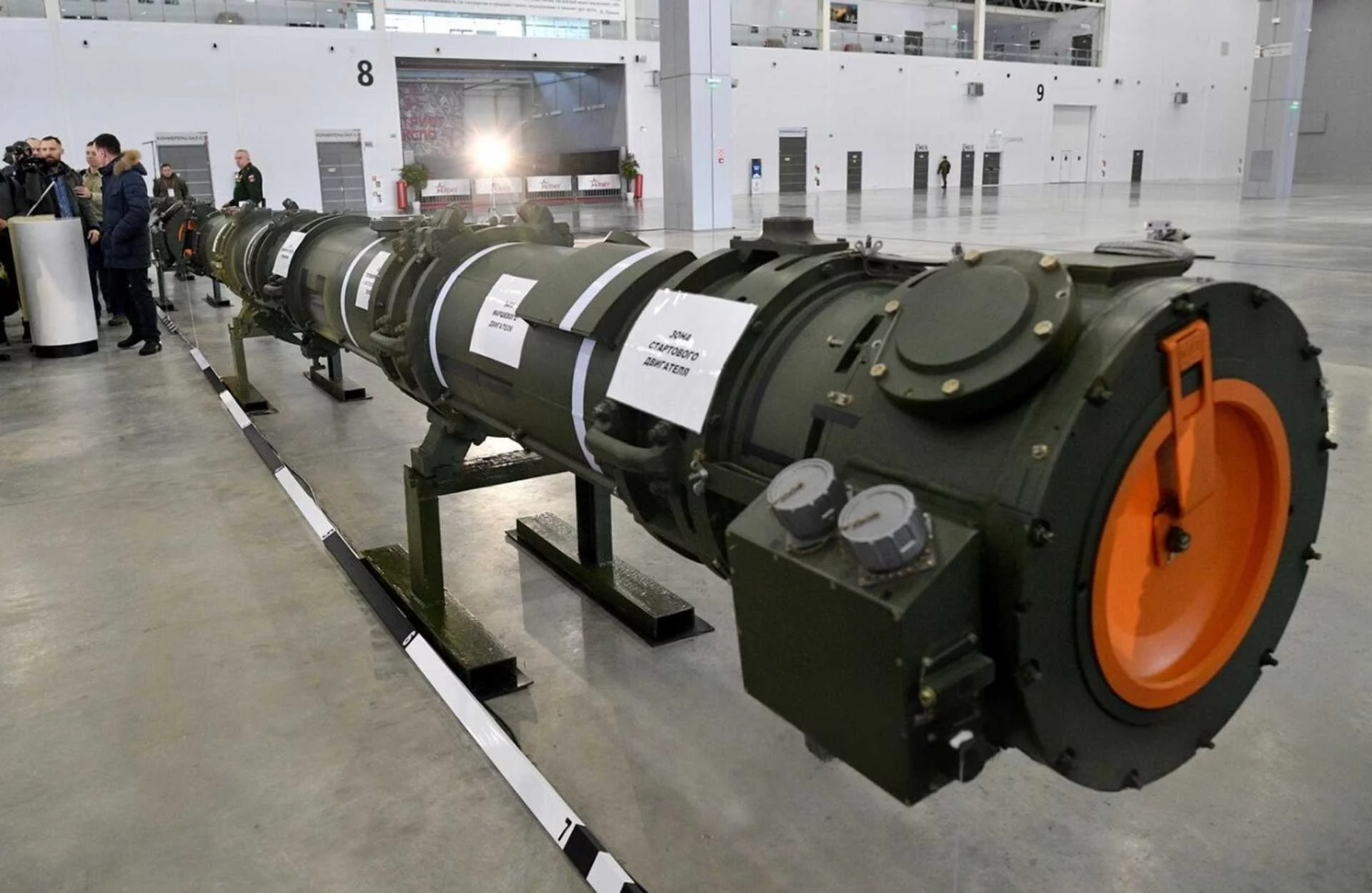
Moscow deploys INF Treaty-breaking 9M729 missile in its first confirmed combat use.
Ukraine has confirmed that Russia used its nuclear-capable 9M729 Novator ground-launched cruise missile in combat for the first time — a weapon once central to the U.S. withdrawal from the Intermediate-Range Nuclear Forces (INF) Treaty.
According to Reuters, Ukrainian Foreign Minister Andrii Sybiha stated that Russia had fired the 9M729 at least 23 times since August 2025 and twice in 2022. One missile traveled over 1,200 kilometers before striking near Lviv, where debris bearing the “9M729” marking was recovered.
A Dual-Capable, Long-Range System
Developed by NPO Novator, the 9M729 can carry either a conventional or nuclear warhead and is believed to have a range of up to 2,500 km, far beyond Russia’s official claim of 480 km.
The missile is launched from Iskander-K systems and is derived from the 3M14 Kalibr sea-launched cruise missile.
The Missile That Ended the INF Treaty
The 9M729 was at the heart of Washington’s decision to exit the INF Treaty in 2019.
In the same year, Russia publicly displayed the missile near Moscow, claiming it complied with INF limits. However, the U.S. National Air and Space Intelligence Center recorded its range at 2,500 km, confirming a violation.
First Confirmed Combat Employment
Missile fragments recovered after the October 5, 2025 strike in western Ukraine matched Novator’s engineering layout.
Experts, including Dr. Jeffrey Lewis of the Middlebury Institute, confirmed that the components were consistent with the 9M729 configuration — proving its first operational use.
Implications for European Security
Analysts warn that this event marks a major escalation and undermines Europe’s post-INF security balance.
The missile’s dual nuclear-conventional capability blurs deterrence boundaries and increases NATO’s strategic risk.
