

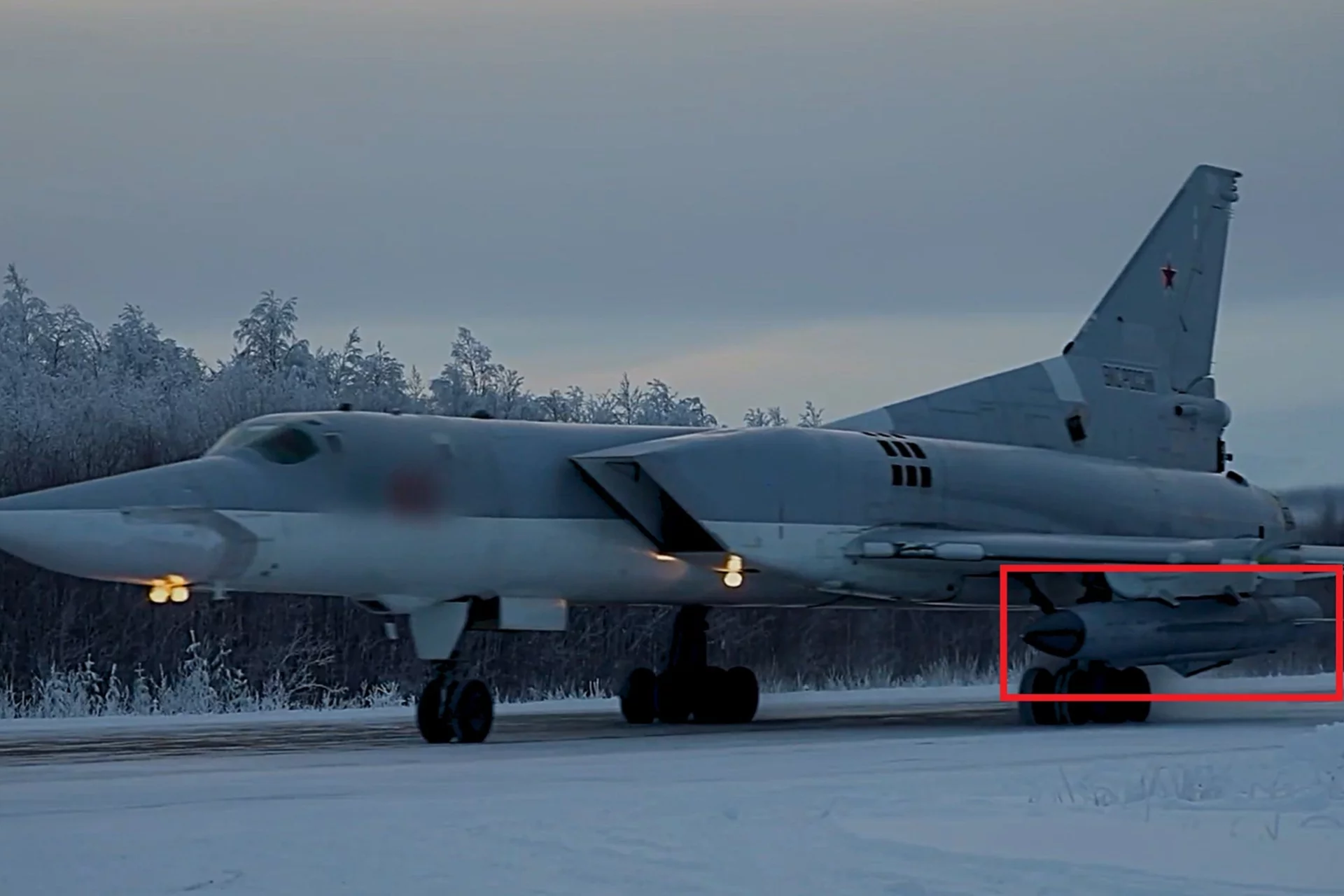
Russia’s Ministry of Defense announced that Tu-22M3 long-range missile-carrying bombers, accompanied by Su-35S and Su-27 fighter escorts, conducted a more than five-hour patrol over neutral Baltic Sea airspace on November 27. The deployment of these bombers—configured to employ Kh-22 and Kh-32 long-range anti-ship missiles—highlights Moscow’s intent to signal its ability to threaten NATO naval forces and maritime supply routes from stand-off range in one of Europe’s most heavily monitored sea corridors.
According to Russian statements, NATO aircraft shadowed the formation during parts of the route, a frequent occurrence in the Baltic region’s tense airspace. While Moscow described the mission as a routine scheduled flight, the combination of aircraft and theatre underscores the continued strategic messaging role of Russia’s long-range aviation.
The Tu-22M3 “Backfire-C” bomber, a variable-geometry supersonic platform capable of speeds above Mach 2, remains central to Russia’s long-range strike fleet. It carries Kh-22 and the more advanced Kh-32 missiles—large, high-speed, high-altitude weapons originally designed to target carrier strike groups and critical infrastructure from several hundred kilometres away. Open sources estimate the Kh-32’s range between 800 and 1,000 km, with improved guidance and electronic resilience suited to modern contested environments. Fighter escorts provided by Su-35S and Su-27 aircraft expanded the formation’s situational awareness and ensured air-superiority cover throughout the sortie.
Both the bomber and missile families have a long operational pedigree. The Tu-22M series, conceived during the Cold War, has undergone incremental upgrades, with current programmes such as the Tu-22M3M incorporating digital avionics and new precision-strike integrations. The Kh-22/32 missile lineage evolved from high-speed dives against maritime targets to more adaptive profiles designed to counter modern air defences. Despite combat losses in the Ukraine war—including drone strikes on bases and the publicised downing of a Tu-22M3 by a modified S-200—Russia has continued long-range patrol operations to demonstrate capability and retain crew proficiency.
The November 27 patrol mirrors a classic maritime strike rehearsal adapted to the Baltic’s geography. Operating from international airspace, a Tu-22M3 armed with Kh-32 missiles can threaten naval forces, ports, coastal infrastructure and operational hubs across much of northern Europe without entering the defended airspace of a NATO member. The missile’s high terminal speed compresses reaction timelines for shipborne defences, while fighter escorts deter close interception and provide tactical flexibility during encounters with foreign aircraft.
Strategically, the flight aligns with repeated Tu-22M3 appearances over the Baltic between 2023 and 2025, often coinciding with moments of regional tension or major developments in the Ukraine conflict. For Moscow, these missions simultaneously train crews, signal resilience despite attrition and highlight the dual conventional-nuclear capabilities of its long-range aviation. For NATO’s Baltic and Nordic members, the flights serve as a reminder that their maritime infrastructure and sea lanes remain within reach of Russian stand-off systems.
In essence, the latest patrol is more than routine training—it is a calculated message. By showcasing long-range bombers armed with powerful anti-ship missiles so close to NATO borders, Russia reinforces its ability to project influence in the Baltic Sea, turning each “scheduled flight” into a measure of the shifting security balance between Moscow and the Euro-Atlantic alliance.
