

Punggye-ri Site Fully Prepared, Awaiting Kim Jong Un’s Approval
South Korea’s Defense Intelligence Agency (DIA) has informed lawmakers that North Korea can conduct a seventh nuclear test at the Punggye-ri site on short notice, pending a final decision from leader Kim Jong Un.
The closed-door briefing, reported by Yonhap, indicated concentrated activity at Tunnel No. 3, suggesting that Pyongyang has completed all necessary technical preparations. The assessment also links the regime’s nuclear posture with growing defense cooperation with Russia, including possible space technology exchanges.
Evolution of North Korea’s Nuclear Capabilities
After six underground detonations between 2006 and 2017, the last estimated between 100 and 250 kilotons, analysts believe Pyongyang has moved from boosted-fission devices to two-stage thermonuclear designs.
The Punggye-ri complex, refurbished in recent years, enables greater control, minimized seismic leakage, and faster test resumption — reducing detection and response windows for regional defense planners.
Expanding Missile Arsenal
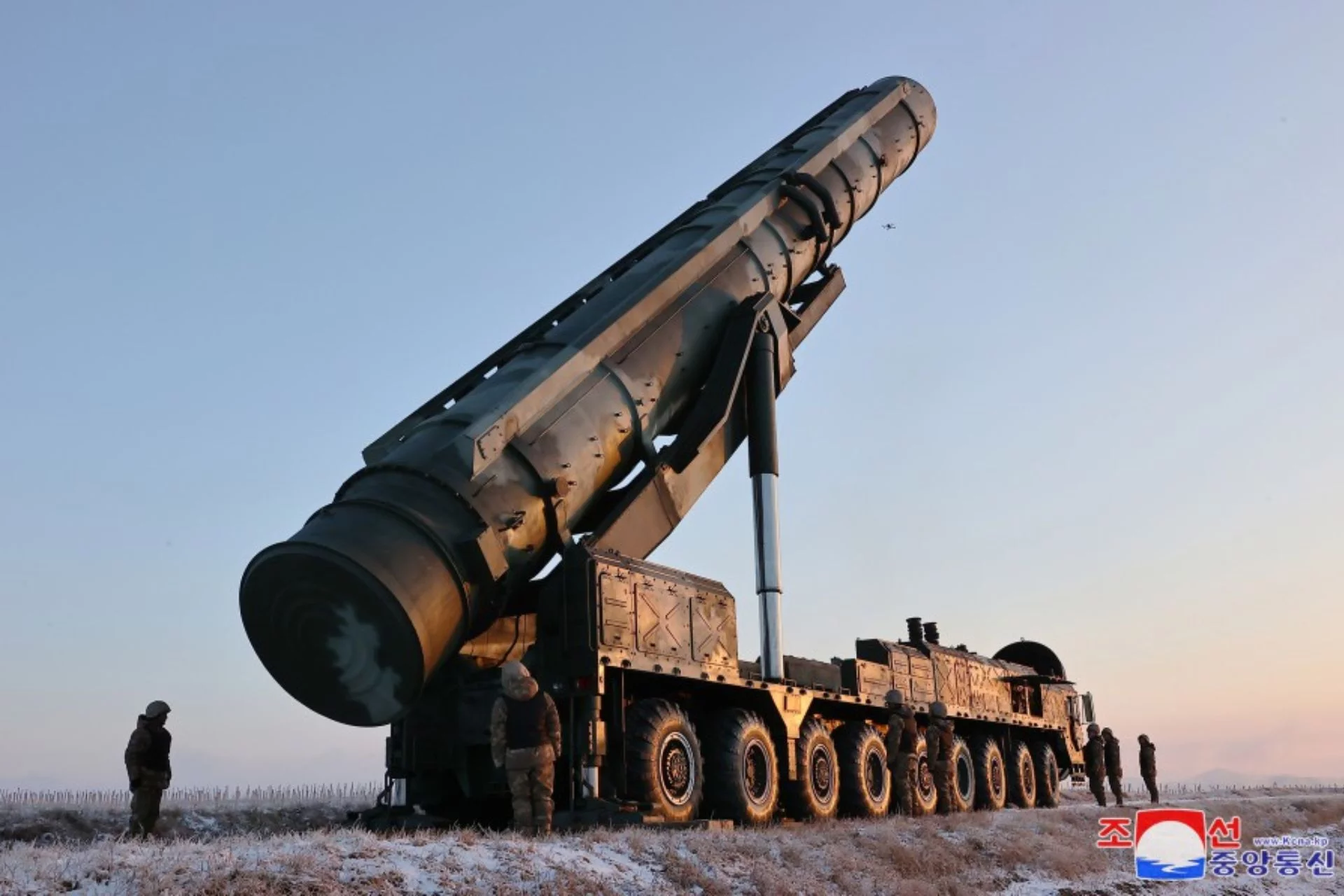
North Korea’s strategic deterrent centers on the liquid-fueled Hwasong-15 and Hwasong-17, and the solid-fueled Hwasong-18 ICBM.
The Hwasong-15 can theoretically exceed 12,000 km in range, while the three-stage, canisterized Hwasong-18 offers rapid launch readiness and unpredictable trajectories.
Regionally, Hwasong-12 IRBMs and short-range systems such as KN-23, KN-24, and KN-25 strengthen theater deterrence by providing multiple launch profiles and overwhelming missile defenses.
Satellite Development and Russian Involvement
Intelligence reports indicate that Pyongyang is preparing a new military reconnaissance satellite to follow the Malligyong-1, launched in 2023. The upcoming platform reportedly features improved optics and real-time data transmission.
South Korean officials have also raised concerns about Russian technical assistance, potentially linked to cooperation stemming from the Ukraine conflict — a dynamic that could complicate international sanctions enforcement.
Regional Implications and Diplomatic Tensions
If North Korea proceeds with a seventh nuclear test, it would trigger renewed UN Security Council deliberations, though consensus on new measures remains unlikely.
Japan continues to adjust its air and missile defense posture, China maintains strategic ambiguity, and the United States reinforces extended deterrence commitments through rotational deployments and integrated missile defense drills.
For Seoul, the priority lies in maintaining autonomous intelligence, surveillance, and reconnaissance (ISR) capabilities to reduce dependency on allied data streams.
Ultimately, the situation underscores a volatile balance where technical readiness intersects with political timing. Stability across the Korean Peninsula now depends on measured deterrence, effective communication among allies, and disciplined crisis management.
